
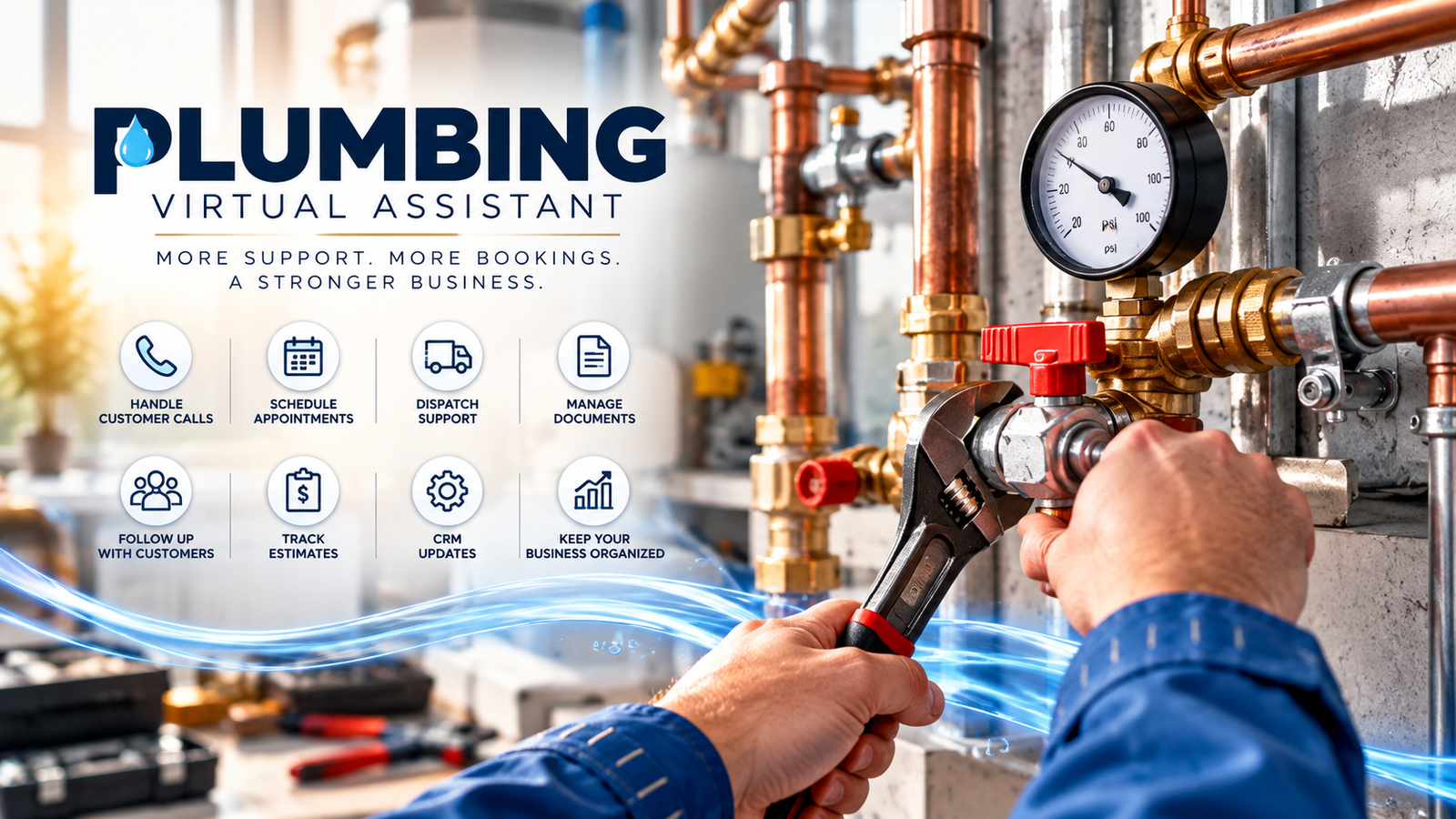
Plumbing companies operate in a fast-moving environment. Emergency calls can arrive at any time, technicians are constantly moving between jobs, customers need appointment updates, and office teams have to keep up with estimates, invoices, paperwork, and follow-ups.
When administrative work starts taking attention away from customers and field operations, a Plumbing Virtual Assistant can provide dedicated support for the office side of the business.
A trained Virtual Assistant can handle repeatable administrative tasks while plumbers and service managers remain focused on technical work, customers, and daily operations.
What Does a Plumbing Virtual Assistant Do?
A Plumbing Virtual Assistant provides administrative and customer-support services specifically for plumbing businesses.
Depending on the company's workflow, a Plumbing VA can support:
- Customer calls and service requests.
- Appointment scheduling.
- Dispatch coordination.
- Emergency-call administration.
- Customer confirmations.
- Estimate follow-ups.
- CRM updates.
- Job documentation.
- Invoicing support.
- Payment follow-ups.
- Permit and document administration.
- Maintenance appointment scheduling.
- General back-office tasks.
The responsibilities should be based on documented SOPs, company procedures, software access, and clear escalation rules.
Why Plumbing Companies Need Administrative Support
Plumbing professionals need to spend their time where their expertise creates the most value: in the field.
The U.S. Bureau of Labor Statistics projects 7% employment growth for plumbers, pipefitters, and steamfitters from 2025 to 2035, compared with 3.5% projected growth across all occupations. BLS also projects approximately 42,000 openings per year for the occupation during that period.
With continued demand for plumbing services, companies need administrative systems that can keep pace with incoming work.
A Virtual Assistant can become an extension of the office team, handling repeatable tasks that would otherwise consume the owner's, dispatcher’s, or service manager's time.
1. Customer Calls and Service Request Support
For many plumbing companies, the first interaction with a customer happens over the phone.
A Plumbing Virtual Assistant can support the initial administrative process by:
- Answering customer calls.
- Collecting customer information.
- Recording service requests.
- Confirming service addresses.
- Identifying the type of requested service.
- Scheduling appointments.
- Following up on missed calls.
- Escalating urgent situations according to company procedures.
The VA should not independently diagnose plumbing problems. Technical questions and decisions should be transferred to qualified plumbing professionals.
This creates a simple division of responsibility: the VA manages communication and administration while the plumber handles the technical work.
2. Scheduling and Dispatch Coordination
Scheduling becomes more complicated as a plumbing company adds technicians and receives more service requests.
A Plumbing VA can help maintain the schedule by:
- Booking appointments.
- Confirming appointments.
- Rescheduling customers.
- Updating customer information.
- Communicating schedule changes.
- Tracking open appointments.
- Coordinating administrative information with technicians.
- Updating job records.
For companies using systems such as ServiceTitan, Housecall Pro, Service Fusion, or other field-service platforms, a trained VA can follow established procedures for scheduling and administrative updates.
Major emergency prioritization, technician assignments, and technical dispatch decisions can remain with the company's service manager.
3. Emergency Call Administration
Plumbing emergencies require quick communication.
A Virtual Assistant can support the administrative side of emergency requests by collecting:
- Customer name.
- Contact information.
- Service address.
- Description of the issue.
- Preferred appointment information.
- Relevant account details.
The VA can then follow the company's escalation procedure to ensure the request reaches the appropriate team member.
This helps create a consistent process without asking the Virtual Assistant to make technical judgments.
4. Estimate and Quote Follow-Ups
A plumbing company may prepare estimates for repairs, replacements, installations, or larger projects.
Following up on those estimates is important, but it can easily be delayed when technicians and managers are busy.
A Plumbing Virtual Assistant can:
- Track outstanding estimates.
- Maintain follow-up lists.
- Contact customers according to approved procedures.
- Record customer responses.
- Schedule follow-up calls.
- Update CRM records.
- Escalate technical or pricing questions.
This gives every outstanding estimate a defined next step.
5. Customer Communication and Appointment Follow-Ups
Customers appreciate clear communication throughout the service process.
A Plumbing VA can manage routine administrative communication such as:
- Appointment confirmations.
- Reminder calls.
- Rescheduling requests.
- Service updates.
- Follow-ups after completed jobs.
- Customer information requests.
- Review-request communication.
- Unresolved administrative inquiries.
Consistent follow-up can also reduce the number of routine calls reaching plumbers while they are working on-site.
6. CRM and Job Management
Accurate customer and job information is essential for a growing plumbing business.
A Virtual Assistant can maintain approved information within the company's CRM or field-service platform.
Tasks may include:
- Customer data entry.
- Contact updates.
- Job information updates.
- Service-history administration.
- Task management.
- Document uploads.
- Notes and attachments.
- Follow-up tracking.
- Spreadsheet maintenance.
The goal is to keep the company's administrative records organized and current.
7. Invoicing and Payment Follow-Up
The work does not end when a plumber completes a service call.
Invoices still need to be prepared, sent, tracked, and followed up.
A Plumbing Virtual Assistant can support administrative billing workflows by:
- Preparing invoices according to company procedures.
- Sending invoices.
- Tracking outstanding balances.
- Following up on unpaid invoices.
- Updating payment information.
- Organizing billing documentation.
- Escalating billing disputes.
The VA follows the company's established process rather than independently making financial decisions.
8. Documentation, Permits and Back-Office Support
Plumbing companies often have administrative documentation that needs to be organized and tracked.
Depending on the business and local requirements, a VA can assist with:
- Job documentation.
- Customer records.
- Permit-related administrative tracking.
- Inspection scheduling.
- Work-order documentation.
- Photos and attachments.
- Vendor information.
- Spreadsheet updates.
- Internal reports.
- File organization.
Permit requirements and technical compliance decisions should remain with qualified personnel who understand the applicable local requirements.
9. Maintenance Scheduling and Customer Retention
For plumbing businesses offering maintenance programs or recurring services, administrative follow-up can help keep customers on schedule.
A Virtual Assistant can manage:
- Maintenance reminders.
- Appointment scheduling.
- Customer notifications.
- Follow-up lists.
- Service agreement records.
- Renewal reminders.
- Customer database updates.
This gives the office team a consistent process for staying connected with existing customers.
What Should a Plumbing Virtual Assistant Not Handle?
A Plumbing Virtual Assistant should support administrative operations without replacing qualified plumbing professionals.
Technical responsibilities should remain with appropriately qualified personnel, including:
- Plumbing diagnosis.
- Repair decisions.
- Technical troubleshooting.
- Safety decisions.
- Code-related professional judgments.
- Technical installation decisions.
- Final technical recommendations.
- Work requiring licensing or certification.
Clear SOPs and escalation procedures help the VA recognize when a request needs to be transferred to the plumbing team.
How to Start Using a Plumbing Virtual Assistant
Plumbing companies can start small instead of transferring every administrative responsibility immediately.
A practical process is:
- List the office tasks consuming the most time.
- Identify repetitive tasks that can be documented.
- Create SOPs and checklists.
- Separate administrative work from technical responsibilities.
- Provide the VA with appropriate system access.
- Create escalation procedures for emergencies and technical questions.
- Review the workflow and expand responsibilities over time.
Good starting responsibilities include call handling, scheduling, customer follow-ups, estimate follow-ups, CRM updates, documentation, and invoicing support.
Frequently Asked Questions
What does a Plumbing Virtual Assistant do?
A Plumbing Virtual Assistant handles administrative and customer-support tasks such as calls, scheduling, dispatch coordination, estimate follow-ups, CRM updates, documentation, invoicing support, and customer communication.
Can a Plumbing Virtual Assistant handle scheduling?
Yes. A trained VA can schedule appointments, confirm customers, manage rescheduling requests, update calendars, and support dispatch administration according to company procedures.
Can a Plumbing VA support ServiceTitan?
Yes. A trained VA can support approved ServiceTitan administrative workflows, including scheduling, customer records, job updates, follow-ups, and documentation.
Can a Plumbing Virtual Assistant follow up on estimates?
Yes. A VA can track outstanding estimates, contact customers according to approved procedures, record responses, schedule follow-ups, and escalate technical or pricing questions.
Can a Plumbing VA handle emergency calls?
A VA can support the administrative intake and escalation process for emergency calls. Technical diagnosis, emergency prioritization, and plumbing decisions should remain with qualified plumbing professionals.
Final Takeaway
Plumbing companies need skilled professionals in the field, but they also need reliable administrative support behind those professionals.
A dedicated Plumbing Virtual Assistant can help manage calls, scheduling, dispatch coordination, customer follow-ups, estimates, CRM updates, documentation, invoicing, and other recurring office responsibilities.
By delegating these administrative workflows, plumbing business owners and service managers can reduce office workload while keeping plumbers focused on customers and field service.
Virtual Nexgen Solutions provides experienced, industry-focused Virtual Assistants who understand the day-to-day administrative demands of plumbing businesses—helping you stay organized, responsive, and focused on what matters most.
Ready to delegate the busywork and give your plumbing team more time to grow?