

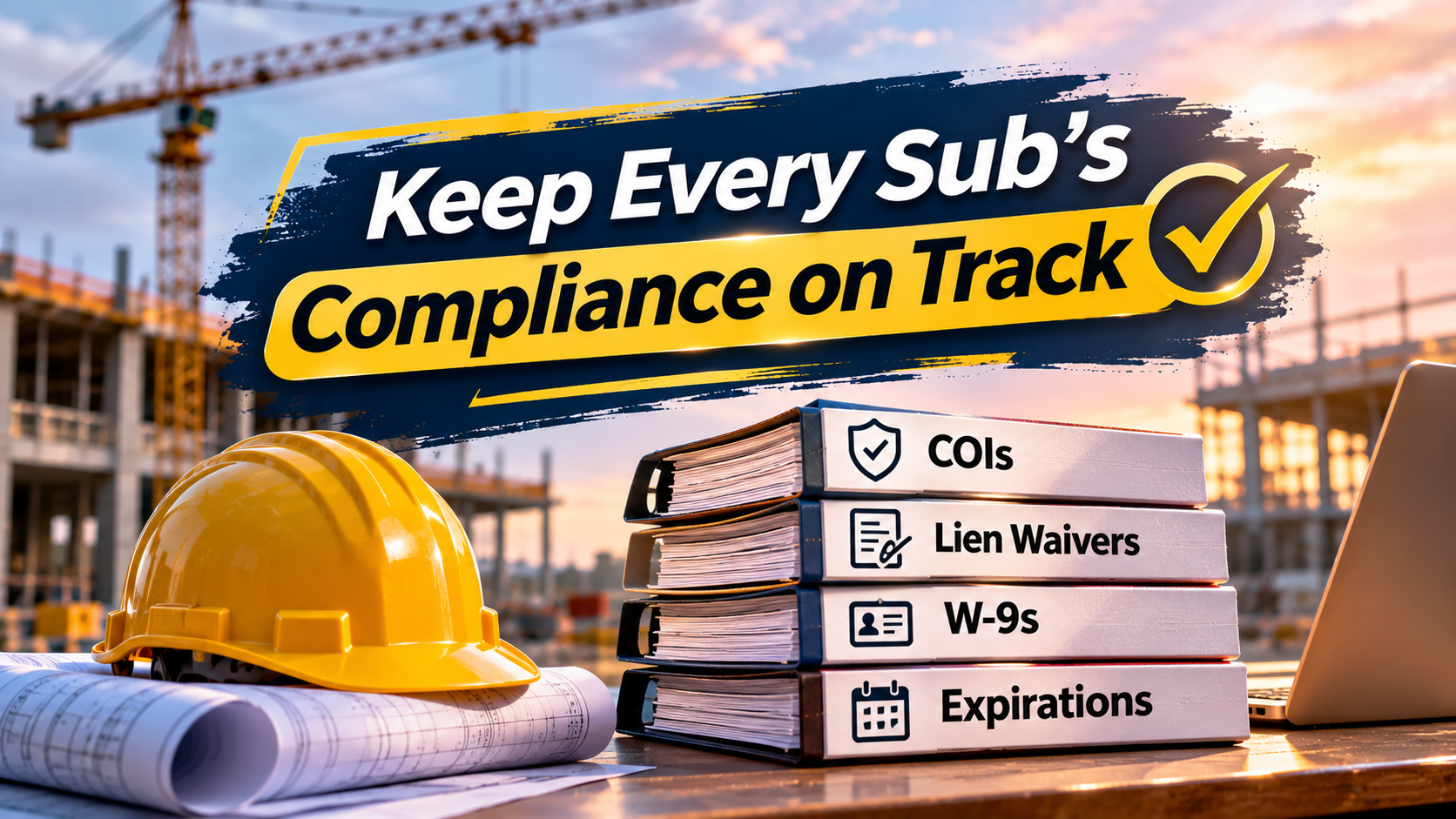
A general contractor with 12 subcontractors on one job is effectively running 12 small compliance programs: each has its own insurance, tax forms, contract, payment documents and deadlines. When nobody owns the tracking, missing paperwork tends to surface at the worst moment, when you need to release payment, close out a job or answer a claim.
That accumulating backlog is compliance debt: paperwork you didn’t collect or verify today that can cost you time, leverage or clarity later. A dedicated administrator can help keep the records current without taking legal or payment decisions out of your hands. Virtual Nexgen’s construction virtual assistants can support document collection, subcontractor follow-ups and project recordkeeping within your established process.
What paperwork should you track across a subcontractor’s job?
The most reliable approach is to track documents by job phase, not just by subcontractor. A sub may have a current insurance certificate on file, for example, but still need a project-specific endorsement or a payment-period waiver before a particular milestone.
Before hiring or mobilization
Set up a record for each subcontractor and project. Depending on your contract, trade and jurisdiction, your checklist may include:
- Business identity and signed subcontract, including scope and exhibits.
- License or registration details where required.
- Completed W-9.
- Certificate of insurance (COI), plus any required endorsements.
- Workers’ compensation documentation or an applicable exemption.
- Bonding or safety documents required by the project.
A COI is useful evidence of insurance, but it does not necessarily provide the rights stated in your subcontract. For example, a certificate alone may not establish additional-insured status; the relevant endorsement may need review. Your broker, insurer or construction counsel should resolve questions about coverage and wording.
A virtual assistant (VA) can request documents, record receipt, note what is missing and route exceptions to the right reviewer. The GC or designated qualified reviewer decides whether the subcontractor is cleared to mobilize.
While the project is active
Documents keep changing after onboarding. Track policy expiration dates, updated licenses, change-order records and any notices or project-specific requirements. For public work, requirements may also include prevailing-wage or certified-payroll submissions, depending on the contract and applicable rules. A VA can maintain a deadline calendar and flag missing submissions; payroll certification and compliance decisions belong with the responsible payroll specialist or project leadership.
State and project requirements can also affect preliminary notices. In some places, a subcontractor or supplier may need to provide a notice within a specific timeframe to preserve potential rights. The exact rule depends on the location, work and parties involved, so use a state- and project-specific checklist approved by your counsel.
At payment
Payment paperwork needs to match the payment event. Track the pay application, payment amount, retainage, waiver type, work-through date and any required lower-tier releases. If the job has multiple subs and suppliers beneath the prime subcontractor, record which downstream documents your contract or project process requires.
A VA can chase documents and enter key details into your system. Your authorized approver should decide whether the payment package meets the GC’s requirements and whether payment can be released.
At closeout
Before final payment or retainage release, track final waivers, warranties, manuals, as-builts, punch-list completion and any remaining supplier or lower-tier releases required by the contract. Keep payment records organized throughout the year so your finance team or tax preparer can review subcontractor reporting needs in January, including any required Form 1099-NEC filings.
The IRS explains its rules for independent contractors and information returns. Collecting a W-9 is an important recordkeeping step, but a form or contract label alone does not determine whether someone is legally an independent contractor. Ask your tax or legal adviser about classification questions.
What is the lien-waiver trap for GCs?
A lien waiver is a document that may release some or all of a claimant’s lien rights for specified work, payment or period. The distinctions matter:
- A conditional waiver generally takes effect only if the stated payment is received or clears, according to its terms.
- An unconditional waiver may take effect when signed, so signing it before payment is safely received can create risk.
- A progress waiver relates to a particular payment period or stage.
- A final waiver relates to final payment or completion, subject to the applicable form and rules.
The waiver should match the payee, project, amount and payment period. The exact legal effect, required wording and timing vary by state. California, for example, provides different forms for conditional and unconditional waivers for progress and final payments. Review the California Contractors State License Board’s waiver forms as an example, not as a national template.
A VA can log which waiver was received, compare its stated amount and through-date against your payment records, and follow up on missing forms. The GC or construction counsel should approve the form, determine its legal effect and decide whether it is sufficient for the payment. Don’t ask an assistant to interpret a waiver or choose a form based on a document’s title alone.
How do you prevent an insurance certificate from expiring unnoticed?
A COI can be current when collected and out of date before the subcontractor finishes work. If an incident occurs during a coverage gap, the timing and policy details may become important. A simple expiration calendar helps you spot the risk before a project depends on it.
Give the administrator a written process: record each policy type and expiration date; request renewal documents ahead of expiry; follow up on outstanding renewals; and escalate any lapse, name mismatch, missing endorsement or unclear coverage term. The assistant tracks and flags. Your broker, insurer or designated reviewer verifies the coverage and approves any exception.
What can a construction VA manage, and what should stay with you?
A useful boundary is simple: the VA tracks, chases, files and flags; the GC or qualified adviser interprets, approves and decides.
A VA can maintain a subcontractor matrix, request documents, monitor dates, organize versions, record follow-ups and prepare a weekly exception report. A VA should not interpret contract language, accept a subcontractor’s assurance as proof of coverage, make legal determinations, certify payroll or approve a payment based on their own judgment.
Keep access limited to what the role needs. Use approved accounts and permissions, store documents in your designated system, and create a clear escalation route for anything that is missing, inconsistent, expired or disputed. A VA supports your controls; they do not replace them.
How can you set up a subcontractor compliance process in 30 days?
- Week 1: Build the matrix. Create one record for each subcontractor on each project. Include the project state, scope, contract status, required documents, expiration dates and internal owner.
- Week 2: Define requirements and ownership. Have your project lead, finance team and counsel identify which checklist applies to each job. Mark who collects, who verifies and who approves.
- Week 3: Connect waivers to payment. Add waiver checks to your existing payment workflow. Specify who matches the waiver to the payee, amount, period and payment status, and who authorizes release.
- Week 4: Start a weekly review. Review expiring policies, overdue documents, payment-package gaps and unresolved exceptions. Assign each item an owner and due date.
Begin with one active project if you need to test the workflow. Fix unclear handoffs before applying the process across your whole subcontractor roster.
Which metrics show whether the system is working?
Keep reporting light enough that your team will use it. Track:
- COI gap count: active subcontractors with missing, expired or unresolved insurance records.
- Waiver-at-payment rate: payment packages with the required waiver documentation ready at review.
- Collection time: average days between a request and receipt of a complete document.
- 1099 readiness: subcontractor tax records and payment data organized for finance review.
- Hours returned: time your PMs and owners spend on follow-ups before and after the process change.
Measure these consistently. A declining backlog and fewer last-minute escalations are useful signals, but they don’t replace professional review of legal, insurance or tax requirements.
What does subcontractor compliance support cost?
The U.S. Bureau of Labor Statistics reported a $21.53 median hourly wage for customer service representatives in May 2025. That occupation is a broad labor-market comparison, not a construction-compliance wage or a direct measure of total hiring cost. Review the BLS wage information alongside your own role requirements.
Virtual Nexgen has published an $8-per-hour figure for VA support. Treat that as a published company figure, not a universal or guaranteed quote; confirm the current rate, hours, scope and onboarding requirements directly. The right comparison is the full cost and coverage of the support you need, alongside the time your project team can return to site and delivery work.
Frequently asked questions
What subcontractor paperwork can a VA manage?
A VA can request, organize and track documents such as W-9s, COIs, licenses, contracts, expiration dates, payment waivers and closeout records, using your approved checklist. Your team should verify requirements and approve exceptions.
Can a VA handle lien waivers?
A VA can track waivers, match recorded details to payment records and follow up on missing forms. The GC or counsel should determine the correct form, legal effect and timing because rules vary by state and project.
Can a VA track insurance certificates?
Yes. A VA can record policy dates, request renewals and flag missing or inconsistent documents. A qualified reviewer, broker or insurer should verify coverage and endorsements.
What does “compliance debt” mean for a GC?
Compliance debt is the accumulating backlog of subcontractor paperwork that has not been collected, checked or followed up. It often becomes visible when payment, closeout or an audit requires complete records.
How do you keep control of subcontractor decisions?
Define what the VA can do, who verifies documents, who approves exceptions and who releases payment. Use role-based access and a clear escalation process; keep legal, coverage and payment decisions with authorized people.
Make subcontractor paperwork a managed workflow
If subcontractor follow-ups are pulling project managers away from the work, add an owner to the process, not another informal reminder. Virtual Nexgen provides dedicated, construction-trained VAs who can support document tracking and follow-ups within your established procedures. Explore our construction virtual assistant services or book a 30-minute call to discuss the workflow you want covered.
For related construction operations guidance, see our construction scaling guide and virtual assistant guide for construction companies.
Sources
Work With Virtual Nexgen Solutions
If your business needs dependable virtual assistant support, Virtual Nexgen Solutions can provide support around your existing workflow. Book a discovery call today.
Get in Touch Now!