
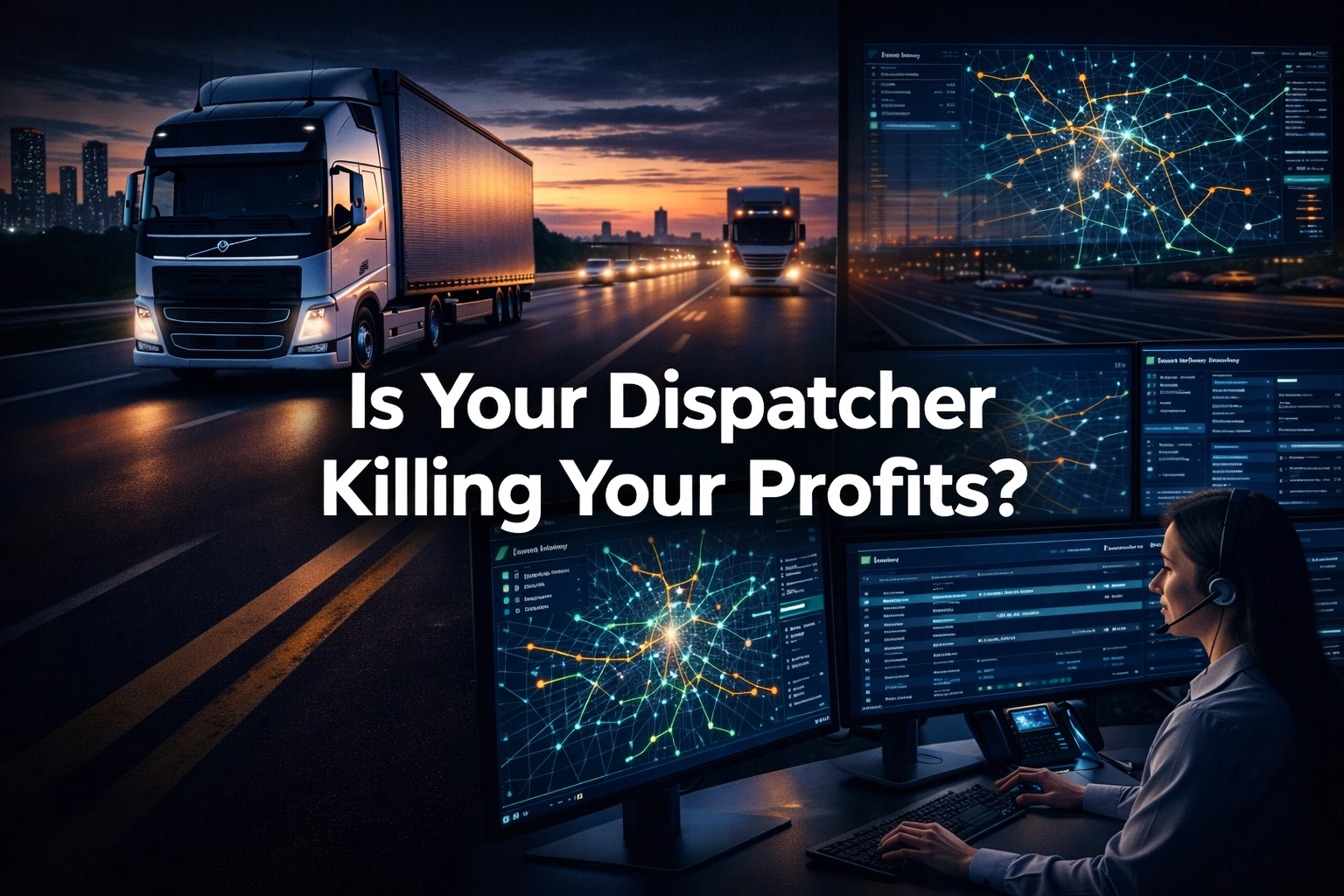
The logistics industry is a game of margins, minutes, and constant movement. If your trucks aren't moving, you're losing money. But even when they are moving, many fleet owners and owner-operators find themselves bleeding profit through a thousand small cuts in their dispatch operations.
Most trucking companies believe the answer to inefficient dispatching is to work harder or hire more local staff. However, the true cost of an in-house dispatcher in 2026: including salary, benefits, office space, and payroll taxes: often balloons to over $85,000 per year. When you factor in the "hidden costs" of missed loads, manual errors, and high turnover, that number skyrockets.
If your dispatching feels like a constant fire drill, you don't need more "hustle": you need a structural shift. Here are the 10 reasons your trucking dispatch isn't working and how a specialized Logistics Virtual Assistant can turn your operation into a high-margin machine.
1. The "After-Hours" Profit Leak
Freight doesn’t stop moving at 5:00 PM. Many traditional dispatching setups operate on a standard 9-to-5 schedule, leaving a massive gap in coverage during the evenings and weekends. When a driver has a breakdown at 2:00 AM or a high-paying "hot load" hits the board on a Saturday morning, who is there to pick up the phone?
If you're relying on your drivers to self-dispatch after hours or trying to handle it yourself, you’re losing money. A Logistics Virtual Assistant provides 24/7 coverage, ensuring that your fleet is supported and your revenue never sleeps.
2. Manual Load Matching is Killing Your Efficiency
In 2026, relying on basic spreadsheets or memory to match loads is a recipe for disaster. Many dispatchers spend hours manually scanning load boards like DAT or Truckstop without a systematic approach. This leads to "deadhead" miles: the ultimate profit killer.
A Trucking Dispatch VA is trained to use advanced Transport Management Systems (TMS) to proactively map out backhauls before the driver even reaches the first destination. They don't just find "a load"; they find the right load that minimizes empty miles.
3. The Burden of High Overhead
The math is simple: a local dispatcher expects a high salary, health insurance, 401k matching, and a physical desk. At Virtual Nexgen Solutions, we provide highly trained, industry-specific Logistics VAs for just $8 per hour.
When you compare a $30/hour loaded cost for an in-house employee to an $8/hour specialized professional, the savings alone can pay for the fuel of an entire truck for a year. Reducing overhead is the fastest way to increase your net profit without adding a single new customer.
4. Scalability Bottlenecks
Every time you add five trucks to your fleet, you typically need to hire another dispatcher. This creates a "stair-step" growth problem where your expenses jump significantly before your revenue catches up.
Virtual Assistants offer elastic scalability. You can scale your dispatch team up or down based on seasonal demand or fleet growth without the drama of local hiring, training, and potential layoffs. This agility is what separates top-tier carriers from those that stay small.
5. Weak Proactive Broker Management
Effective dispatching is about relationships. Many dispatchers are "order takers": they wait for a load to look good and then call. A top-tier Logistics Virtual Assistant acts as a dedicated account manager.
They spend their day building relationships with brokers, checking credit scores, and negotiating detention and lumper fees upfront. By being proactive rather than reactive, they secure better rates and ensure you're working with high-quality partners who pay on time.
6. Fatal Data-Entry and Compliance Errors
A single mistake in an ELD (Electronic Logging Device) report or a typo in a Bill of Lading (BOL) can lead to massive fines or delayed payments. In-house dispatchers, often overwhelmed by phone calls, are prone to these "small" errors.
A dedicated VA focuses on the administrative backbone. They handle the heavy lifting of data entry into your TMS, ensuring that every load is documented, every certificate of insurance is current, and every invoice is sent the moment the proof of delivery is uploaded. For more on how administrative support changes business outcomes, see our guide on administrative engines for firms.
7. High Employee Turnover and Burnout
Dispatching is one of the most high-stress jobs in the logistics world. The burnout rate for local dispatchers is incredibly high, leading to a constant cycle of hiring and training. Every time a dispatcher leaves, they take their broker relationships and operational knowledge with them.
Remote logistics professionals often see these roles as high-status, long-term careers. Because they work in a structured environment with specialized SOPs, they provide the consistency your drivers need to feel supported.
8. Lack of 24/7 Visibility
Do you know where your trucks are right now? Do your customers? If you have to call three different people to get a status update, your dispatching is broken.
A Logistics VA acts as a central hub for visibility. They monitor GPS tracking, update customer portals in real-time, and provide you with daily reports on fleet performance. This transparency builds trust with your shippers, leading to more direct-freight opportunities and fewer "where's my load" phone calls.
9. Failure in Route Optimization
Fuel is one of your largest expenses. If your dispatchers aren't considering topography, weather, and fuel stop pricing, they are throwing money out the window.
A specialized VA uses routing software to guide drivers through the most fuel-efficient paths, suggesting optimized fuel stops where your corporate discounts are deepest. They ensure that drivers avoid unnecessary tolls and stay compliant with FMCSA regulations, reducing the risk of costly violations.
10. Rising Customer and Driver Churn
Drivers leave companies when they feel unsupported or when their paycheck is inconsistent due to poor load planning. Shippers leave when communication breaks down.
A Logistics VA solves both by providing a constant point of contact. They handle the "soft skills" of dispatching: checking in on drivers, resolving facility issues, and keeping shippers informed. When your drivers are making more money with less stress, they stay. When your shippers receive proactive updates, they renew.
The Solution: Virtual Nexgen’s 24/7 Logistics Engine
At Virtual Nexgen Solutions, we don’t just provide "virtual assistants"; we provide a specialized logistics infrastructure. Our VAs are trained in the specific workflows of the US trucking industry, from understanding HOS (Hours of Service) to navigating complex load boards.
For just $8 per hour, you get a dedicated professional who handles:
- Full-cycle dispatching and load booking.
- Broker negotiations and credit checks.
- 24/7 driver support and check-calls.
- TMS management and invoicing.
- Document management (BOLs, Rate Cons, Insurance).
Stop losing freight to "sleepy" dispatchers or high overhead. It’s time to modernize your fleet's operations.
Book a 30-minute strategy call here to scale your fleet today.
Frequently Asked Questions (FAQs)
How much does a Logistics Virtual Assistant cost?
At Virtual Nexgen Solutions, our specialized Logistics VAs are available at a flat rate of $8 per hour. There are no hidden fees, health insurance costs, or payroll taxes for you to worry about.
Can a VA handle broker negotiations?
Yes. Our VAs are trained in market rate analysis and negotiation tactics. They check broker credit scores and ensure that all accessorial charges (detention, layover, etc.) are included in the rate confirmation before the load is accepted.
Do they work in my time zone?
Absolutely. We provide 24/7 coverage options. Whether you need a dispatcher for the night shift, weekend coverage, or standard US business hours (EST/CST/PST), we align the VA's schedule with your fleet's needs.
What software are the VAs familiar with?
Our VAs have experience with major industry tools including DAT, Truckstop, McLeod, ProTransport, Samsara, and various ELD platforms. We can also train them on your specific proprietary systems.
Is there a contract or commitment?
We believe in earning your business every day. While we focus on long-term partnerships, we offer flexible terms that allow you to scale your team as your fleet grows or changes.
How do they communicate with my drivers?
Communications can be handled via phone, SMS, WhatsApp, or through your TMS mobile app. Our VAs are proficient in English and trained in professional driver communication to ensure clear instructions and high morale.
Can they help with safety and compliance?
Yes. VAs can monitor ELD logs for violations, track upcoming vehicle maintenance, and ensure that all driver qualification files are up to date, helping you maintain a high CSA score.