

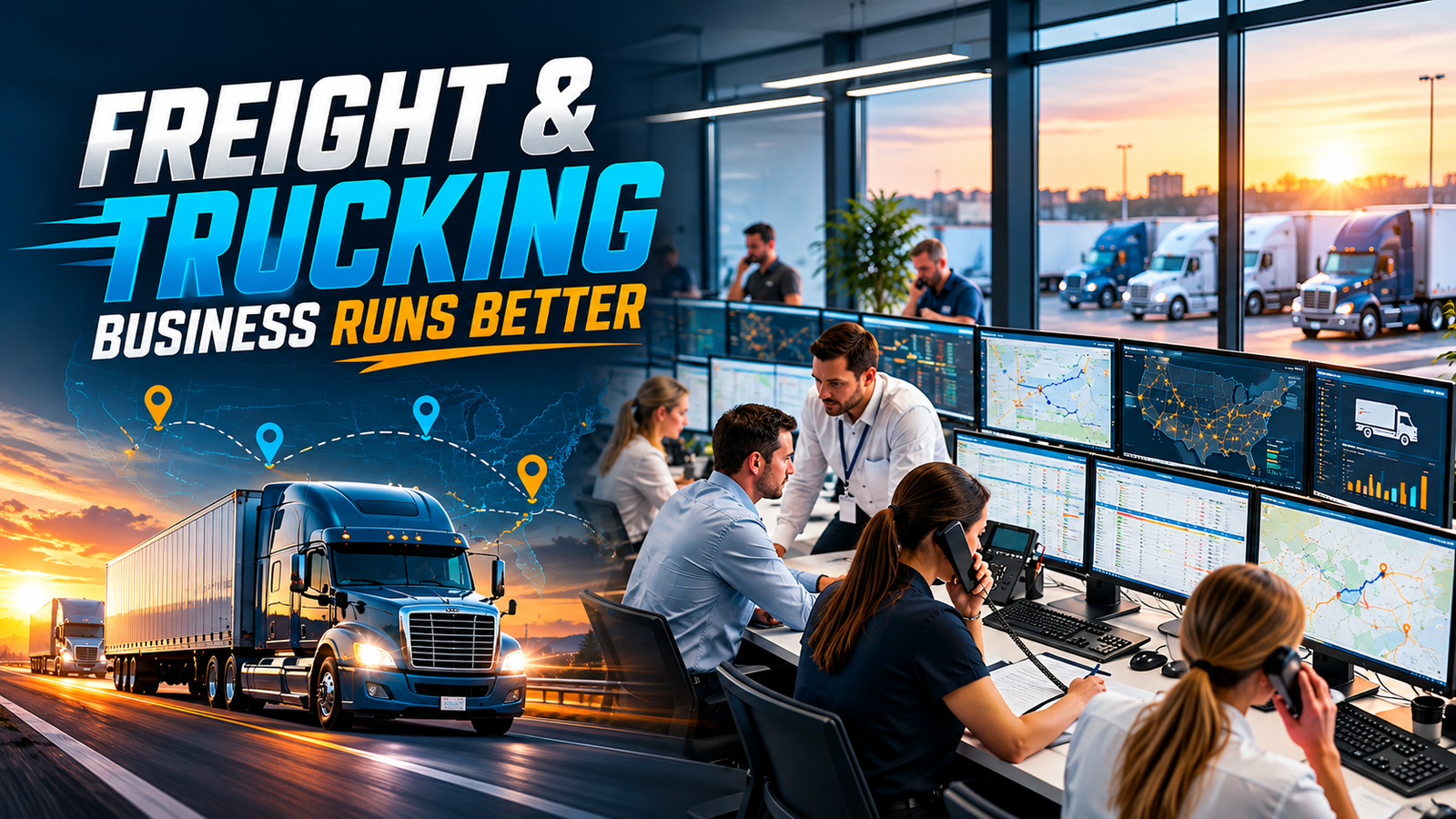
Freight and trucking companies across the United States operate in a fast-moving environment where dispatch coordination, driver communication, load documentation, invoicing, and customer updates must be handled consistently.
For trucking business owners, fleet managers, and freight brokers, managing these responsibilities can create a significant administrative workload. Delayed paperwork, missed follow-ups, and incomplete records can make it harder to maintain visibility across daily operations.
A dedicated trucking virtual assistant (VA) helps manage dispatch administration, organize load documents, support invoicing, and coordinate routine communications. This gives transportation teams more time to focus on fleet operations, customer relationships, and business development.
Why Trucking Companies Need Virtual Assistant Support
Trucking businesses handle multiple operational processes simultaneously. Each load may involve dispatch instructions, driver details, pickup and delivery appointments, proof of delivery, customer updates, and billing documentation.
When these activities are managed across emails, spreadsheets, phone calls, and transportation software, keeping records current can become difficult.
A trucking virtual assistant provides administrative support to help organize these workflows and maintain accurate operational records.
Whether a company operates a small fleet, manages owner-operators, or coordinates freight across multiple states, a VA can help reduce the administrative burden on dispatchers and management teams.
Key Responsibilities of a Trucking Virtual Assistant
1. Dispatch Administration and Load Tracking
Dispatch teams need accurate information about loads, drivers, pickup appointments, delivery deadlines, and shipment status.
A trucking VA can assist with:
- Entering load information into transportation management systems.
- Updating dispatch boards and load trackers.
- Organizing driver and carrier information.
- Recording pickup and delivery appointment details.
- Sending approved dispatch instructions.
- Monitoring load status and flagging delays.
- Maintaining communication records.
A VA can also help organize information received from drivers and customers so dispatchers can quickly identify loads requiring attention.
Operational decisions, route changes, and safety-related matters remain with the authorized dispatch and management personnel.
2. Driver Communication and Appointment Coordination
Timely communication helps trucking companies coordinate pickups, deliveries, and schedule changes.
A virtual assistant can support routine driver communication by confirming appointments, sending reminders, recording status updates, and maintaining contact information.
Typical tasks include:
- Confirming pickup and delivery times.
- Communicating approved appointment details.
- Recording estimated arrival updates provided by drivers.
- Following up on missing status information.
- Updating internal dispatch records.
- Escalating delays or urgent issues to the dispatcher.
This support helps keep information organized without replacing the dispatcher's operational responsibilities.
3. Proof of Delivery and Freight Documentation
Freight documentation is essential for completing loads, supporting billing, and maintaining customer records.
A trucking VA can help collect, organize, and verify the administrative completeness of documents such as:
- Proof of delivery (POD).
- Bills of lading (BOL).
- Rate confirmations.
- Lumper receipts.
- Detention and layover documentation.
- Fuel and other approved expense receipts.
The VA can track missing paperwork and follow up with drivers, carriers, or customers.
For example, once a delivery is completed, the VA can check whether the required POD has been received, save it in the correct load folder, and update the shipment record.
This process helps reduce documentation gaps that can delay invoicing.
4. Invoicing and Accounts Receivable Support
Freight companies need organized billing workflows to ensure completed loads are invoiced and outstanding payments are monitored.
A trucking virtual assistant can support:
- Preparing invoices using approved load information.
- Matching PODs and rate confirmations to completed loads.
- Updating invoice records.
- Tracking outstanding customer payments.
- Sending payment reminders using approved templates.
- Maintaining accounts receivable reports.
- Organizing billing discrepancies for review.
A VA working with QuickBooks Online or a transportation management system can help keep billing records current.
Payment approvals, accounting decisions, and the resolution of complex billing disputes should remain with authorized personnel.
5. Carrier Setup and Compliance Administration
Trucking companies often need to collect and maintain carrier, driver, insurance, and other operational documentation.
A VA can help organize carrier onboarding records, track document expiration dates, maintain checklists, and request missing paperwork.
Depending on the company's procedures, this may include:
- Certificates of insurance.
- W-9 forms.
- Carrier agreements.
- Operating authority documentation.
- Driver qualification records, where authorized.
- Renewal and expiration reminders.
The VA can flag missing or expired documents for review. Regulatory determinations, safety decisions, and compliance approvals should remain with qualified personnel.
6. Customer Service and Freight Broker Support
Consistent communication helps trucking companies maintain strong relationships with shippers, brokers, and other logistics partners.
A virtual assistant can respond to routine inquiries using approved information, provide shipment updates, organize customer emails, and follow up on outstanding requests.
For freight brokers, a VA may also assist with carrier communication, load entry, document collection, and updating shipment milestones.
These administrative tasks help teams maintain visibility across shipments while experienced personnel handle negotiations, exceptions, and operational decisions.
Trucking Software a Virtual Assistant Can Support
A trucking VA can work with the software and communication systems already used by the company, including:
- DAT and Truckstop for authorized load-board administration.
- McLeod Software for transportation management workflows.
- Tailwind TMS for dispatch and freight operations.
- AscendTMS for shipment and carrier administration.
- Samsara for authorized fleet information and operational records.
- QuickBooks Online for invoicing and accounting administration.
- Microsoft Excel and Google Sheets for load tracking and reporting.
The exact responsibilities depend on the software, user permissions, company procedures, and the VA's training.
Benefits of Hiring a Trucking Virtual Assistant
More organized dispatch operations: Load details, appointments, and shipment updates are maintained consistently.
Improved document collection: Missing PODs, rate confirmations, and receipts can be identified and followed up on.
More consistent billing workflows: Completed loads can be prepared for invoicing without unnecessary administrative delays.
Reduced workload for dispatchers: Routine data entry, documentation, and communication tasks can be delegated.
Better operational visibility: Updated trackers and records help managers identify outstanding tasks.
Flexible back-office support: Companies can allocate administrative resources according to their operational needs.
Why Choose a Dedicated Trucking VA?
A dedicated trucking virtual assistant can become familiar with a company's dispatch procedures, documentation requirements, TMS platform, customer communication standards, and billing workflow.
This consistency can be valuable for trucking companies that need ongoing administrative support rather than occasional assistance.
At Virtual Nexgen Solutions, trucking virtual assistant services can be customized for dispatch administration, load tracking, POD collection, invoicing, carrier documentation, and customer communication.
Our dedicated support model helps transportation businesses establish repeatable administrative workflows, with onboarding structured around the company's software, SOPs, and operational requirements.
Conclusion
Trucking companies depend on accurate information, organized documentation, and consistent communication to manage daily operations.
A dedicated trucking virtual assistant can support dispatch administration, load tracking, document collection, invoicing, and routine customer follow-ups.
By delegating these recurring responsibilities, trucking companies and freight businesses can give their dispatchers and managers more time to focus on operational decisions, customer service, and business growth.
Ready to streamline your trucking back-office operations?
Partner with Virtual Nexgen Solutions for reliable, industry-focused Virtual Assistant support tailored to your business needs.