

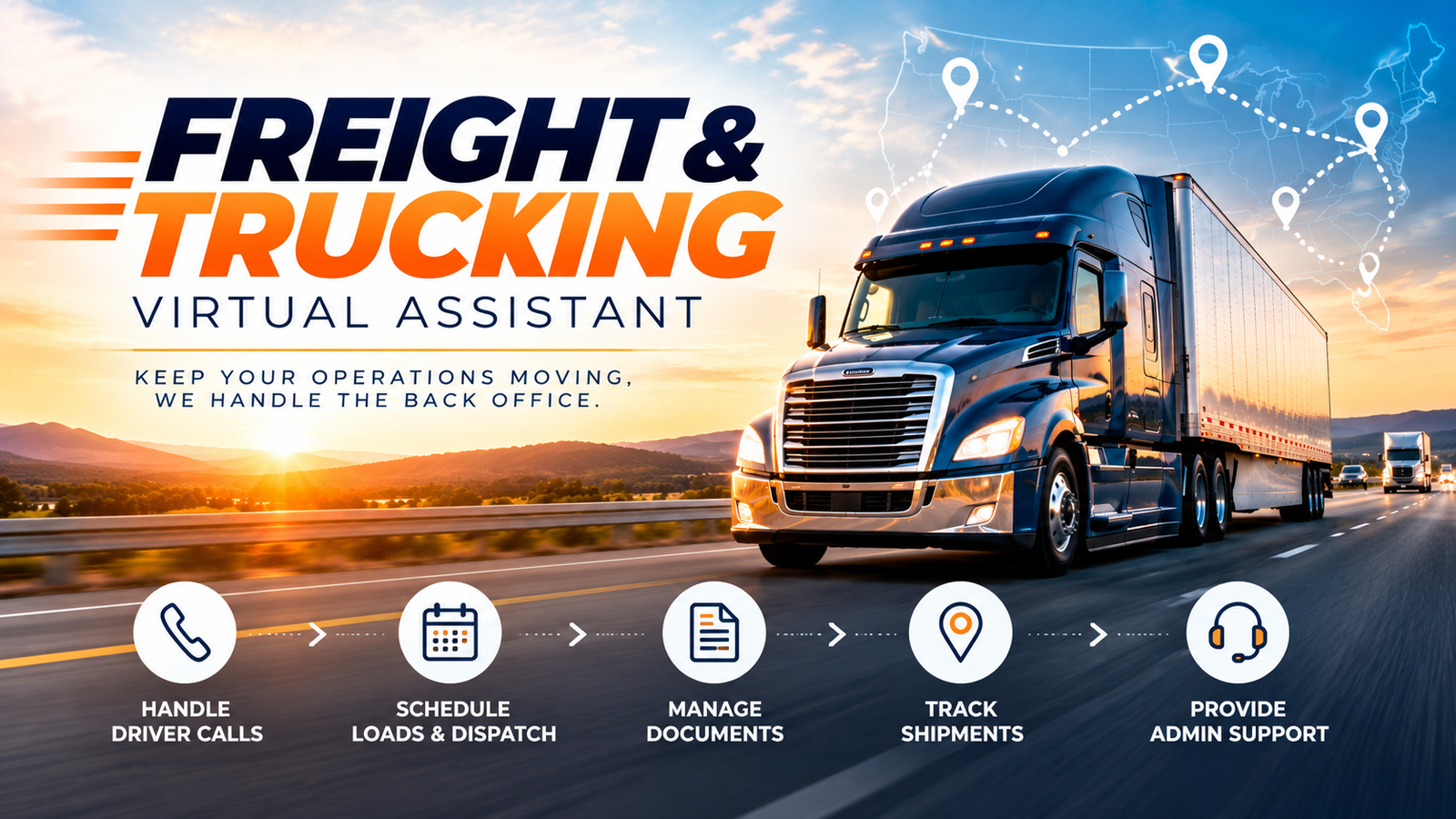
Trucking companies operate on schedules, loads, drivers, customers, paperwork, and communication.When administrative work starts consuming the time of dispatchers, owners, or operations managers, a dedicated Trucking Virtual Assistant can provide valuable back-office support.
A VA can assist with dispatch administration, load documentation, proof of delivery, invoicing support, customer communication, data entry, and other defined office responsibilities.
What Can a Trucking Virtual Assistant Do?
Depending on the carrier, broker, or 3PL's processes, a trucking VA can support:
- Load entry.
- Dispatch administration.
- Rate confirmation organization.
- Driver communication.
- Appointment tracking.
- Pickup and delivery coordination.
- POD collection.
- Document filing.
- Invoice preparation support.
- Billing data entry.
- Collections follow-up.
- Carrier paperwork.
- Customer communication.
- Spreadsheet management.
- Compliance administration.
- Email management.
- TMS updates.
The exact scope should always follow the company's SOPs.
Trucking TMS Software
Transportation companies increasingly rely on specialized transportation management systems.
McLeod Software, for example, provides TMS solutions for carriers, brokers, 3PLs, private fleets, and LTL operations. Its dispatching tools address load visibility, resource management, load planning, and execution.
McLeod's carrier solutions also include areas such as document management, compliance, driver communication, detention tracking, and financial processes.
A trained VA can support administrative activity within systems such as McLeod, DAT, Truckstop, TMW, Samsara, Motive, AscendTMS, and other platforms depending on the operation.
Dispatch Administrative Support
Dispatchers have to coordinate constantly with drivers, customers, brokers, shippers, receivers, and internal teams.
A VA can support the dispatcher by maintaining information such as:
- Driver availability.
- Load details.
- Pickup times.
- Delivery appointments.
- Load status.
- Customer information.
- Rate confirmations.
- POD status.
- Delivery documents.
The VA does not replace the dispatcher’s operational judgment. Instead, the VA handles defined administrative responsibilities around the dispatch process.
Proof of Delivery and Document Management
PODs are critical for freight billing.
A VA can monitor incoming documentation and organize:
- Bills of lading.
- Proofs of delivery.
- Rate confirmations.
- Lumper receipts.
- Detention documents.
- Fuel receipts.
- Accessorial documentation.
The VA can verify that required documents have been received according to company procedures and flag missing paperwork for the appropriate team member.
Invoicing and Collections Support
Trucking businesses need accurate paperwork before invoices can move through the billing process.
A VA can help:
- Organize completed loads.
- Verify documentation.
- Enter billing information.
- Prepare invoice packages.
- Track outstanding invoices.
- Maintain accounts-receivable spreadsheets.
- Follow up on approved collections processes.
Financial decisions and final accounting responsibilities should remain with authorized personnel.
Driver Communication Support
A trucking VA can assist with administrative communication involving drivers.
This may include:
- Sending load information.
- Confirming appointment details.
- Requesting missing documents.
- Following up on PODs.
- Updating dispatch records.
- Communicating administrative reminders.
Clear communication helps keep information moving between drivers and office staff.
Compliance Administration
Transportation companies have substantial documentation requirements.
Depending on the operation, a VA can help organize and track:
- Driver documents.
- Vehicle documents.
- Insurance certificates.
- Carrier packets.
- Renewal dates.
- Supporting compliance paperwork.
- Administrative checklists.
The VA should follow the company's compliance procedures and escalate regulatory questions to the appropriate qualified personnel.
Who Can Use a Trucking VA?
Dedicated Virtual Assistant support can benefit:
- Truckload carriers.
- Freight brokers.
- 3PLs.
- Owner-operators.
- Fleet operators.
- Dispatch companies.
- Logistics companies.
- Expedited freight businesses.
- Specialized carriers.
Why Trucking Companies Choose Dedicated Support
Trucking is time-sensitive.
A missing POD can delay billing. An unorganized load file can create unnecessary follow-up. An outdated status can make it harder for the office to understand what is happening with a shipment.
A dedicated VA can take responsibility for defined administrative tasks and maintain consistency throughout the day.
Final Thoughts
A Trucking Virtual Assistant can become an extension of a transportation company's back office.
From dispatch administration and POD management to invoicing support, driver communication, compliance paperwork, and TMS updates, the right VA can help keep information organized and accessible.
For trucking companies that want their dispatchers and operations managers focused on transportation rather than repetitive administrative work, dedicated VA support can provide a practical additional resource.
Ready to strengthen your trucking back office with dedicated Virtual Assistant support?