
A burst pipe, a customer injury, or fire damage can quickly turn into a costly business problem. But insurance policies are not always easy to compare, especially when several coverages are packaged together.
A Business Owner’s Policy, or BOP, typically bundles general liability, commercial property, and business income coverage into one policy for eligible small businesses. It can be a convenient starting point, but it does not cover every business risk. What’s included, excluded, and available as an add-on depends on the insurer and the specific policy.
This guide explains what BOP insurance coverage usually means, what to check before buying, and where a BOP may need to be supplemented. It is general educational information, not insurance advice. Confirm coverage details with your licensed agent or insurer.
What does a BOP policy cover?
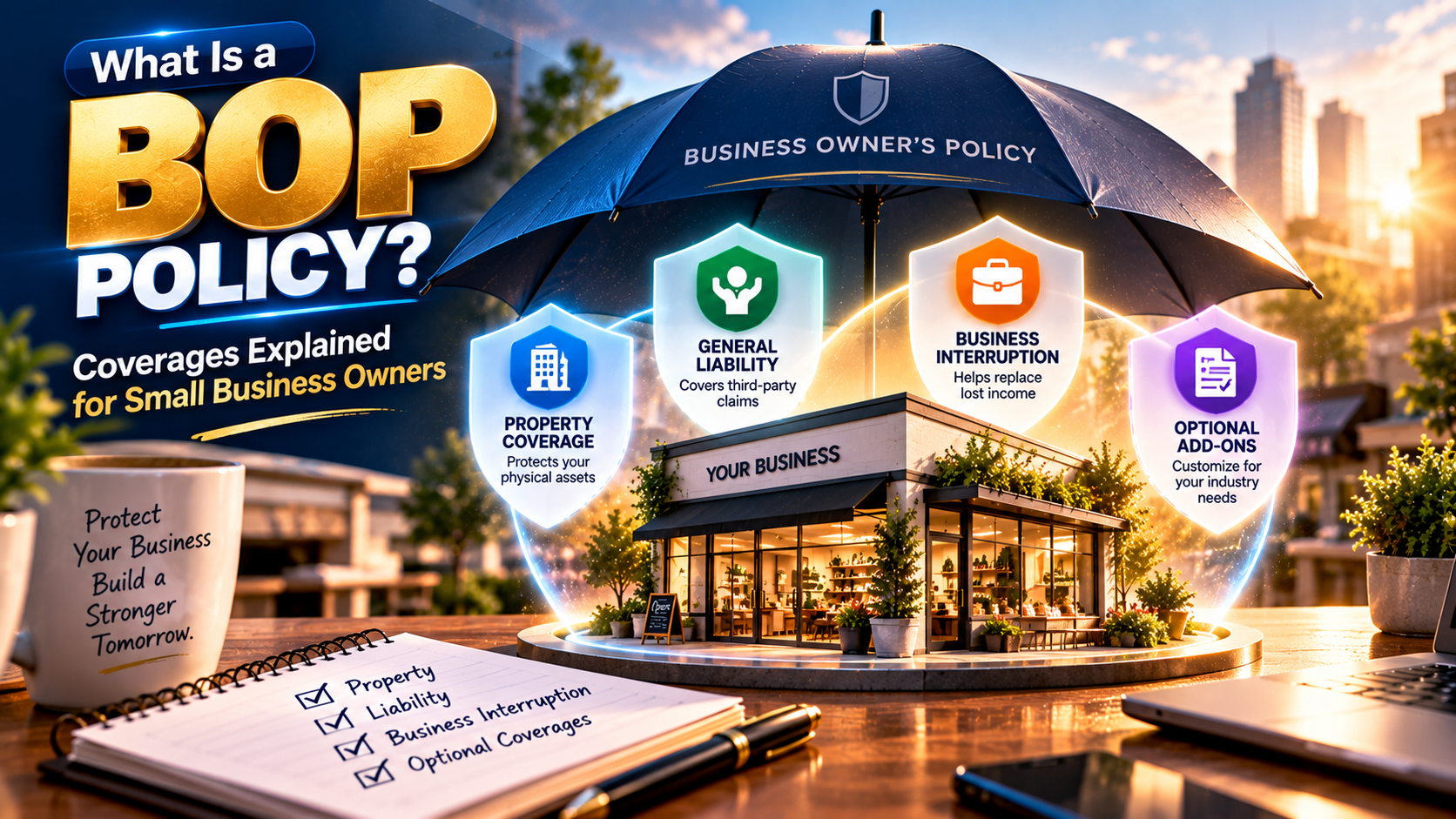
A business owner’s policy commonly combines three types of protection:
- General liability for certain third-party injury and property-damage claims.
- Commercial property for covered damage to business buildings, equipment, inventory, and other physical property.
- Business income, also called business interruption coverage, for certain financial losses when covered property damage disrupts operations.
The National Association of Insurance Commissioners (NAIC) describes BOPs as packages that generally include these coverages. The package can simplify purchasing, but the policy wording, not the label “BOP”, determines what applies.
1. General liability: What if someone else is injured or their property is damaged?
General liability coverage generally addresses certain claims made by other people against your business. For example, a customer might slip in your shop, or your employee might accidentally damage a client’s property while working.
Depending on the policy, general liability may help with covered medical expenses, legal defense costs, or settlements and judgments, subject to its terms, limits, and exclusions. It may also address certain personal or advertising injury claims.
It does not automatically cover every injury, lawsuit, or mistake. A claim connected to professional advice or services, for instance, may fall outside general liability and require a separate professional liability policy.
2. Commercial property: What if your business space or equipment is damaged?
Commercial property coverage generally applies to business property damaged by a covered cause of loss. Depending on your policy and circumstances, that property might include:
- Your building or leased improvements
- Computers, tools, furniture, and machinery
- Inventory, supplies, or other business contents
The cause of damage matters. A policy might cover some events while excluding or limiting others. Flood and earthquake damage, for example, are commonly not covered by a standard BOP unless coverage is added or arranged separately. Check the policy’s covered causes of loss, exclusions, deductibles, and any property-specific conditions with your agent.
3. Business income: What if covered damage forces you to pause operations?
If covered physical damage interrupts your business, business income coverage may help with certain lost income and continuing expenses during the recovery period. Depending on the policy, eligible expenses may include rent or other fixed costs, as well as some costs of temporarily operating elsewhere.
This is not general protection for every decline in revenue. Coverage usually depends on the type of property damage, the policy’s terms, and how long the covered interruption lasts. Ask your agent about the waiting period, restoration period, and any limits or exclusions that apply.
The NAIC explains that business interruption coverage is commonly included in a BOP and is generally tied to covered property damage. Read the NAIC’s overview of BOP and business interruption coverage for more detail.
What does a BOP usually not cover?
A BOP is a package, not an all-purpose policy. Businesses often need separate coverage for risks such as:
- Professional liability, or errors and omissions: Claims alleging a mistake, failure, or negligence in professional services.
- Workers’ compensation: Employee work-related injury or illness coverage. Requirements vary by state and business circumstances.
- Commercial auto: Liability or damage involving vehicles used for business.
- Cyber incidents: Certain costs or claims related to data breaches, cyberattacks, and other digital risks.
These coverages are commonly purchased separately, although availability and policy structures vary. A contractor using vehicles, a healthcare practice providing professional services, and an online retailer handling customer data may have very different insurance needs. Ask your agent to identify exposures a BOP does not address.
Are endorsements or add-ons available?
Sometimes. An endorsement changes or adds terms to a policy, and an insurer may offer optional coverage for risks not included in the standard package. Depending on the business and policy, you could ask about options for flood, earthquake, equipment breakdown, or other exposures.
Availability is not guaranteed, and an add-on may have its own conditions, exclusions, or limits. Ask the agent to explain what the endorsement covers and what it does not.
Who might need a BOP?
A BOP may be worth discussing if you run an eligible small business and need both liability and property protection. A neighborhood retail shop, bookkeeping firm, small office, or some home-services businesses might be candidates, depending on their operations and insurer requirements.
But eligibility is not automatic. A contractor’s tools, vehicles, work locations, and job types can create needs that a standard package may not address. A healthcare practice may need professional liability coverage. An e-commerce business may have cyber or product-related exposures to review.
BOP vs. general liability alone: What’s the difference?
General liability alone usually addresses certain third-party claims, but it does not typically provide the same package of commercial property and business income protection as a BOP. If your business owns equipment, inventory, or other property, or depends on a physical location to operate, ask whether liability-only coverage leaves important gaps.
A BOP may combine several protections in one policy, but that does not make it the right or complete option for every business. Compare the coverage, exclusions, and cost of the options with a licensed agent. The U.S. Small Business Administration’s business insurance guide recommends considering your risks and comparing policy terms and prices.
How do eligibility and pricing generally work?
There is no single BOP eligibility rule that applies to every insurer. Insurers may consider your industry, business activities, location, premises, property values, revenue, claims history, and the types of coverage you request. Businesses with higher or more specialized risks may need different or additional coverage.
Pricing also varies. Rather than comparing premiums alone, ask what each quote covers, what deductibles apply, and whether the policies use the same assumptions about your business and property. A lower price is not a useful comparison if important protections differ.
What should you ask your agent before choosing a BOP?
Bring clear information about what your business does, where it operates, what property it owns or leases, and how it serves customers. Then ask:
- Which general liability, property, and business income coverages are included in this quote?
- What causes of property damage are covered, excluded, or subject to special conditions?
- How is business income coverage triggered, and what waiting and restoration periods apply?
- Are flood, earthquake, equipment breakdown, or other endorsements available and relevant to my operations?
- Do I need separate professional liability, workers’ compensation, commercial auto, or cyber coverage?
- What changes in my business should prompt me to review or update the policy?
Review the actual policy documents with your agent. A quote summary may not explain every condition or exclusion.
How insurance agencies can keep BOP-related service work moving
For agencies that sell BOP policies, service work can build up around quote follow-ups, certificate-of-insurance requests, policy service inquiries, document collection, and renewals. A dedicated administrative assistant can help track requests, organize information, send approved reminders, and update records according to the agency’s procedures.
That support should not replace licensed judgment. Coverage explanations, recommendations, policy changes, and other activities requiring a license or professional authority should remain with appropriately qualified agency staff. Clear access controls, documented workflows, and review checkpoints help keep administrative support within its intended scope.
Virtual Nexgen Solutions’ insurance virtual assistants support insurance agencies with tasks such as lead follow-up, policy administration, certificate request coordination, and renewal follow-ups. Learn more about insurance policy administrative support, or book a conversation about your agency’s workflow.
Frequently asked questions
Is a BOP policy the same as general liability insurance?
No. A BOP generally packages general liability with commercial property and business income coverage. General liability alone usually does not provide that same property and interruption package.
Does a BOP cover business interruption?
Many BOPs include business income or business interruption coverage, but it generally applies only when the policy’s conditions are met, often involving covered physical property damage. Confirm the trigger and other terms in your policy.
Does a BOP cover professional mistakes?
Usually, professional liability is not included as standard BOP coverage. Ask a licensed agent whether your work requires a separate errors and omissions or professional liability policy.
Can a contractor get a BOP?
Some contractors may qualify, but eligibility and suitable coverage depend on the contractor’s operations, property, vehicles, and other risks. Ask an agent whether a BOP fits your work and what separate policies or endorsements may be needed.
A BOP can be a practical way to package essential business coverages, but it is not a substitute for reviewing your specific risks. Ask a licensed agent or insurer to explain what your policy covers, what it excludes, and what additional protection your business may need.
Educational notice: This article provides general information, not insurance advice or a coverage recommendation. BOP eligibility, coverage details, exclusions, and endorsements vary by insurer, policy, state, and business. Confirm specifics with your licensed a
Work With Virtual Nexgen Solutions
If your business needs dependable virtual assistant support, Virtual Nexgen Solutions can provide support around your existing workflow. Book a discovery call today.
Get in Touch Now!