
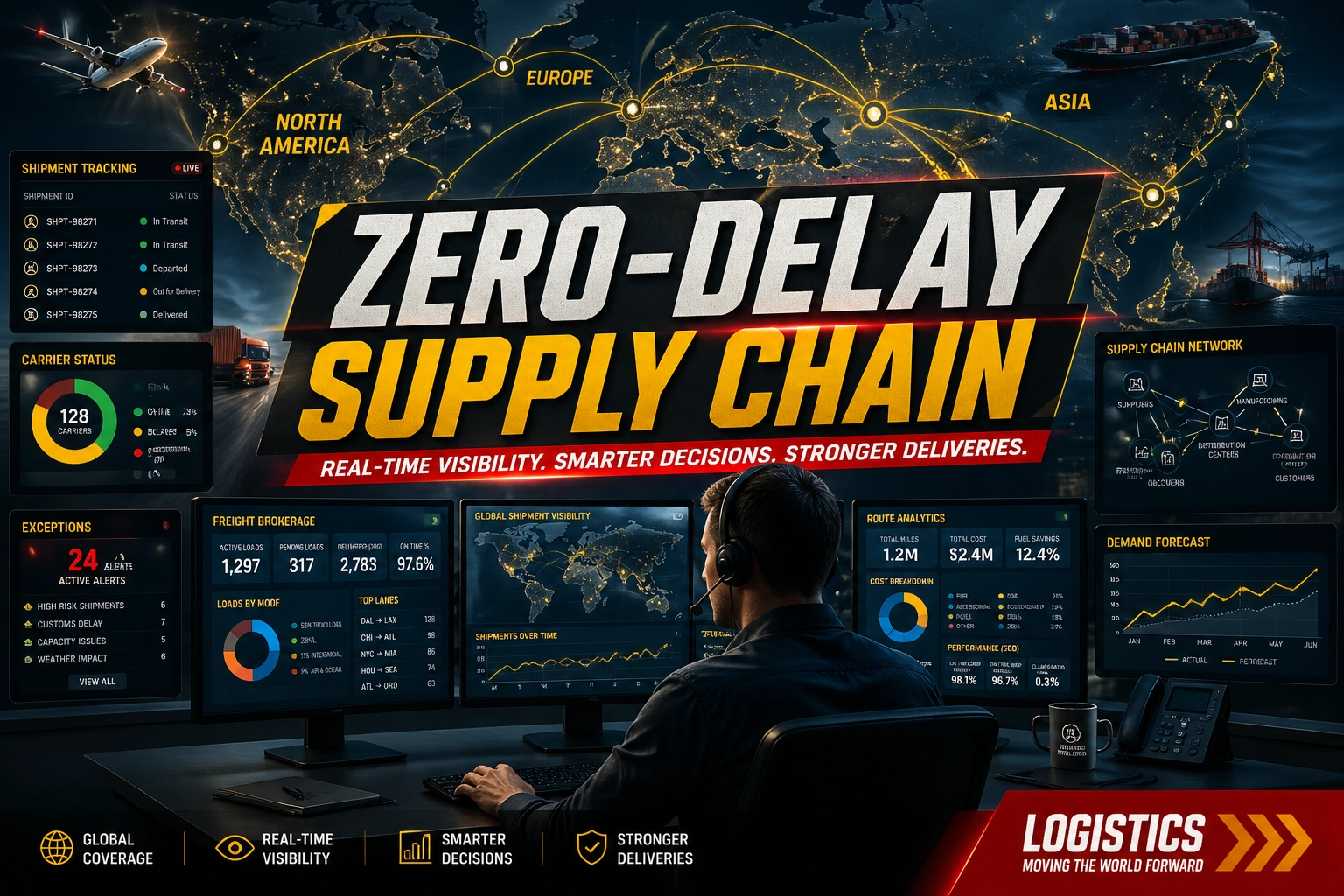
The modern supply chain runs on speed, visibility, and disciplined follow-through. In 2026, that pressure has intensified for 3PLs, freight brokerages, and supply chain teams. Shippers expect instant updates. Carriers expect clean communication. Finance teams expect precise documentation. One delay in follow-up, one missed carrier packet, or one unresolved claim can create admin debt that spreads across the entire operation.
That is why the demand for a Logistics Virtual Assistant has surged. A specialized Freight Broker VA or 3PL Virtual Assistant gives your team the administrative engine required to support a zero-delay supply chain. Instead of forcing brokers and operations leaders to chase paperwork, track exceptions, and manage inbox clutter, a trained VA handles the daily operational load that protects margin and service quality.
For logistics companies competing in volatile markets, this is no longer a nice-to-have. It is a strategic operating layer.
What Is a Logistics Virtual Assistant?
A Logistics Virtual Assistant is a trained remote operations professional who supports freight movement, documentation, carrier coordination, shipment visibility, billing workflows, and customer communication.
In practical terms, this person helps your brokerage or 3PL keep loads moving without allowing back-office friction to slow execution. A Freight Broker VA supports brokers, dispatchers, carrier sales reps, and operations managers. A 3PL Virtual Assistant extends that support across warehousing coordination, client reporting, POD management, claims, and exception handling.
Use a logistics VA to standardize repetitive tasks, close communication gaps, and reduce profit leakage caused by avoidable delays.
The Zero-Delay Supply Chain: Why Logistics Teams Need VAs in 2026
The highest-performing supply chain teams in 2026 are not simply moving more freight. They are reducing lag across every operational handoff.
That means:
- Confirm loads faster
- Vet carriers faster
- Track shipments faster
- Recover PODs faster
- Resolve claims faster
- Invoice faster
Every missed step creates cost. Every late status update creates risk. Every unbilled load or missing document becomes profit leakage.
A VA helps remove that lag.
While your licensed brokers, carrier reps, and account managers focus on pricing strategy, shipper relationships, and capacity decisions, your logistics VA handles execution support with consistency. This matters even more when markets tighten and every basis point in margin counts.
According to the Federal Motor Carrier Safety Administration, carrier compliance and operating authority checks remain foundational for safe transportation partnerships. Meanwhile, logistics visibility platforms and digital shipment monitoring continue to shape customer expectations for real-time updates across the supply chain.
The 6 Daily Pain Points Slowing 3PLs and Freight Brokerages
Every logistics operation faces some version of these six daily issues:
- Carrier onboarding bottlenecks that delay tendering and create capacity gaps.
- Endless check calls and status requests that consume broker time.
- Missing PODs, BOLs, and rate confirmations that delay billing.
- Slow claims handling that frustrates shippers and weakens trust.
- Margin compression from weak rate discipline and poor documentation follow-up.
- After-hours coverage gaps that leave loads exposed when problems happen overnight.
Ignore these issues and admin debt compounds quickly. Teams burn out. Service levels drop. Clients notice. Margins thin out.
10 Specific Tasks a Logistics Virtual Assistant Can Handle
A trained 3PL Virtual Assistant can own or support these high-value workflows:
- Carrier onboarding and packet review
- MC, DOT, insurance, and authority verification
- Rate confirmation preparation and load entry
- Real-time shipment tracking and milestone updates
- Check calls and exception escalation
- POD, BOL, lumper, and detention document collection
- Claims intake, filing support, and follow-up
- Carrier invoice review and billing support
- Shipper status communication and after-hours inbox monitoring
- KPI reporting for on-time performance, claims ratio, and carrier compliance
These are not side tasks. These are the administrative mechanics that keep a brokerage or 3PL stable at scale.
The Logistics Command Center: 7 Systems for 24/7 Supply Chain Efficiency
A zero-delay operation depends on systems, not heroics. Build your logistics command center around these seven workflows.
1. Carrier Onboarding
Screen new carriers quickly and consistently. Verify authority, insurance, W-9, and contact data before dispatch. Keep documents organized and searchable.
2. Rate Negotiation Support
Prepare lane history, carrier benchmarks, and target buy rates before the broker negotiates. Maintain a current preferred carrier database.
3. Real-Time Tracking
Monitor shipments through TMS data, tracking tools, email updates, and direct driver communication. Flag delays before the customer asks.
4. Claims Processing
Capture incident details immediately. Log timelines, collect delivery exceptions, gather photos, and track communication until closure.
5. Billing and Invoicing
Recover PODs fast. Match documents to load records. Push complete files to accounting without delay to protect cash flow.
6. Customer Communication
Send clean updates at pickup, in transit, delay, arrival, and delivery milestones. Maintain one source of truth across your inbox and TMS.
7. After-Hours Coverage
Keep the operation responsive beyond standard office hours. Use a VA team structure to maintain 24/7 reliability across time zones.
This is where Virtual Nexgen Solutions’ Integration-First approach matters. Instead of forcing your team into a brand-new process, Virtual Nexgen Solutions plugs trained logistics VAs into your current workflow, communication channels, SOPs, and system stack, then refines execution from there.
5 Core Logistics Tools a Specialized VA Should Know
A serious logistics VA should be comfortable working inside the systems your team already uses. Common tools include:
- DAT for load boards and market visibility
- Truckstop for posting, carrier search, and lane activity
- McLeod Software for TMS-driven brokerage workflows
- Tai TMS for 3PL and freight operations management
- Project44 for shipment visibility and status monitoring
- FourKites for real-time supply chain tracking
A strong VA should also adapt quickly to your EDI workflows, document portals, email systems, shared SOP libraries, and accounting handoff processes.
12 Tactical SOPs for a Zero-Delay Supply Chain
Below are 12 action-first SOPs a Freight Broker VA or Logistics Virtual Assistant can run daily.
SOP 1: Vet a New Carrier
- Pull the MC and DOT number.
- Verify authority status in FMCSA.
- Check insurance limits and expiration dates.
- Review safety rating and inspection history.
- Confirm business contact details.
- Save all files in the carrier profile.
- Flag mismatches immediately.
SOP 2: Process Carrier Onboarding Packets
- Receive packet and date-stamp it.
- Confirm W-9, COI, notice of assignment, and operating authority.
- Review paperwork for missing signatures.
- Request corrections the same day.
- Upload approved files to the TMS.
- Mark carrier as ready only after full verification.
SOP 3: Prepare a Rate Negotiation File
- Pull lane history.
- Review current market trends.
- Identify target buy rate and walk-away number.
- List backup carriers.
- Note special equipment or service requirements.
- Hand the file to the broker before outreach begins.
SOP 4: Enter and Confirm a New Load
- Create the load in the TMS.
- Enter pickup and delivery details exactly.
- Attach shipper notes and appointment windows.
- Upload rate confirmation.
- Send confirmation to carrier.
- Verify receipt before closing the task.
SOP 5: Run Real-Time Tracking
- Check tracking platform status first.
- Cross-check pickup and transit milestones.
- Contact carrier if status is stale.
- Update notes inside the TMS.
- Notify the customer if there is a material delay.
- Escalate at-risk loads immediately.
SOP 6: Handle a Delay Alert
- Confirm the reason for delay.
- Document time, location, and revised ETA.
- Notify the broker and customer fast.
- Record all communication in one thread.
- Request recovery plan from carrier.
- Follow up until normal movement resumes.
SOP 7: Collect PODs and Delivery Documents
- Request POD as soon as delivery is confirmed.
- Check image clarity and signature completeness.
- Match POD to load number.
- Upload to TMS and shared folder.
- Notify billing that the file is complete.
- Chase missing paperwork the same day.
SOP 8: Process a Freight Claim
- Open a claim file immediately.
- Gather BOL, POD, photos, invoice, and exception notes.
- Log the incident timeline.
- Notify shipper, carrier, and internal lead.
- Submit claim documents in required format.
- Track status until resolution.
SOP 9: Audit a Carrier Invoice
- Compare invoice to rate confirmation.
- Validate accessorial charges.
- Review detention, lumper, or extra stop paperwork.
- Flag discrepancies before approval.
- Route accurate invoice to accounting.
- Log recurring carrier billing issues.
SOP 10: Support Shipper Updates
- Build an update cadence by shipment milestone.
- Send concise status notes.
- Include revised ETA when needed.
- Avoid vague language.
- Document every outbound update.
- Keep the broker copied on exceptions.
SOP 11: Run End-of-Day Operations Review
- Review open loads.
- Identify unresolved delays, missing PODs, and pending claims.
- Create a priority list for the next shift.
- Flag loads needing after-hours attention.
- Send summary to operations leadership.
- Archive closed items cleanly.
SOP 12: Prepare Weekly KPI Reporting
- Pull load count, on-time performance, and exception volume.
- Track claims count and claims cost.
- Review carrier compliance issues.
- Summarize margin-impact events.
- Present top recurring operational problems.
- Recommend one process fix each week.
How 2026 Predictive Shipment Tracking Fits In
Predictive shipment tracking has become more useful in logistics because visibility platforms can forecast probable delays based on route behavior, weather, traffic patterns, geofencing events, and historical lane performance.
Use these systems as an early-warning layer. Do not treat them as a replacement for human follow-through.
A logistics VA adds the missing operational discipline. When a predictive alert flags a risk, the VA investigates, confirms with the carrier, updates the TMS, informs the customer, and escalates only when needed. That human response closes the gap between visibility and action.
This is the real value of a zero-delay supply chain. Data highlights risk. People resolve it.
Why In-House Back-Office Scaling Breaks First
Many 3PLs and brokerages try to solve admin overload by pushing more work onto brokers or hiring locally after the breakdown happens. That is expensive and slow.
An in-house admin hire can easily cost around $60,000 per year before benefits, management overhead, and workspace costs. A specialized logistics VA at $8 per hour gives you flexible coverage at a far lower operating cost.
More importantly, it gives your revenue team room to do revenue work.
Why Virtual Nexgen Solutions Fits Logistics Teams
Virtual Nexgen Solutions supports businesses that need operational consistency without adding friction. For logistics companies, that means more than generic admin support.
It means:
- 24/7 reliability for load coverage, shipment monitoring, and communication support
- An Integration-First approach that fits into your current stack and workflows
- SOP-driven execution for freight brokerage, 3PL, and supply chain teams
- Flexible support at $8 per hour
- Coverage that helps reduce admin debt and profit leakage before they spread
If your team is already feeling pressure from inbox overflow, stale tracking updates, billing delays, missing documents, or after-hours gaps, the problem is not workload alone. The problem is that your operation needs stronger support infrastructure.
For more support models in adjacent operations, explore Virtual Nexgen Solutions’ logistics-focused resources on www.virtualnexgen.com.
Zero-Delay Supply Chain for 3PLs and Freight Brokers
rnEvery delayed update in logistics costs money.
In 2026, the best 3PLs and freight brokerages are not winning because they work harder. They are winning because they remove delay from carrier onboarding, shipment tracking, claims, billing, and customer communication.
A Logistics Virtual Assistant acts as the operational control layer behind your brokers and dispatchers. They keep documents moving, updates flowing, and exceptions from turning into service failures.
A Freight Broker VA can handle carrier vetting, real-time tracking, POD recovery, invoice checks, and claims support. That protects margin and keeps your team focused on shipper growth.
The real strategy is building a zero-delay supply chain. Use predictive tracking tools for visibility, then use human VAs to take action fast.
If your brokerage or 3PL is dealing with admin debt, after-hours gaps, or profit leakage, this is the next operational fix to make.
Frequently Asked Questions (FAQs)
1. What does a Logistics Virtual Assistant do for a 3PL?
rnA logistics VA supports shipment tracking, carrier onboarding, document management, claims processing, billing support, customer updates, and after-hours coordination.
2. Can a Freight Broker VA handle carrier vetting?
rnYes. A trained Freight Broker VA can verify authority, insurance, compliance documents, and onboarding packets before a carrier is approved for use.
3. What is the difference between a Logistics Virtual Assistant and a general VA?
rnA logistics VA understands freight workflows, TMS processes, carrier communication, load documentation, and exception handling. A general VA usually does not have that industry-specific training.
4. Can a 3PL Virtual Assistant work 24/7?
rnYes. With the right staffing model, a 3PL Virtual Assistant can provide coverage across time zones for after-hours updates, exception monitoring, and customer communication. Virtual Nexgen Solutions offers 24/7 reliability for teams that need continuous support.
5. Which software should a logistics VA know?
rnThey should be comfortable with tools such as DAT, Truckstop, McLeod, Tai TMS, Project44, and FourKites, plus your communication and document systems.
6. How much does a Logistics Virtual Assistant cost?
rnVirtual Nexgen Solutions offers specialized VA support at $8 per hour, which is significantly lower than the cost of a full-time in-house admin role that can run about $60k per year.
7. Can a logistics VA help with freight claims?
rnYes. They can gather documents, organize claim files, track communication, and support timely follow-up through resolution.
8. How quickly can a logistics VA start?
rnA trained VA can usually be integrated quickly once your core workflows, SOPs, access permissions, and communication expectations are defined.
Ready to Build a Zero-Delay Supply Chain?
If your team is losing time to check calls, document chasing, claims follow-up, and after-hours gaps, fix the operational layer first.
Book a strategy call with Virtual Nexgen Solutions and see how a specialized Logistics Virtual Assistant, Freight Broker VA, or 3PL Virtual Assistant can fit into your current workflow with an Integration-First rollout.
Work With Virtual Nexgen Solutions
If your business needs dependable virtual assistant support, Virtual Nexgen Solutions can provide support around your existing workflow. Book a discovery call today.
Get in Touch Now!