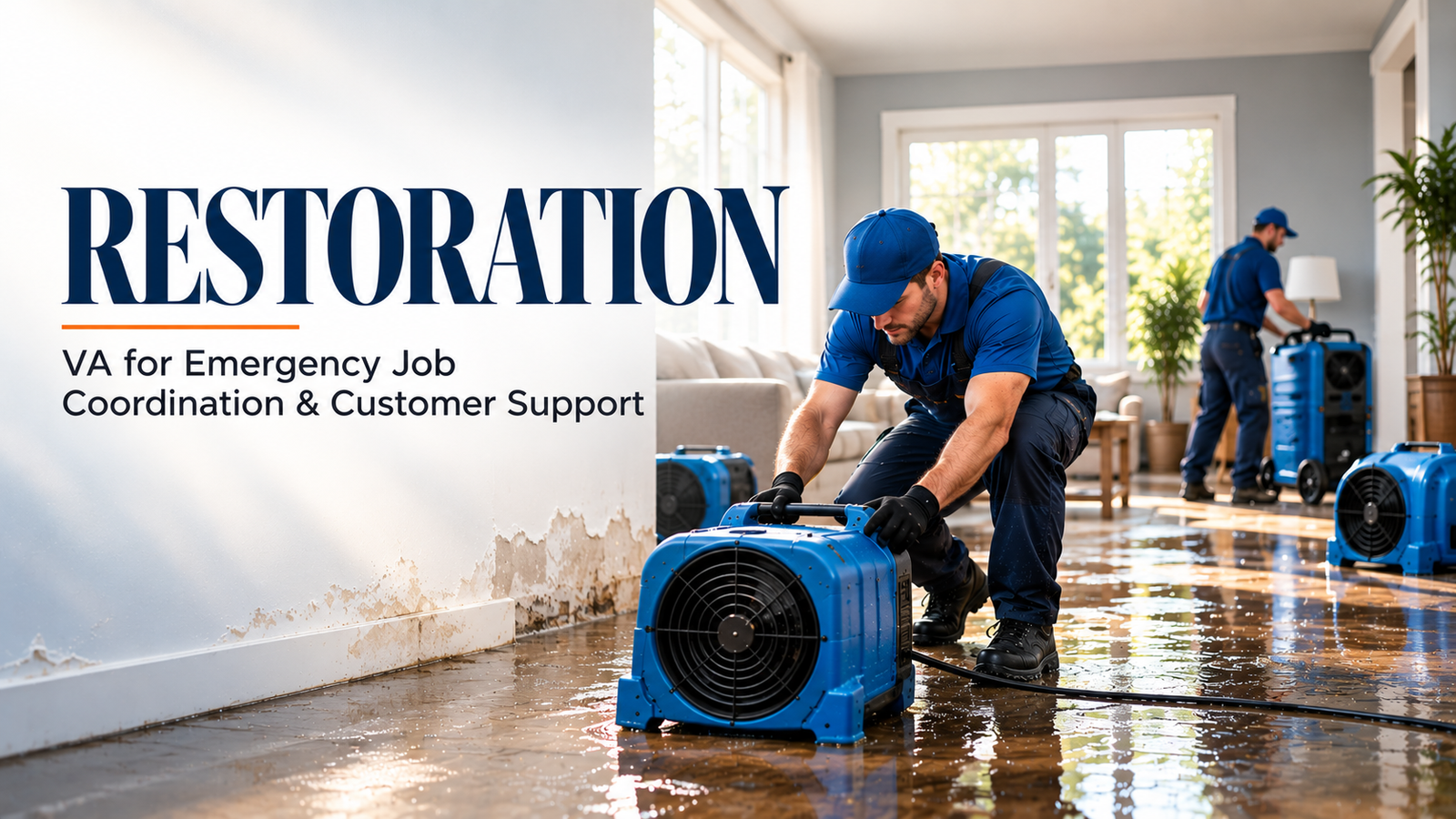


A plumbing business can have experienced technicians, reliable service vehicles, and a steady flow of customer inquiries, yet still lose valuable time managing the work behind every service call.Homeowners call about leaking pipes, clogged drains, water heater problems, fixture installations, and emergency repairs. Meanwhile, office staff must schedule appointments, coordinate technicians, follow up on estimates, update customer records, and respond to new inquiries.
When these responsibilities pile up, important calls can go unanswered, appointment changes become difficult to coordinate, and potential customers may contact another contractor.
For plumbing contractors across the United States, a Plumbing Virtual Assistant can provide dedicated administrative support for appointments, lead management, customer communication, and back-office operations. The objective is to help businesses organize incoming work and give technicians and owners more time to focus on service delivery and growth.
The Real Challenge: Managing Everything Between Service Calls
Plumbing operations move quickly. A technician may finish one repair while the office receives several new service requests. An existing customer may need to reschedule, a new lead may request an estimate, and another customer may be waiting for confirmation.
Without a consistent administrative process, these activities can become difficult to manage.
Common challenges include:
- Missed calls and delayed responses to customer inquiries.
- Appointment scheduling conflicts and last-minute changes.
- Inconsistent follow-up on estimates and service requests.
- Incomplete customer details or service records.
- Delayed updates in scheduling and field-service software.
- Difficulty tracking pending callbacks and open leads.
- Administrative work that distracts owners from managing the business.
Hiring more technicians does not automatically solve these problems. Sometimes, the missing piece is reliable administrative capacity.
A dedicated virtual assistant can help manage defined office workflows so customer requests are recorded, appointments are coordinated, and follow-up activities remain visible.
Six Ways a Plumbing Virtual Assistant Can Support Your Business
1. Appointment Scheduling That Keeps Technicians Organized
Scheduling is central to plumbing operations. Each appointment must account for customer availability, service requirements, technician schedules, travel considerations, and the company's dispatch procedures.
A Plumbing VA can help manage the administrative side of scheduling by:
- Recording incoming appointment requests.
- Scheduling approved service appointments.
- Confirming bookings with customers.
- Coordinating rescheduling requests.
- Sending appointment reminders.
- Updating authorized scheduling systems.
-
Communicating schedule changes to the appropriate team members.
For example, when a homeowner requests a water heater inspection, the VA can collect the necessary details, check the company's approved booking process, and coordinate an available appointment.
Dispatchers and service managers retain responsibility for technician assignments and decisions requiring operational judgment.
The benefit: A more organized appointment process and less time spent coordinating routine scheduling requests.
2. Lead Management That Helps Prevent Lost Opportunities
Every new inquiry represents a potential service opportunity. However, a lead can easily be overlooked when customer calls, emails, website inquiries, and referral requests arrive through multiple channels.
A Plumbing Virtual Assistant can help maintain a structured lead management process.
This may include entering new inquiries into the CRM, recording the requested service, assigning lead statuses, scheduling callbacks, and tracking estimates that require follow-up.
A simple workflow can look like this:
Capture the inquiry
Record customer details, service needs, and preferred contact times.
Coordinate the next step
Arrange an appointment or schedule an authorized follow-up.
Track the opportunity
Update the CRM and keep outstanding inquiries visible.
The benefit: Better visibility into incoming opportunities and a more consistent approach to lead follow-up.
3. Customer Calls and Service Request Intake
Plumbing customers often contact contractors because they need a repair, an installation, or help understanding the next step in arranging service.
A VA can answer assigned calls, collect customer information, document the reported issue, and route requests according to the company's procedures.
Typical responsibilities include recording service addresses, identifying the type of assistance requested, confirming contact information, and notifying the appropriate team member.
Urgent requests must be handled through clearly defined escalation procedures. A VA should not independently diagnose plumbing problems, promise technical outcomes, or delay emergency escalation while processing routine administrative work.
The benefit: More consistent intake of service requests and less interruption for technicians working in the field.
4. Estimate Follow-Ups and Customer Communication
A plumbing contractor may send estimates for pipe replacements, fixture installations, water heater upgrades, or larger plumbing projects. When these estimates require follow-up, the office needs a reliable way to track responses.
A Plumbing VA can maintain a list of pending estimates, send approved follow-up messages, schedule callbacks, and update records when customers respond.
The assistant can also coordinate routine communications about appointment confirmations, documentation requests, and approved job-status updates.
Questions about technical recommendations, project scope, pricing decisions, or changes to a quoted job should be routed to the responsible professional.
The benefit: A more organized process for managing estimates and maintaining communication with prospective and existing customers.
5. Plumbing Software and Customer Record Management
Many plumbing businesses use field-service management platforms to coordinate appointments, customer information, estimates, invoices, and job histories.
With appropriate training and authorized access, a virtual assistant can support administrative workflows in systems such as ServiceTitan, Housecall Pro, and Service Fusion.
Responsibilities may include:
- Updating customer contact information.
- Recording approved service request details.
- Maintaining appointment records.
- Organizing job-related documentation.
- Tracking pending estimates and callbacks.
- Updating administrative task lists.
- Preparing routine reports from approved records.
The exact responsibilities depend on the company's software configuration, internal procedures, and access permissions.
The benefit: More consistent record maintenance and better visibility into everyday office activities.
6. Back-Office Administration After the Job Is Complete
The work does not end when a technician completes a repair. Plumbing companies may still need to organize job notes, maintain documentation, track invoices, coordinate payment reminders, and update customer histories.
A VA can assist with approved administrative responsibilities such as organizing service records, preparing invoice information for review, tracking outstanding documentation, and maintaining follow-up lists.
Financial approvals, technical assessments, and decisions requiring the business owner's authorization should remain with designated personnel.
The benefit: A more systematic approach to post-service administration and fewer unfinished office tasks competing for attention.
Which Plumbing Businesses Can Benefit From a Virtual Assistant?
Different plumbing businesses have different operational needs.
|
Business type |
Potential VA responsibilities |
|---|---|
|
Residential plumbing contractors |
Customer calls, appointment scheduling, and service follow-ups |
|
Commercial plumbing companies |
Service coordination, documentation, and customer communication |
|
Drain cleaning businesses |
Inquiry intake, dispatch coordination, and appointment reminders |
|
Water heater installation companies |
Installation inquiries, estimate tracking, and scheduling |
|
Growing multi-technician businesses |
CRM maintenance, administrative tracking, and back-office support |
Small plumbing companies may start with call handling and scheduling, while larger operations may require more extensive administrative coordination.
How to Introduce a Plumbing VA Into Your Existing Workflow
Virtual assistant support works best when responsibilities are clearly defined and connected to established company procedures.
Start with your biggest bottleneck. Identify whether missed calls, appointment coordination, lead follow-up, or documentation is consuming the most time.
Document the workflow. Establish procedures for customer intake, scheduling, escalation, estimate follow-up, and record updates.
Train on your software. Provide practical training on the company's field-service platform, CRM, communication tools, and booking procedures.
Set clear boundaries. Define what the VA can handle independently and what requires a technician, dispatcher, or manager.
Measure the results. Track follow-up completion, appointment accuracy, record completeness, response times, and outstanding administrative tasks.
Starting with a manageable group of responsibilities helps the business evaluate performance before expanding the role.
Frequently Asked Questions
What does a Plumbing Virtual Assistant do?
A Plumbing Virtual Assistant supports plumbing contractors with customer calls, appointment scheduling, lead management, estimate follow-ups, CRM updates, customer communication, and back-office administration.
Can a plumbing VA help with emergency service requests?
Yes. A VA can collect relevant information and follow the company's escalation procedures. Emergency requests must be routed promptly to the appropriate team according to established protocols.
Can a Plumbing VA work with ServiceTitan?
Yes. With suitable training and authorized access, a VA can assist with approved administrative tasks in ServiceTitan, including customer record maintenance, scheduling coordination, and follow-up tracking.
Is a virtual assistant suitable for a small plumbing business?
Yes. A small contractor can delegate repetitive administrative tasks to free up time for fieldwork, customer relationships, and business development.
How can a plumbing company measure a VA's performance?
Relevant measures include appointment accuracy, response times, lead follow-up completion, record quality, and the number of outstanding administrative tasks. Results should be evaluated against the company's operational goals.
Conclusion: Keep Your Plumbing Business Moving
A successful plumbing business depends on skilled technicians, dependable customer service, and efficient coordination behind the scenes.
When customer calls, appointment scheduling, lead follow-ups, and paperwork compete for attention, the entire operation can become harder to manage. A dedicated Plumbing Virtual Assistant can help organize these responsibilities and support a more consistent administrative process.
For residential plumbing contractors, commercial plumbing companies, drain cleaning businesses, and growing service providers across the United States, specialized virtual assistant support can create additional administrative capacity while allowing technicians and business owners to concentrate on service quality and growth.
Ready to delegate the busywork and give your team more time to grow?
Partner with Virtual Nexgen Solutions for reliable, industry-focused Virtual Assistant support tailored to your plumbing business.