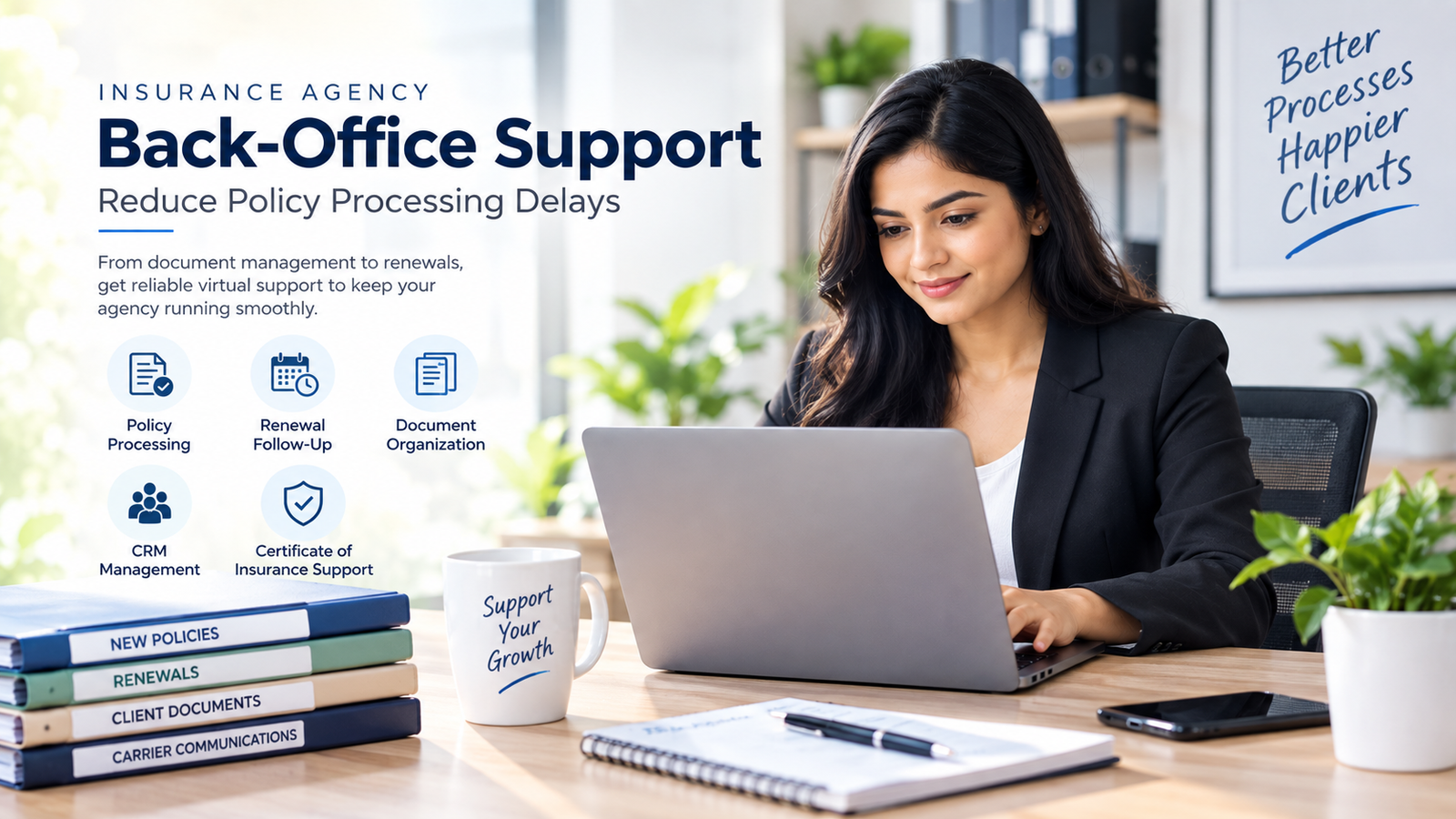


Your account managers are drowning in a sea of PBM disclosures and eligibility spreadsheets while your firm’s growth stagnates under the weight of mounting admin debt. As 2026 introduces more rigorous Department of Labor (DOL) rules for Pharmacy Benefit Manager (PBM) fee disclosures and expanded Consolidated Appropriations Act (CAA) reporting, the friction in your operations is no longer just an annoyance: it is a profit leak that threatens your scalability. When your $120,000-a-year lead consultants are spending twenty hours a month reconciling manufacturer rebates and checking ACA eligibility status, you aren't just losing money; you are losing the capacity to win new groups. The traditional model of hiring more high-priced local staff to solve administrative bottlenecks is broken. To thrive in this high-compliance environment, you must pivot to human-led, specialized support systems that move the heavy lifting off your core team's plate.
How does manual eligibility tracking reduce cost-to-serve?
Manual eligibility tracking reduces cost-to-serve by shifting repetitive data entry and reconciliation from high-salaried account managers to specialized Virtual Assistants at $8/hour. This human-led workflow ensures that every plan member's status is verified against carrier records and payroll data weekly, preventing premium overpayments and ensuring 100% accuracy in billing without exhausting your local team’s expensive time.
Eligibility tracking is the heartbeat of plan administration, yet it is often the primary source of administrative friction. When a plan member is terminated or added, the ripple effect through the carrier portal, the PBM system, and the payroll platform must be managed with surgical precision. Relying on "when we get to it" processes leads to retroactive billing corrections that frustrate clients and drain your staff's energy.
By implementing a specialized Insurance Virtual Assistant through Virtual Nexgen Solutions, you create a dedicated manual check-and-balance system. Your VA follows a strict SOP:
- Extract weekly census reports from the client’s payroll system.
- Cross-reference active enrollments in the carrier portals (e.g., UnitedHealthcare, BlueCross).
- Manually flag discrepancies where a member is active in payroll but terminated in the carrier system.
- Update the agency management system (AMS) to ensure your internal records match reality.
This level of meticulous, human-led oversight ensures that when it comes time for annual renewals or ACA reporting, the data is already clean. You avoid the "year-end scramble" that typically shuts down your sales activity in Q4.
What is the SOP for handling PBM disclosures without automation?
The SOP for handling PBM disclosures involves a human-led workflow that standardizes the intake, normalization, and fiduciary review of PBM compensation data. Specialized support teams manually extract drug-level financials, manufacturer rebates, and spread compensation from disparate PBM reports, entering them into a master fiduciary file to ensure the plan sponsor meets ERISA 408(b)(2) transparency requirements.
The DOL’s 2026 proposed rule for PBM fee disclosures requires covered service providers to provide detailed compensation data "reasonably in advance" of contract renewals. For a benefits firm, this means you are now the gatekeeper for complex data sets that PBMs often deliver in non-standardized formats.
To handle this without relying on expensive, buggy software, follow this specialized human-led SOP:
- Disclosure Request Trigger: Thirty days before a client's PBM contract renewal or extension, your Virtual Assistant sends a formal request for the ERISA 408(b)(2) disclosure.
- Data Extraction and Normalization: Once received, the VA manually extracts key data points, including direct compensation, indirect manufacturer payments (rebates/incentives), and spread compensation (the difference between billed amounts and pharmacy reimbursement).
- Variance Analysis: The VA compares current disclosure figures against the previous semiannual report. Any variance greater than 5% is manually flagged for your lead consultant to review.
- Fiduciary Documentation: The VA prepares a "Reasonableness of Compensation" summary. This document translates the PBM’s drug-level data into a clear narrative that the plan fiduciary (your client) can sign off on to prove they have fulfilled their fiduciary duty.
This managed workflow allows your consultants to walk into client meetings with a fully prepared fiduciary file, rather than spending their weekend wrestling with pharmacy claims spreadsheets. You can book a 2026 efficiency audit to see how this workflow fits into your specific agency structure.
How can an Insurance Virtual Assistant streamline ACA reporting?
An Insurance Virtual Assistant streamlines ACA reporting by performing continuous, manual data audits of 1095-C forms and RxDC filings throughout the year. Instead of a seasonal rush, the VA maintains a monthly "Reporting Readiness" log, manually verifying employee hours, coverage offers, and prescription drug costs to ensure that the final submission is accurate and penalty-free.
ACA reporting (Forms 1094 and 1095) and the newer RxDC (Prescription Drug Data Collection) requirements are administrative minefields. The cost of a single "Letter 226-J" penalty from the IRS can dwarf the cost of a decade of support services. Most firms fail because they treat these as "annual events."
A Virtual Nexgen Solutions VA changes the game by moving to a manual process optimization model:
- Monthly Look-Back Audits: The VA manually checks the hours worked for variable-hour employees against the "Measurement Period" defined in the plan document. This ensures that an employee who crosses the 30-hour threshold is offered coverage exactly when required.
- RxDC Data Aggregation: The VA collects the required data files (P1-P3 and D1-D8) from the TPA, carrier, and PBM. They manually reconcile the "Total Premium" and "Total Claims" columns to ensure they match the client's financial statements before the June deadline.
- Gag Clause Attestations: The VA monitors carrier contracts for prohibited "gag clauses" and prepares the annual attestation for the CMS portal, documenting the human review process for your compliance file.
By delegating these high-consequence, low-complexity tasks to an $8/hour specialist, you ensure that "Admin Debt" never accumulates to the point of a compliance crisis.
Why is a Continuous Compliance Audit Workflow better than annual audits?
A Continuous Compliance Audit Workflow is superior because it identifies and rectifies errors in real-time, preventing small data discrepancies from ballooning into multi-million dollar fiduciary liabilities. By having a Virtual Assistant perform weekly or monthly human-led checks on PBM rebates and eligibility, you eliminate the high-stress, error-prone environment of reactive annual audits.
Most benefits firms live in a state of reactive panic. They wait for an audit notice or a renewal deadline to check if their data is correct. This is "Profit Leakage" in its purest form. A Continuous Compliance Audit Workflow, powered by a dedicated Insurance Virtual Assistant, turns compliance into a quiet, background process.
The SOP for a Continuous Compliance Audit includes:
- Weekly Rebate Tracking: The VA logs into the PBM portal weekly to verify that rebate remittances match the "100% pass-through" requirements of the 2026 CAA reforms.
- Monthly Plan Document Review: The VA checks that any mid-year plan changes (Summary of Material Modifications) have been manually updated in the employee handbook and the enrollment portal.
- Quarterly Fiduciary Benchmarking: Every 90 days, the VA pulls the latest "Net Cost Per Drug" data and compares it against the initial PBM disclosure.
This human-led, manual oversight ensures that your clients are always "audit-ready." When a DOL auditor knocks, you don't scramble; you simply hand over the beautifully organized, VA-maintained compliance binder. This level of service is what separates a "broker" from a "consultant" in 2026.
How do you scale an employee benefits firm with a $8/hour VA?
Scaling a benefits firm requires decoupling your growth from your local headcount costs. By deploying a specialized Insurance Virtual Assistant at $8/hour to handle manual eligibility tracking, PBM disclosures, and ACA reporting, you can reduce your cost-to-serve per plan member by roughly 60%. This shift allows your senior account managers to support three times their current client load without sacrificing the accuracy or "high-touch" service your clients expect. In-house administrative staff typically demand salaries and benefits packages exceeding $60,000 annually, plus the hidden costs of office space and turnover. In contrast, a Virtual Nexgen Solutions VA provides the same level of technical expertise for a fraction of the cost, effectively converting your administrative burden into a competitive advantage.
Consider a benefits firm in Pennsylvania that was struggling to manage forty mid-market groups. Their two lead account managers were working 60-hour weeks, yet clients were complaining about billing errors. By integrating two Virtual Nexgen Solutions VAs into their workflow, the firm offloaded 100% of the eligibility and PBM reporting tasks. Within six months, the account managers had the mental bandwidth to cross-sell voluntary benefits and 401(k) services to their existing block. The firm grew its revenue by 22% while decreasing its total payroll expense: a classic example of eliminating administrative friction to drive top-line growth.
Frequently Asked Questions (FAQ)
Can a Virtual Assistant handle sensitive PII and PHI for benefits administration?
Yes. Virtual Nexgen Solutions VAs are trained in HIPAA compliance and follow strict data security protocols. We implement human-led security checks, including multi-factor authentication and secure remote access environments, to ensure that all Personally Identifiable Information (PII) and Protected Health Information (PHI) remain protected.
How does the 2026 DOL PBM rule change my daily workflow?
The new rule requires more frequent and more detailed disclosures. Your workflow must shift from "set it and forget it" PBM contracts to semiannual manual reviews of drug-level compensation and rebates. A specialized VA handles the data entry and comparison, ensuring your consultants only focus on the final fiduciary analysis.
What insurance-specific tools are your VAs experts in?
Our VAs are proficient in industry-leading platforms such as Applied Epic, AMS360, EmployeeNavigator, Ease, and BerniePortal. They can also manage specialized PBM reporting portals and CMS attestation systems with ease.
How quickly can a Virtual Assistant be integrated into our benefits firm?
We follow a rapid-deployment SOP. Once you book your 2026 efficiency audit, we analyze your specific friction points and can typically have a specialized support team integrated into your manual workflows within 7 to 10 business days.
Is $8/hour a fixed rate for all benefits-related tasks?
Yes. Our pricing is transparent and fixed at $8 per hour. This allows you to accurately forecast your administrative costs and calculate your ROI with precision as you scale your client base.
Ready to Eliminate the Admin Friction in Your Firm?
Stop letting "Admin Debt" choke your growth and start operating like a top-tier consultancy. The regulatory landscape of 2026 doesn't have to be a burden: it can be the catalyst that forces you to build a more efficient, profitable, and scalable business. By leveraging the human-led workflows and specialized support teams at Virtual Nexgen Solutions, you can recapture your time and focus on what you do best: advising your clients and growing your firm.
Book your 2026 efficiency audit today and see the $8/hour difference for yourself.