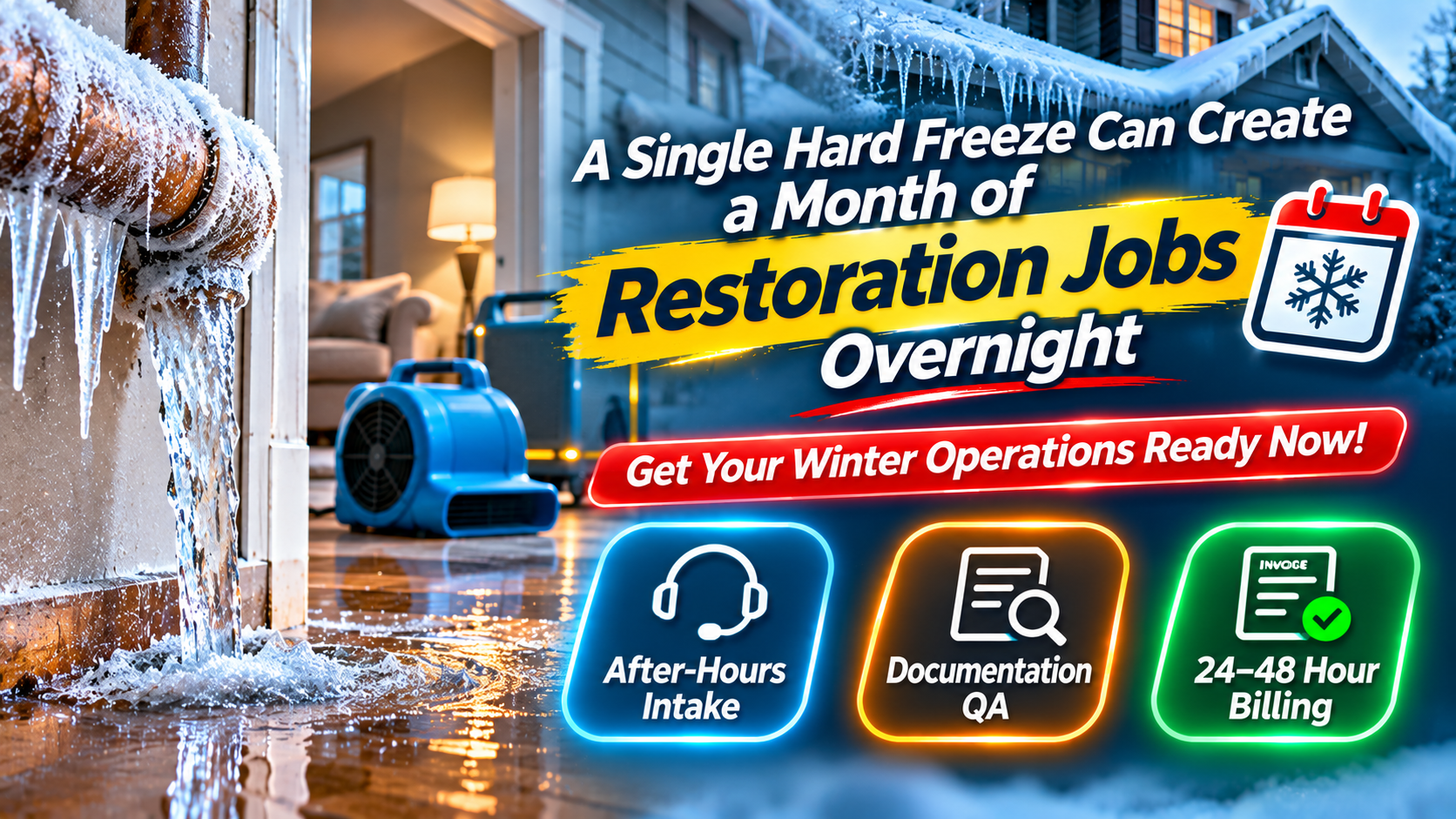

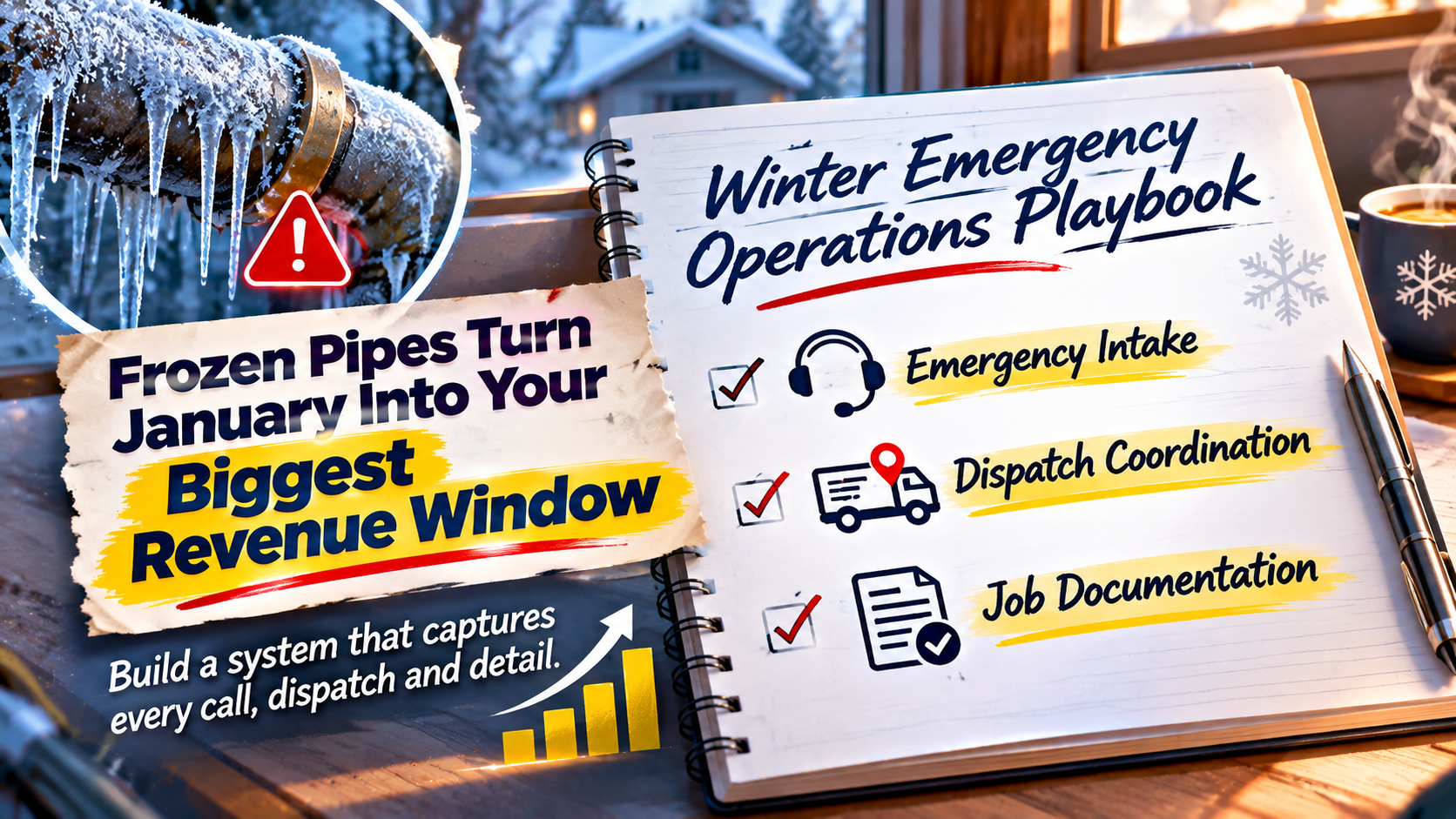
January can bring frozen-pipe calls, and expose every weakness in your office operation. When several emergencies arrive at once, unanswered calls, unclear priorities and delayed paperwork can cost you customers and leave technicians without the information they need.
A dedicated virtual assistant can help manage repeatable office workflows during the surge. Virtual Nexgen Solutions’ administrative support team provides trained, one-on-one support that can work to your procedures, with your team retaining control of technical and dispatch decisions.
What winter demand means for plumbing businesses
Winter demand is driven by local weather, housing and staffing conditions, not a single national call-volume forecast. Some industry guides cite 30–70% increases in winter emergency calls, but treat that range as a planning hypothesis, not a universal benchmark. A single cold snap can create a sharp local spike: during a 2024 freeze, plumbers in Spokane told The Spokesman-Review that daily calls at their companies rose from typical levels to around 100 or more.
The potential property losses are substantial. State Farm reported more than 20,000 freezing-related and winter water-damage claims from 2024 through June 2025, with over $628 million in paid losses and an average claim payment above $30,000.
That figure describes insurance claim payments, not plumbing-company revenue or the value of an individual plumbing job. It does, however, show why fast, well-organized service matters when a pipe bursts.
In many cold-weather markets, frozen-pipe requests cluster around hard freezes and subsequent thaws, often during January and February. But your local history and forecast are more useful than a broad national assumption.
What breaks first: the phone, the schedule and the paperwork
During a freeze, the first problem is often not a shortage of plumbing knowledge. It is the flow of information between the customer, office and field team.
- Calls go unanswered. Technicians are on jobs, office staff are occupied, and after-hours calls may go to voicemail.
- Urgency is unclear. A routine appointment and an active leak may be competing for the same technician.
- Customers are left guessing. Homeowners waiting in a cold house need realistic arrival windows and updates when plans change.
- Job records fall behind. Photos, work notes, receipts and customer approvals may be incomplete or scattered.
- Billing gets delayed. A high workload can push invoice preparation and follow-up down the list. Insurance-related documentation and payment timelines vary, so organized records and timely billing matter.
A busy phone does not automatically mean a profitable season. Your goal is to capture and organize demand you can serve safely, without overpromising, exhausting your team or losing track of completed work.
Build a freeze-season office playbook
Even if winter is already underway, you can tighten your process before the next cold snap.
1. Prepare the customer list and communication templates
Contact past customers and service-agreement members before forecast freezes with useful prevention reminders. Keep messages practical: disconnect outdoor hoses, know where the main shutoff is, and consider having exposed pipes inspected or protected by a qualified plumber.
Prepare a separate template for communicating emergency rates, service areas and realistic appointment windows. Use it consistently, and make sure any marketing messages follow applicable consent and messaging rules.
2. Set up an intake script and clear escalation rules
The person answering a call should gather the information your dispatcher needs without attempting to diagnose the problem.
An intake script can capture:
- Customer name, address and best callback number
- Whether water is actively leaking or flooding
- Whether the caller knows where the main shutoff is
- Which fixtures or areas are affected
- Whether the property is occupied
- Access instructions and any photos the customer can safely provide
Write down which situations must be escalated immediately to the on-call technician or manager. If a caller reports a gas odor or carbon monoxide alarm, direct them to leave the building and contact emergency services or the gas utility from a safe location, following your approved safety protocol. Do not let an administrative assistant troubleshoot the hazard.
3. Give dispatch and customer updates a clear owner
Define who reviews incoming requests, confirms priority and assigns or approves technician routing. The person handling administrative support can log calls, send approved updates, track open requests and flag missed callbacks. The designated dispatcher or manager should make decisions about emergency priority and technician assignments.
When crews are at capacity, give customers honest windows and a clear next update time. A prompt, realistic update is better than a promise the team cannot keep.
4. Keep job documentation and billing moving
Use a consistent checklist to confirm that job records include the information your company requires: service notes, customer approvals, photos where appropriate, parts or materials and invoice status.
Good records can help your business answer customer questions and organize documents that may be requested for an insurance claim. They do not guarantee coverage or claim approval. Keep coverage questions and claim decisions with the customer, insurer and appropriately qualified professionals.
What a plumbing virtual assistant can, and cannot, do
A dedicated plumbing virtual assistant can support repetitive office work using your approved scripts, software permissions and escalation rules.
This division lets your field team focus on skilled work while the office keeps customers informed and records organized. If you are evaluating support for a related trade, our HVAC virtual assistant guide covers similar administrative workflows.
Account for regional winter conditions
The 2026–27 seasonal outlook is not a call-volume forecast. Broad outlooks can suggest regional temperature or precipitation patterns, but they cannot tell you exactly when a local freeze will hit, or how many customers will call.
HomeProRadar’s winter 2026–27 outlook discusses a potentially wetter South and milder conditions across parts of the North, with short cold snaps still capable of triggering demand. For plumbing businesses, that means southern teams should consider rain-related leaks and water intrusion as part of their seasonal planning, while freeze-prone markets should stay ready for sudden cold and thaw events.
Use local weather alerts and your own service history to adjust staffing, call coverage and customer communications.
Track the metrics that show whether the process works
Review a small set of measures during and after each cold-weather event:
- Call answer rate: How many incoming calls were answered live?
- After-hours capture: How many after-hours callers received a response or callback?
- Emergency-to-book conversion: How many appropriate emergency requests became scheduled jobs?
- Customer update completion: Were customers contacted when their appointment window changed?
- Documentation completeness: Did completed jobs have the required records attached?
- Invoice lag: How long did it take to send invoices after job completion?
- Wait-list conversion: How many customers with later appointment windows ultimately booked?
Set a baseline from your own operation before deciding what “good” looks like. Review the results after each surge, then adjust your scripts, coverage and workflow.
Frequently asked questions
When is plumbing busiest during winter?
It depends on your climate and service area. In colder markets, demand often spikes during hard freezes and the thaw that follows, commonly in January or February. Local weather and your previous seasons’ call records are the best planning tools.
How much do plumbing calls increase in winter?
There is no reliable universal increase that applies to every company. Some guides quote 30–70%, while local reports show that a severe cold snap can push call volume much higher. Use that range cautiously and build your plan around your own history and local conditions.
Why do plumbers miss calls during a freeze?
Technicians may be working on urgent jobs while office staff handle a sudden backlog of calls, dispatch requests and customer updates. A defined after-hours process and clear ownership for call intake help reduce the risk of unanswered requests.
Can a virtual assistant handle emergency plumbing calls?
A virtual assistant can answer, collect information, follow an approved intake script and escalate urgent reports to your designated team. They should not diagnose the plumbing issue, give technical advice or make unsupervised dispatch decisions.
What should a plumbing company prepare before winter?
Prepare customer prevention messages, an after-hours coverage plan, call-intake and safety escalation scripts, dispatch ownership, customer-update templates and a job-documentation checklist. Test the process before your next major cold snap.
Turn seasonal demand into a more organized operation
A freeze can produce more requests than your team can serve at once. The advantage comes from answering promptly, gathering the right information, prioritizing with qualified staff and keeping customers updated, not from promising every caller immediate service.
Virtual Nexgen Solutions provides dedicated, industry-trained virtual assistants and AI automation to support administrative workflows. If you want help deciding what to delegate this winter, book a 30-minute conversation.
Sources
Work With Virtual Nexgen Solutions
If your business needs dependable virtual assistant support, Virtual Nexgen Solutions can provide support around your existing workflow. Book a discovery call today.
Get in Touch Now!