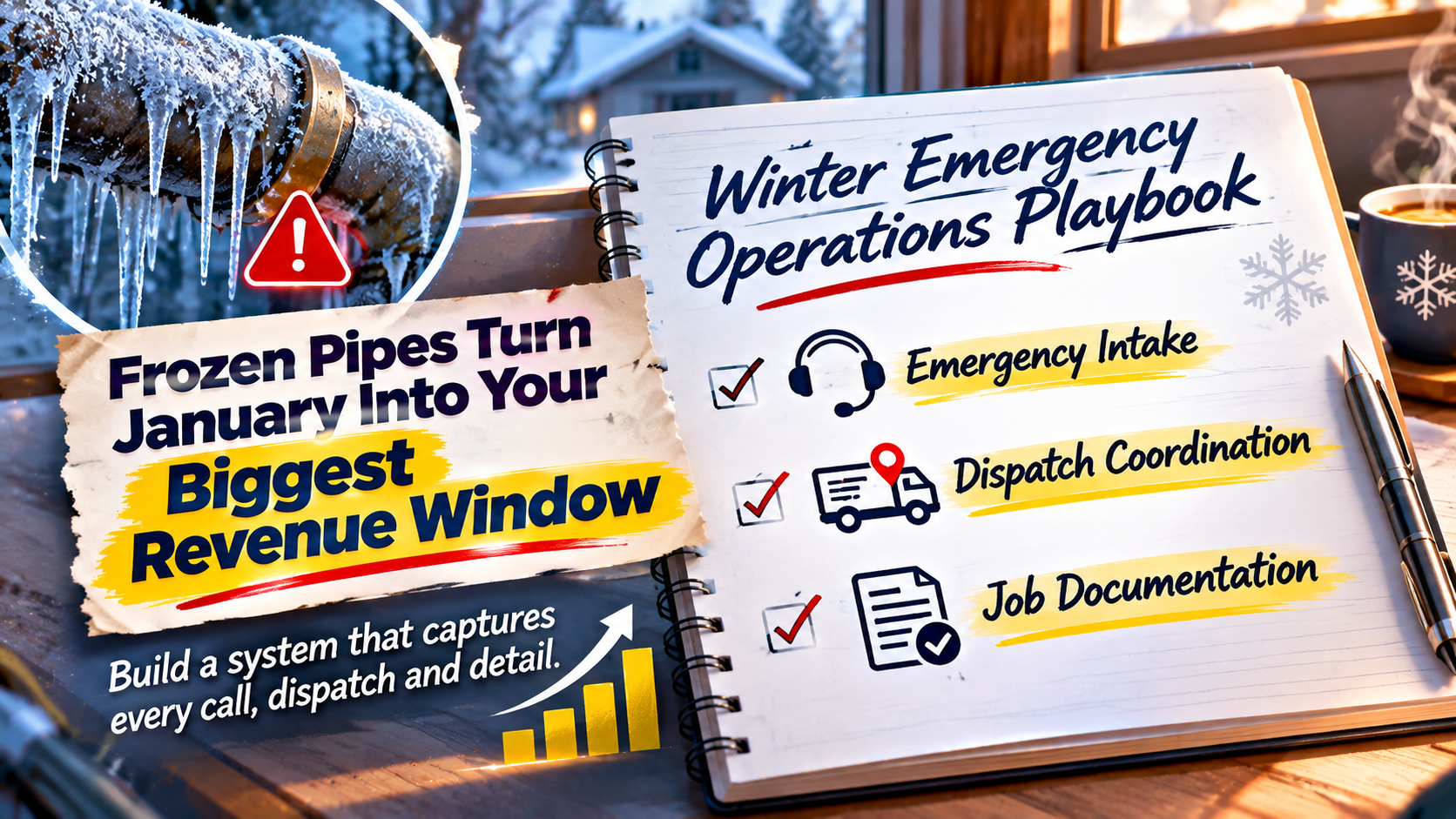

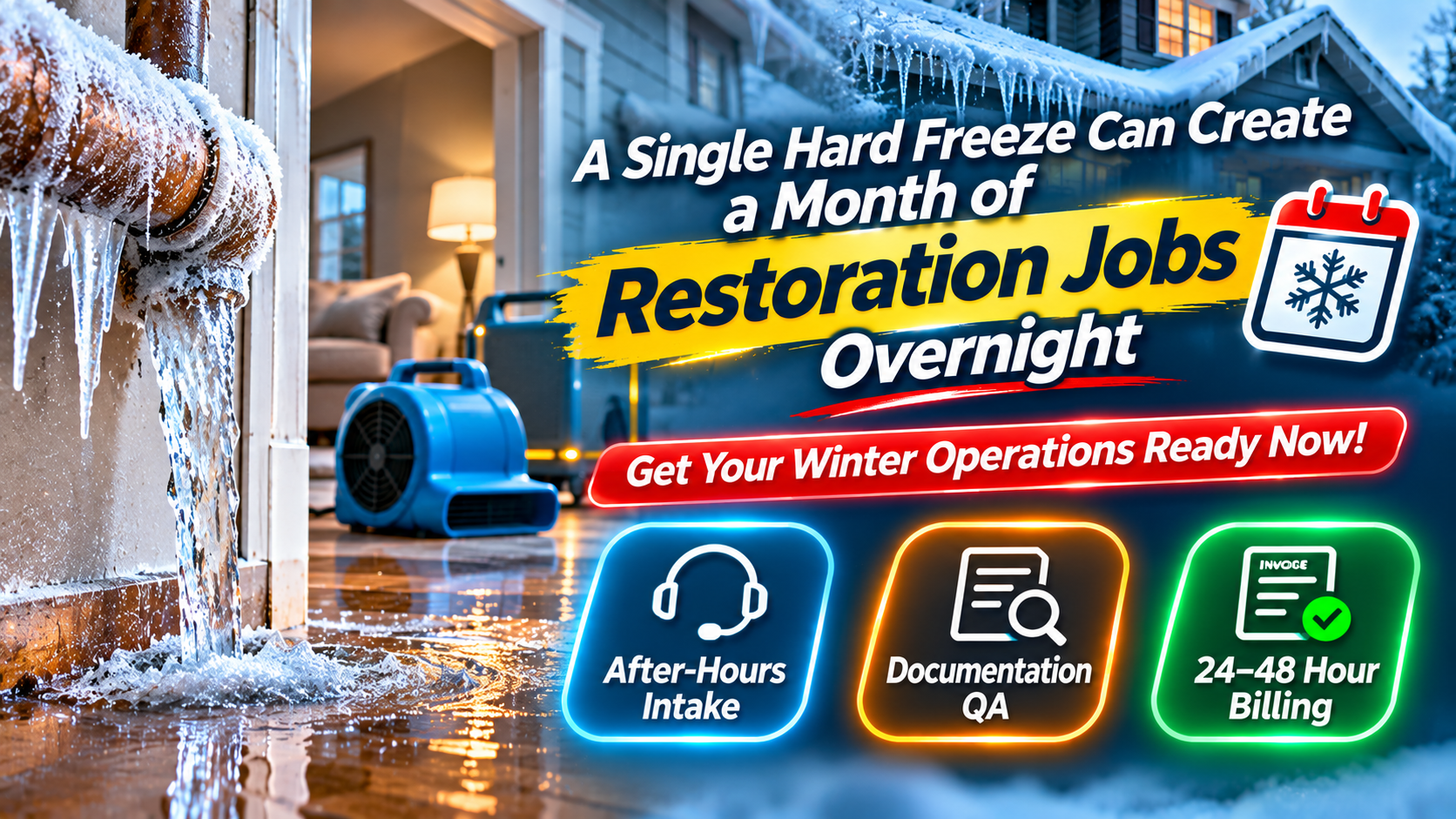
For restoration owners, winter is not one long busy season. It is a series of ambushes. A hard freeze on Tuesday night can turn into a surge of calls by Wednesday morning, and the companies that capture the work have their office workflows ready before the weather turns.
That preparation matters because a burst-pipe loss does not end when a crew arrives. Calls need to be answered, jobs triaged, records assembled, dispatch coordinated and invoices prepared while the field team is managing active losses. A dedicated restoration virtual assistant can support those administrative workflows, so your project managers can stay focused on field decisions and customer needs.
Why the winter restoration surge can be valuable, and unpredictable
The financial stakes are significant. From January 2024 through June 2025, State Farm received more than 20,000 freeze-related homeowner claims, with over $628 million in paid losses and an average payment exceeding $30,000, according to Carrier Management’s report on State Farm’s data. That figure covers a range of freeze-related damage, not just burst-pipe claims, so treat it as an indicator of potential severity, not a forecast of revenue for your company.
Winter weather can also produce a sudden increase in service calls. In February 2026, PuroClean reported a sharp rise in storm-related calls following a month of winter weather, including frozen pipes, water damage and power-related issues (PR Newswire).
For the 2026–27 winter, HomeProRadar’s seasonal outlook points to a strong El Niño pattern, with wetter conditions possible across parts of the South and milder seasonal averages across parts of the North. That outlook is not a day-by-day forecast: a region with a milder winter can still face a damaging cold snap.
The bigger point is that weather-driven demand arrives unevenly. Verisk’s Q1 2026 property report showed U.S. claim volume down year over year overall, while ice-and-snow claims rose sharply. Plan for event-driven spikes, not guaranteed high volume throughout the season.
In a freeze event, the office can become the bottleneck
When calls arrive faster than your team can process them, routine gaps turn into missed work and delayed files. The first pressure points are often:
- After-hours calls: Customers may reach voicemail when water is actively spreading.
- Intake and triage: Important information (such as the property address, active leak status, occupancy and access) may be incomplete.
- Dispatch coordination: Your team may struggle to match available crews and equipment to the next priority job.
- Documentation: Photos, readings, job notes and forms can be harder to gather while crews move between losses.
- Billing and follow-up: Invoices and receivables may slip while staff focus on immediate response.
Those gaps matter because the surge is not only about getting to a property. Your company also needs to keep the job record organized and move the file toward billing while details are fresh.
Prepare your restoration company before the first hard freeze
Use November to set up the workflow, then review it before each forecast weather event. Start with these five steps:
- Check your requirements. Review contract, insurer and TPA procedures, submission rules and documentation requirements. Confirm who is responsible for tracking deadlines and exceptions.
- Create an escalation tree. Name the primary and backup contacts for intake, dispatch, project management and after-hours decisions. Make it clear when an issue must go directly to a manager.
- Set up after-hours coverage. Decide who answers, what they record and how urgent calls are routed. Test the call flow outside business hours.
- Standardize job documentation. Create a checklist for the records your team needs, such as dated photos, readings, equipment logs, job notes, authorizations and closeout information. Your qualified staff should confirm what each job requires.
- Stage resources using local triggers. Monitor weather alerts and local conditions, then check crew availability, equipment readiness, fuel, travel time and subcontractor coverage. A calendar date alone is not a useful surge plan.
Use a simple operating playbook during the surge
When calls rise, the goal is to capture the right information, route the job and keep records moving. Your exact process should reflect your company’s safety rules and service commitments.
For each emergency call, record the caller’s contact details, property address, type of loss, whether water is still active, occupancy, access instructions and any immediate safety concerns. Use your approved triage script and escalate cases that require professional judgment.
Make safety escalation explicit. If a caller reports a possible gas leak, carbon monoxide concern, electrical hazard or other immediate danger, instruct them to move away from the hazard and contact emergency services or the relevant utility as appropriate. Do not ask an unqualified intake person to assess or advise on the hazard.
Coordinate dispatch support. Share the approved intake details with the designated dispatcher or project manager, record the assigned next step and keep the caller informed according to your process. Do not promise an arrival time the team has not confirmed.
Check documentation at closeout. An administrative checklist can flag missing items for a qualified staff member to review before billing. It can help catch gaps; it cannot determine the technical scope or replace a project manager’s judgment.
Prepare billing promptly. C&R Magazine’s 2026 State of the Industry reporting discusses long payment timelines for some restoration work and recommends billing within 24–48 hours of job completion where the workflow and payer requirements allow. Treat that as an operational target, not a guarantee of when funds will arrive, and assign someone to track follow-ups and aging receivables.
What a restoration virtual assistant can handle, and what stays with your experts
A restoration-trained virtual assistant can support repeatable administrative work such as:
- Logging calls and organizing intake details
- Updating job records and tracking assigned follow-ups
- Coordinating routine customer status updates using approved scripts
- Organizing documentation and flagging items missing from a checklist
- Supporting TPA portal uploads and deadline tracking, with authorized access
- Preparing billing packets and recording accounts-receivable follow-ups
Your certified or otherwise qualified staff should retain decisions involving site safety, damage assessment, moisture and drying strategy, technical scope, estimates, pricing, claim interpretation and final approval. The assistant keeps information moving; your experts determine what it means and what work should be done.
Virtual Nexgen Solutions provides dedicated, one-on-one virtual assistant support and AI automation for business workflows. For restoration businesses, administrative tasks can be organized around your existing SOPs, tools and review process. Explore administrative support, read our guide to restoration company virtual assistants, or book a conversation about the tasks your team could delegate.
Track these six metrics through the season
A few consistent measures can show whether your freeze-season office playbook is working:
- Call answer rate: How many calls are answered live or returned within your target?
- After-hours capture: How many out-of-hours inquiries become documented, routed jobs?
- Intake-to-dispatch time: How long does it take to move a complete intake to the designated dispatcher?
- Documentation completeness at billing: How often is a file ready for review without chasing missing items?
- Invoice lag: How long after job completion is the invoice prepared and submitted, where requirements permit?
- Accounts-receivable aging: Which invoices need a follow-up, and who owns the next action?
Review these numbers weekly during the season. If calls are being captured but files are not getting billed, add support at closeout and billing, not simply more intake capacity.
Frequently asked questions
When is restoration company busy season?
For many restoration companies, December through February can bring increased water-damage and freeze-related work. But timing varies by region and weather. Cold snaps and winter storms can create short, intense surges outside a predictable calendar pattern.
How do restoration companies handle winter storms?
They prepare staffing and equipment, establish an after-hours call process, prioritize and route jobs, follow safety procedures, and keep documentation and billing workflows active. During large events, capacity limits should be communicated clearly rather than promising work the team cannot safely deliver.
Why do restoration companies miss calls during freeze events?
Call volume can rise while office staff and project managers are occupied with active jobs, dispatch, customer communication and documentation. A tested after-hours process and clearly assigned intake ownership can reduce missed opportunities.
Can a virtual assistant handle emergency water-damage calls?
A trained assistant can answer calls, collect information using an approved script, record the intake and route it to the right person. They should not diagnose damage, make safety judgments, promise unconfirmed arrival times or replace qualified restoration staff.
What should a restoration company prepare before winter?
Review TPA and customer requirements, update the escalation tree, test after-hours coverage, prepare documentation checklists, confirm staff and equipment availability, and decide how billing and receivables will be tracked during a surge.
Keep the office ready for the next weather trigger
A winter surge can create opportunity, but more calls only help if your team can capture them, route them safely and keep job records moving. Prepare the process before the weather alert. Assign clear owners. Review the results weekly.
For more restoration operations guidance, see our articles on restoration company payment challenges, the HVAC winter surge playbook and the plumbing winter surge playbook.
Sources
Work With Virtual Nexgen Solutions
If your business needs dependable virtual assistant support, Virtual Nexgen Solutions can provide support around your existing workflow. Book a discovery call today.
Get in Touch Now!