
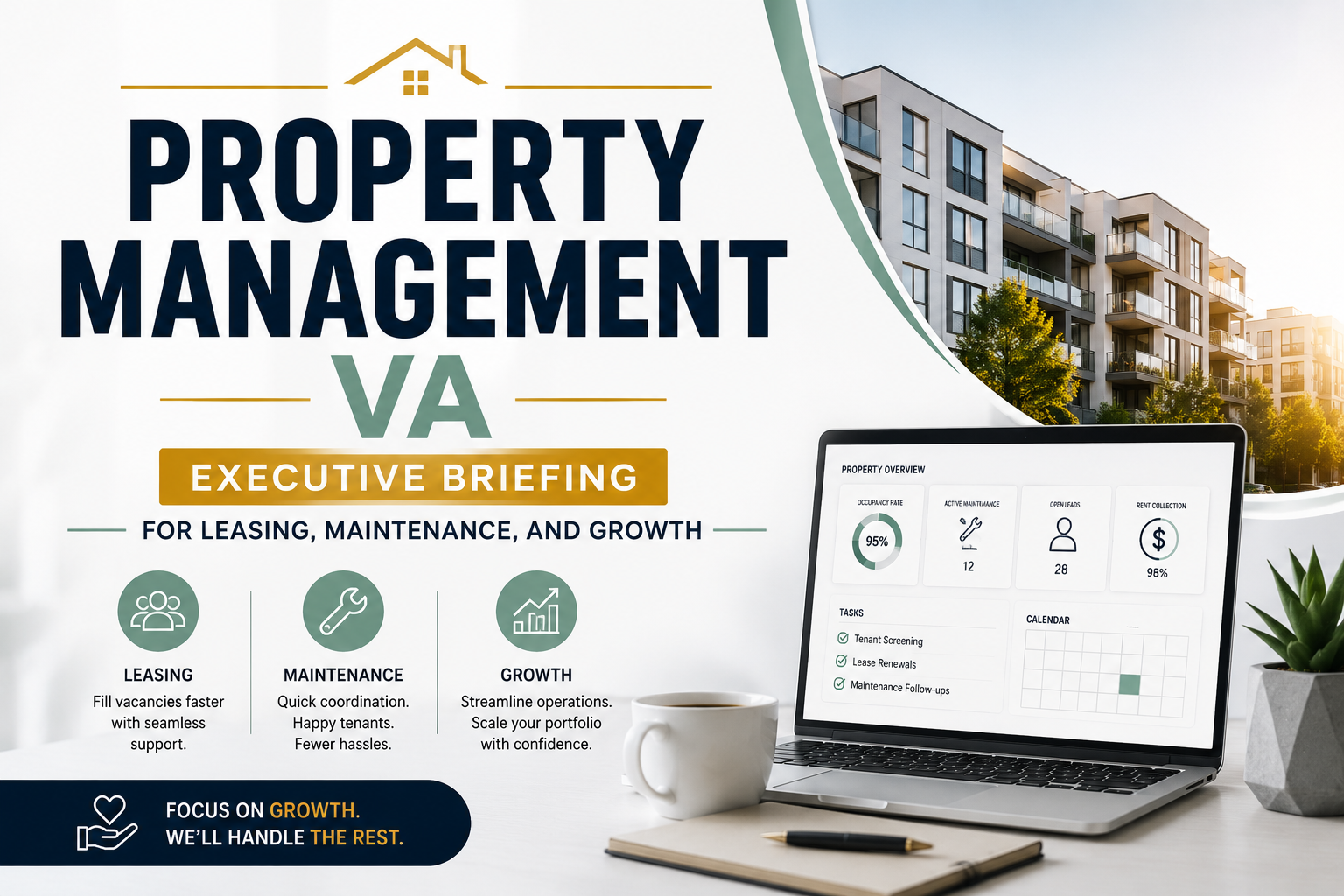
Property management has a hidden margin problem. Most teams do not lose ground because they lack expertise. They lose ground because administrative weight grows faster than operational capacity. The same people responsible for protecting occupancy, owner trust, and resident experience are also handling lead follow-up, screening coordination, vendor calls, late rent reminders, internal updates, and exception management. Over time, that mix creates burnout.
This is where Admin Debt becomes dangerous. It is not only about being busy. It is about carrying too many low-leverage tasks inside roles that should be focused on judgment, escalation, and portfolio performance. When your property manager becomes the default owner of every scheduling gap, maintenance update, and collections follow-up, the business begins to slow from the inside.
The warning signs are easy to recognize:
- Leasing response times stretch too far during busy periods
- Application files move slowly because documents are missing or unorganized
- Maintenance requests pile up in multiple channels before they become clean work orders
- Residents send repeat messages because no one closed the communication loop
- Delinquency follow-up happens inconsistently because urgent issues crowd out routine discipline
- Managers spend the day in reaction mode instead of protecting occupancy and owner relationships
This pattern creates real financial damage. Vacancy days increase. Work order aging rises. Resident frustration grows. Delinquency follow-up loses force. Your most expensive internal talent gets consumed by coordination work that can and should be delegated.
Engineering a High-Margin Portfolio
A high-margin property management portfolio is not built on hustle alone. It is built on operating design. The goal is not to remove people from the workflow. The goal is to assign the right work to the right role with precision.
That is where a Property Management Virtual Assistant changes the economics of the business. Instead of treating support as a general administrative add-on, use your VA as the operational engine behind recurring, time-sensitive execution. The Real Estate Virtual Assistant model works best when it is embedded inside specific workflows with clear thresholds, system access, and reporting discipline.
In practice, that means your VA owns the repeatable coordination work that creates the most Admin Debt:
- Lead response and leasing follow-up
- Application tracking and screening file preparation
- Showing coordination and prospect communication
- Work order entry, triage support, vendor follow-up, and resident updates
- Delinquency reminders, promise-to-pay tracking, and late notice preparation
- PMS documentation inside AppFolio, Buildium, Rent Manager, Propertyware, or similar systems
This is not about vague task offloading. It is about installing an Operational OS that keeps the portfolio moving with consistency. Your managers stay focused on approvals, escalations, inspections, owner communication, and strategic growth. Your VA handles the recurring flow that would otherwise fracture the day.
For this model to work well, establish the right inputs first:
- Give the VA access to your PMS, leasing inboxes, communication tools, and approved templates
- Document screening criteria, emergency maintenance rules, collections policy, and escalation thresholds
- Define what the VA can resolve independently and what must be routed to a property manager
- Require clean note-taking, task updates, and status reporting inside the systems your team already uses
Once those conditions are in place, the VA becomes less of an assistant and more of a throughput manager for the portfolio’s daily administrative load.
Mastering the Leasing Cycle
Leasing performance often depends less on marketing and more on operational follow-through. Many portfolios generate enough interest to stay full, but lose momentum between inquiry and signed lease because the handoffs are weak. This is where a Property Management VA can create immediate impact.
The leasing cycle should begin with centralized lead capture. Every inquiry from your website, listing sites, email, voicemail, and text channels should flow into one clean queue. Your VA should log the source, assign the correct property, record prospect details, and remove duplicate records so your team can see a clear pipeline instead of scattered messages.
Speed of response is the next pressure point. A Real Estate Virtual Assistant should handle first contact quickly, answer standard availability questions, share pre-screening prompts, and move qualified prospects toward a showing or application path. That fast first touch protects occupancy because delay is one of the most common sources of vacancy-related profit leakage.
Pre-screening should happen before your team invests showing time. Have the VA verify household income, intended move-in timing, occupancy fit, pet restrictions, and key eligibility factors against your written criteria. This preserves agent time and keeps unqualified leads from clogging the leasing pipeline.
Showing coordination also benefits from dedicated support. Your VA should manage appointment scheduling, reminder sequences, attendance confirmations, and no-show follow-up. That alone can reduce calendar friction and improve showing conversion, especially when local teams are balancing inspections, owner calls, and maintenance escalations.
Once an application starts, the operational burden shifts to file management. This is where many portfolios lose days. The VA should track missing documents, confirm application status, verify fee completion, gather IDs and income records, coordinate landlord references, and prepare a clean screening summary for decision-makers. When done well, this turns a messy inbox process into a controlled approval flow.
Approved applicants should move immediately into lease coordination. Your VA should support deposit instructions, move-in scheduling, utility transfer reminders, renter’s insurance collection, and checklist communication so approved files do not sit idle. Every idle day after approval is another opportunity for vacancy to extend.
To maintain visibility, track leasing KPIs through the VA’s reporting rhythm:
- Inquiry volume by source
- Average first-response time
- Showings scheduled and confirmed
- Applications started and completed
- Approval turnaround time
- Days from inquiry to signed lease
These metrics reveal where the leasing cycle is slowing and where Admin Debt is most expensive.
Scaling Maintenance without the Friction
Maintenance fatigue is one of the fastest ways to pull a property management team into chronic reaction mode. The issue is not only the number of service requests. It is the fragmentation of the process. Requests come through different channels. Details are incomplete. Vendors respond unevenly. Residents ask for updates because no one documented the last step clearly. Managers then become the fallback point for every unresolved thread.
A structured Property Management Virtual Assistant model changes that by creating one disciplined maintenance flow.
Every incoming issue should be captured immediately in the PMS with the unit, trade category, tenant notes, photos, access instructions, and urgency level. That first layer of order matters because incomplete records create downstream delays. The VA should own the intake discipline that turns resident complaints into actionable work orders.
Triage should follow written rules, not guesswork. The VA should separate true emergencies from urgent but non-emergency issues and routine requests. Use clear criteria for leaks, electrical hazards, loss of heat, lockouts, sewage issues, and habitability concerns. Escalate what meets the threshold. Keep everything else moving through the standard process.
Before dispatching, the VA should apply basic troubleshooting where appropriate. A few targeted questions about breakers, thermostats, active leaks, affected areas, or entry permissions can prevent unnecessary vendor visits and speed resolution. This is a small operational step with a large effect on cost control and response quality.
Vendor coordination is where many teams lose time. The VA should contact approved vendors, communicate scope clearly, confirm tenant access, secure estimated arrival windows, document responses, and move to backup vendors when needed. This prevents managers from spending their day chasing ETAs and status checks.
Resident communication must be treated as part of the maintenance workflow, not as an afterthought. The VA should send updates when the request is received, when the vendor is assigned, when an appointment is confirmed, when a delay occurs, and when completion needs to be verified. Consistent communication lowers inbound noise and strengthens resident trust.
Open work orders also need daily follow-up. The VA should monitor missed appointments, pending estimates, return visits, overdue vendor responses, repeat issues, and closure confirmation. Once the repair is complete, the VA should attach invoices, log final notes, confirm resident satisfaction, and flag pricing or recurrence issues for review.
The clearest maintenance reporting usually includes:
- New work orders opened
- Work orders closed
- Average time to dispatch
- Average time to resolution
- Repeat issues by property or unit
- Vendor response gaps and bottlenecks
That reporting gives leadership operational clarity without forcing them back into the weeds.
The Financial Architecture of Growth
The financial case for a Property Management Virtual Assistant is straightforward, but the full return goes beyond hourly savings.
An in-house administrative coordinator often costs $60,000 or more annually once salary, taxes, benefits, equipment, office overhead, PTO, training time, and turnover exposure are included. That fixed cost becomes especially heavy when the role is still consumed by repetitive coordination work that can be systematized.
A trained Property Management VA from Virtual Nexgen Solutions at $8 per hour typically lands around $15,000 to $17,000 per year, depending on hours and coverage. That creates immediate overhead relief, but the real value is in recovered operating capacity.
With the traditional in-house model, you usually absorb:
- Recruiting cycles and interview time
- Onboarding drag and retraining costs
- Service disruption during turnover
- Manager attention pulled into low-value admin
- Rigid overhead even when demand shifts
With a VA-based operational model, you gain:
- Lower annual staffing cost
- Cleaner leasing follow-up
- Faster maintenance coordination flow
- Better collections discipline
- Stronger documentation inside your PMS
- More manager time for owner-facing and revenue-protecting work
When you reduce vacancy days, shorten application lag, tighten work order follow-up, and maintain more consistent delinquency outreach, the margin effect compounds. Even recovering 15 to 25 manager hours per week can materially change growth capacity across renewals, inspections, vendor oversight, and owner acquisition.
FAQs
What does a Property Management VA actually handle in a real portfolio?
A Property Management VA typically handles the recurring coordination work that slows property teams down: lead response, showing scheduling, application follow-up, screening file preparation, work order updates, vendor coordination, resident communication, delinquency reminders, and late notice preparation. This support reduces Admin Debt and keeps managers focused on exceptions and performance.
How is a Property Management Virtual Assistant different from a standard virtual assistant?
A Property Management Virtual Assistant works inside specialized leasing, maintenance, and collections workflows. They understand PMS documentation, showing cadence, screening support, work order updates, and resident communication standards. That makes them more effective than a general VA when occupancy, response time, and compliance all matter.
Can a Real Estate Virtual Assistant help reduce vacancy?
Yes. A Real Estate Virtual Assistant can reduce vacancy by responding to leads faster, organizing prospect data, coordinating showings, tracking incomplete applications, and moving approved applicants quickly toward move-in. Speed and consistency across these steps are critical to shortening vacancy days.
What software should a Property Management VA be able to use?
A strong Property Management VA should be comfortable working in AppFolio, Buildium, Rent Manager, Propertyware, Yardi Breeze, Google Workspace, Microsoft 365, RingCentral, Dialpad, and the standard communication tools used by U.S. property management teams.
Is a Property Management VA effective for maintenance coordination?
Yes. With a documented vendor list, emergency definitions, spending thresholds, and escalation rules, a VA can handle work order intake, urgency classification, vendor outreach, appointment follow-up, resident updates, and closure documentation with strong accuracy and consistency.
How much does a Property Management Virtual Assistant cost compared with in-house support?
A Property Management Virtual Assistant from Virtual Nexgen Solutions is priced at $8 per hour. Depending on your schedule, that often translates to roughly $15,000 to $17,000 per year, compared with an in-house admin cost that can exceed $60,000 annually after payroll burden and overhead are included.
Is this model practical for smaller property management companies?
Yes. Smaller operators often feel Admin Debt more sharply because the same people handle leasing, maintenance, collections, and owner communication. A VA helps create structure early, protect response times, and support growth without forcing an early full-time hire.
How do you delegate without losing operational control?
Delegate through defined workflows, clear permissions, written escalation rules, clean templates, and daily reporting. The VA should own the repeatable execution, while your manager retains approval authority for exceptions, legal issues, owner-facing decisions, and high-risk escalations.
Secure the Portfolio Before Admin Debt Expands
If leasing delays, maintenance friction, and daily coordination noise are putting pressure on occupancy and team performance, redesign the operating model before the cost compounds further.
Install a trained Property Management Virtual Assistant as the operational layer behind your portfolio. Reduce overhead. Recover manager time. Protect margin.Schedule your consultation now.