
A property manager receives three messages before 9 a.m. One owner asks why the monthly statement has not arrived. An HOA sends a violation notice. A city portal shows that a rental license expired last week.
None of these problems looks dramatic at first. Together, they create lost trust, rushed work, avoidable fines, and angry owner calls. They also pull you away from leasing, maintenance oversight, and portfolio growth.
A dedicated property management virtual assistant can run the owner reporting and HOA/compliance calendar desk. Give the VA a defined process, clear approval limits, and access to the right records. Then keep final decisions with your property manager.
10 Core Tasks a Property Management Virtual Assistant Handles Daily
- Prepare monthly owner statement packets.
- Reconcile rent rolls against property ledgers.
- Review income, expenses, credits, and management fees.
- Track HOA and condominium board correspondence.
- Log violations, fines, hearings, and response deadlines.
- Monitor rental license and registration expiration dates.
- Schedule annual inspections and follow-up corrections.
- Track certificates of insurance and renewal documents.
- Draft owner-facing updates and missing-document requests.
- Maintain compliance folders in AppFolio, Buildium, or shared drives.
SOPs to Protect Owner Retention
Monthly Owner Statement Close
- Export the current rent roll.
- Compare collected rent with the property ledger.
- Check management fees, vendor bills, credits, and owner draws.
- Flag unexplained variances for manager review.
- Assemble statements and supporting invoices.
- Send the approved packet through the owner portal.
Three-Way Reconciliation
- Compare the rent roll with the tenant ledger.
- Compare the ledger with bank or clearing records.
- Match the approved owner statement to both sources.
- List unmatched payments, reversals, or fees.
- Assign each exception to the responsible team member.
- Record the resolution and approval date.
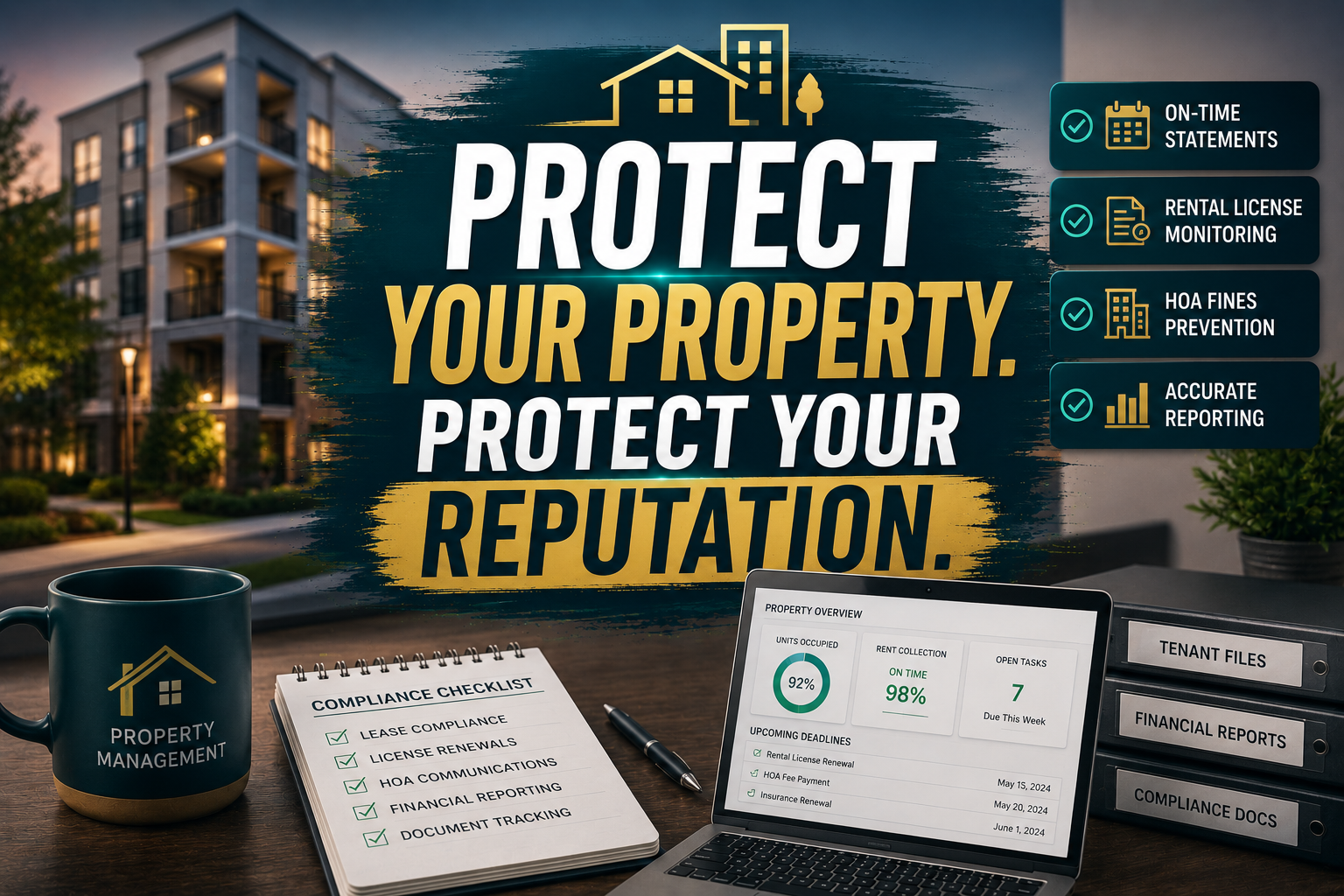
Use five evidence groups during the review: rent roll, tenant ledger, bank activity, vendor invoices, and owner statement. This simple discipline gives your property manager a clear audit trail.
HOA Notice Response
- Date-stamp every board email, letter, and portal notice.
- Record the unit, violation type, fine, and deadline.
- Upload photos and documents to the property record.
- Request instructions from the property manager.
- Draft the owner or board response for approval.
- Log the submission and schedule follow-up.
Rental License Renewal
- Record the jurisdiction, license number, and expiration date.
- Check renewal requirements 120 days in advance.
- Request updated ownership, insurance, and HOA documents.
- Prepare the application and payment information.
- Schedule required inspections.
- Upload approval evidence and update the status.
Never assume one city follows another city’s rules. Confirm requirements with the relevant municipal office.
Inspection Calendar Management
- List every annual or recurring inspection.
- Set 90-, 60-, and 30-day review points.
- Confirm tenant and inspector availability.
- Save appointment confirmations.
- Track failed items and correction owners.
- Close the task only after receiving final evidence.
Insurance Certificate Tracking
- Record carrier, policy number, limits, and policy dates.
- Request updated certificates before expiration.
- Confirm the property address and named parties.
- Save the certificate in the correct folder.
- Flag missing or unclear coverage for review.
- Update the compliance calendar.
Owner Communication Drafting
- Summarize completed reporting and compliance actions.
- List open risks in plain language.
- State the next deadline and responsible party.
- Attach approved documents only.
- Draft the message using the owner’s preferred format.
- Route it to the property manager for final approval.
Industry Software Mastered by Our Virtual Assistants
- AppFolio: Update property records, prepare owner reports, upload compliance documents, and manage task queues.
- Buildium: Review ledgers, organize owner statements, track maintenance-related documentation, and update property notes.
- Yardi Breeze: Maintain rental records, organize documents, and monitor recurring deadlines.
- Propertyware: Support portfolio reporting, tenant records, owner communication, and renewal documentation.
- TenantCloud: Update property information, manage records, and track tenant-facing documents.
- QuickBooks: Organize invoices, support account reconciliation, and prepare documentation for review.
- DocuSign: Send approved forms, monitor signature status, and archive completed agreements.
Call the role an AppFolio virtual assistant or Buildium virtual assistant if that reflects your stack. The important point is workflow ownership, not a generic data-entry assignment.
Use a 30-Day Rollout
Start with one portfolio segment. During days 1–7, inventory every owner report, license, inspection, HOA contact, and insurance certificate. During days 8–14, build standard fields, folders, deadlines, and approval rules. During days 15–21, run the desk in parallel with your current process. During days 22–30, measure late statements, unresolved notices, missing documents, and manager review time.
Assign responsibility clearly. The owner provides required documents and approvals. The property manager owns decisions and regulatory judgment. The VA maintains records, prepares drafts, follows up, and escalates exceptions.
Two ROI Examples
Case Study 1: 310-unit property manager in Florida. Monthly statements were often released five to eight days late because rent-roll variances and vendor invoices waited in separate inboxes. After a VA took over the statement checklist and three-way reconciliation, late packets fell from 16% to 3% over three reporting cycles. The manager recovered about 22 administrative hours each month.
Case Study 2: 185-unit HOA-heavy portfolio in Colorado. The team tracked license renewals in email and missed several board follow-ups. A VA created a 120/90/60/30-day calendar, organized insurance certificates, and logged every HOA response. Over 90 days, the team completed 14 renewal files, closed nine notice follow-ups, and gave owners a monthly compliance snapshot.
The Bureau of Labor Statistics property management overview reports a 2024 median annual wage of $66,700 for property, real estate, and community association managers. A dedicated in-house administrative hire can also cost roughly $45,000–$55,000 annually before recruiting time, benefits, equipment, and leave coverage. Virtual Nexgen Solutions provides specialized support from $8/hour, allowing you to assign a defined desk without committing to a full internal salary.
Use NAA education and rental housing resources, IREM professional standards, and SHRM staffing guidance to strengthen your internal procedures. Then connect those standards to your actual portfolio records and approval chain.
Why Property Management Companies Choose Virtual Nexgen Solutions
Virtual Nexgen Solutions does not place a generic assistant into your operation and hope the process works. We analyze your portfolio, software, reporting schedule, jurisdictions, and escalation rules. Then we assign a trained VA to the desk that creates the most operational pressure.
FAQ
What does a property management virtual assistant do?
A property management virtual assistant handles recurring administrative work such as owner statement preparation, rent-roll reconciliation, HOA correspondence, rental license tracking, inspection scheduling, insurance certificate management, document filing, and owner communication drafting. The property manager retains approval authority while the VA maintains the process and escalates exceptions.
How can a property management virtual assistant improve owner reporting?
A property management virtual assistant improves owner reporting by collecting invoices, checking rent rolls, reconciling ledgers, identifying variances, assembling statement packets, and tracking delivery dates. This creates a repeatable review process that reduces late reports and gives owners clearer explanations of income, expenses, and unresolved items.
Can a virtual assistant track HOA compliance?
Yes. A virtual assistant can track HOA contacts, CC&R documents, violation notices, fines, response deadlines, board communications, approval letters, and follow-up dates. The VA can prepare drafts and organize evidence, while your property manager reviews the facts and approves any response sent to the HOA or owner.
How much does a property management virtual assistant cost?
Virtual Nexgen Solutions’ virtual assistant rate starts at $8 per hour. Your total cost depends on portfolio size, hours, software, reporting frequency, and compliance responsibilities. Compared with an in-house administrative hire costing approximately $45,000–$55,000 annually, a defined VA desk can provide more flexible operational coverage.
What software can a property management virtual assistant use?
A property management virtual assistant can support AppFolio, Buildium, Yardi Breeze, Propertyware, TenantCloud, QuickBooks, and DocuSign. Access should follow your security policy and role permissions. Provide documented procedures, required fields, approval limits, and escalation rules before assigning live portfolio work.
Can a virtual assistant handle rental license renewals?
A virtual assistant can track expiration dates, renewal windows, required documents, inspection appointments, submission confirmations, and municipal follow-ups. Your property manager should verify local requirements and approve filings. Never treat one jurisdiction’s renewal process as a universal rule for every property in your portfolio.
What is the difference between a property manager assistant and a virtual assistant?
A property manager assistant is a broad role that may be in-house or remote. A virtual assistant provides remote support for defined tasks and schedules. Both can handle reporting, records, and communications, but a VA typically offers more flexible capacity without the full cost of an internal employee.
How do I hire a property management virtual assistant?
Start by listing late reports, missed deadlines, software tasks, and recurring document requests. Define approval boundaries and success measures. Then choose a provider with property or real estate experience, software familiarity, secure access practices, and a clear onboarding process. Begin with one portfolio segment before expanding coverage.
Protect owner trust before the next deadline arrives. Review your owner reporting and HOA compliance workflow with Virtual Nexgen Solutions. Discuss your portfolio, software stack, and recurring deadlines.