

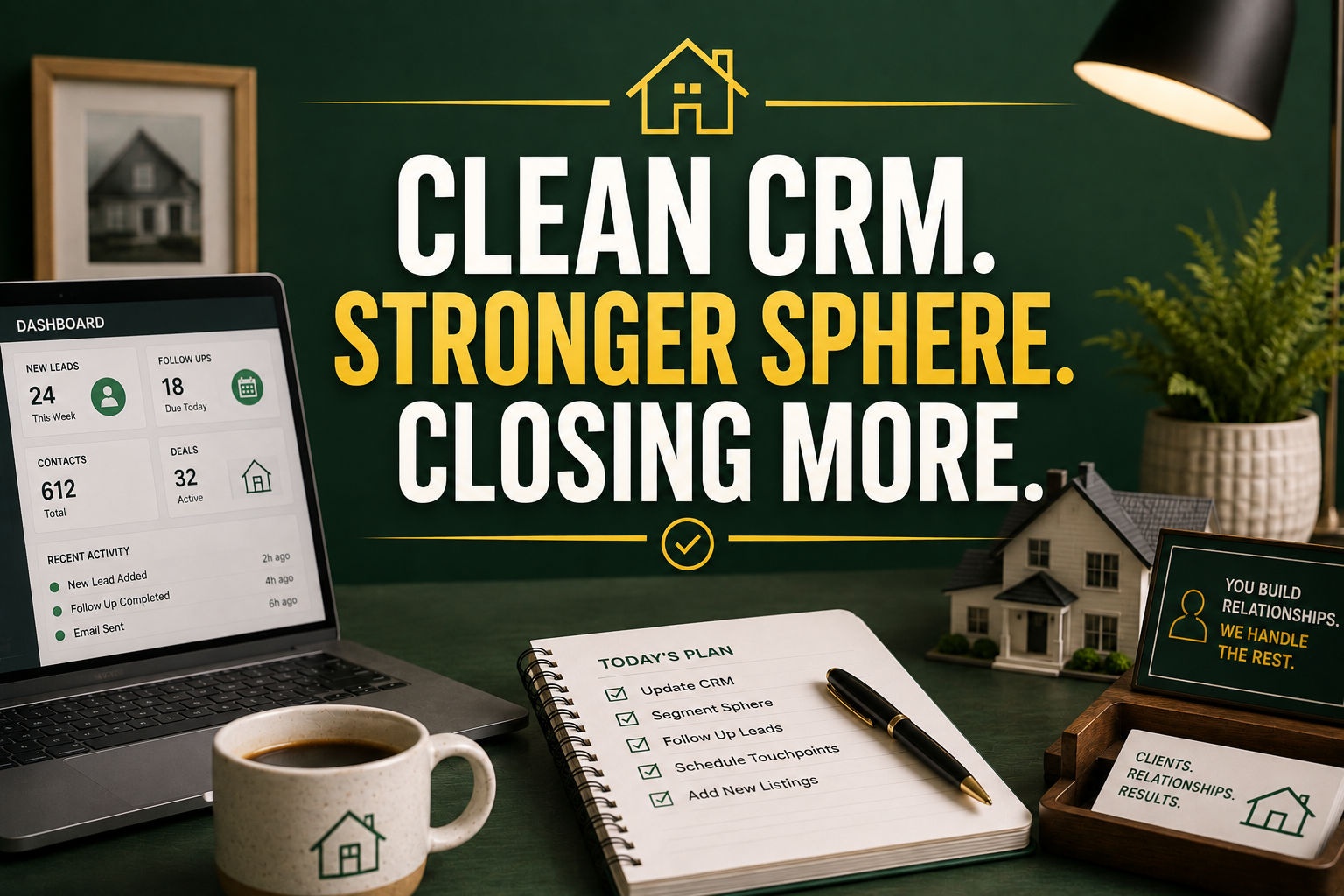
You have 1,200 contacts in your CRM. Yet 80% have not received a meaningful touch in months.
Then a past client refers a friend. You search the database and find three records with similar names, no referral source, and no note about the relationship. Your follow-up feels awkward because the context is missing.
That is not a contact problem. It is a pipeline problem. A neglected real estate database hides referral opportunities, weakens client memory, and allows warm leads to become cold. A dedicated real estate virtual assistant can keep the operational side moving while you own the relationship, advice, negotiation, and closing conversation.
The Pipeline, From Contact to Closing
Source Capture begins when a contact enters your business through a website form, open house, Zillow inquiry, social media message, referral, sign call, or personal introduction. Record the name, contact information, source, property interest, location, timeline, and assigned agent immediately. If you delay entry, the context disappears and duplicate records multiply.
First Touch converts a raw contact into a real conversation opportunity. A VA can verify contact details, send an approved acknowledgment, assign the lead to the correct agent, and create a follow-up task. The VA should not give pricing advice, interpret contracts, or make representations on your behalf. Escalate those conversations to you.
Nurture keeps the relationship alive when the timing is not immediate. Segment contacts by buyer, seller, investor, past client, vendor, referral partner, or local connection. Then schedule relevant market updates, home anniversary reminders, check-ins, and approved real estate marketing messages. Most databases leak here because follow-up stops after the first 30 days.
Appointment turns interest into a calendar event. A VA can coordinate availability, confirm the meeting, prepare the contact record, and attach notes or property details. You decide how to qualify the opportunity and conduct the consultation.
Transaction begins when the relationship becomes a signed client or accepted offer. Your support desk can organize documents, track deadlines, coordinate communication, and maintain CRM stages. For complex compliance or contract decisions, route the matter to the agent, broker, title company, lender, or attorney.
Post-Close Referral protects the long-term value of the relationship. Record the closing date, property address, transaction type, referral source, preferred communication method, and future touch dates. A good post-close record gives you a natural reason to reconnect instead of sending a generic “just checking in” message.
The National Association of REALTORS® buyer and seller research consistently highlights the importance of agent relationships, referrals, and repeat business. Treat those relationships as an operating system, not an afterthought.
Why Agent Databases Go Stale
Databases usually decay through small failures. You add a phone contact but skip the source. You import a spreadsheet without relationship tags. You mix buyers, sellers, investors, past clients, and vendors into one list. You store important details in your phone instead of the CRM.
Then the follow-up cadence breaks. A lead receives two messages, becomes busy, and disappears. Your sphere of influence hears from you only when you need a referral. Nobody reviews duplicates, outdated numbers, bounced emails, or unassigned tasks.
A real estate virtual assistant supports each point without acting as the agent. The VA maintains records, follows approved communication rules, prepares reports, and flags opportunities. You stay responsible for personal advice, fair housing compliance, negotiations, pricing, representation, and closing discussions.
The Database & Sphere Desk
The desk works through five connected phases: Clean, Segment, Touch, Reactivate, and Report.
Clean the real estate database by merging duplicates, standardizing names and phone numbers, correcting email fields, removing invalid records, and identifying missing source information. Preserve important notes. Do not delete a record simply because it has been quiet.
Segment contacts using practical fields: relationship, lead source, ZIP code, buyer or seller intent, estimated timeline, property type, language preference, and last meaningful contact. Build clear groups such as “past client, seller,” “open house, buyer,” “referral partner,” and “sphere, monthly touch.”
Touch the database using your approved cadence. The VA can queue personal follow-up tasks, schedule newsletters, prepare market updates, and send approved reminders. Keep the message personal. Reference the relationship, neighborhood, transaction history, or stated goal whenever the record supports it.
Reactivate dormant contacts carefully. Start with a review of prior notes. Then prepare a short, human message for your approval. For example: “You mentioned moving closer to your grandchildren last year. Has that plan changed?” The VA prepares and tracks the outreach. You conduct the meaningful conversation.
Report what matters. Review new contacts, missing source fields, overdue follow-ups, reactivated conversations, appointments set, referral activity, and contacts without a next task. Measure database health and pipeline movement, not vanity contact counts.
Anonymized case study: residential team in Arizona
A four-agent team had 1,086 CRM records but could not identify the source or status of 31% of them. After a database cleanup and segmentation project, a dedicated VA removed 142 duplicates, assigned source and relationship tags to 774 contacts, and created 219 overdue follow-up tasks. In the next 60 days, the team booked 11 sphere conversations and attributed two listing appointments to previously inactive contacts. Results vary by market, database quality, and agent follow-through.
Anonymized case study: independent brokerage in North Carolina
A seven-agent brokerage relied on phone contacts and disconnected spreadsheets. The database desk consolidated 2,430 records, created post-close reminders, and tracked referral sources across Follow Up Boss and Google Workspace. Within 90 days, the brokerage reduced unassigned leads by 78%, increased documented follow-up activity from 46% to 91%, and recorded six referral conversations that had not previously been tracked. The agents handled every advisory and negotiation discussion.
Which Software Can a Real Estate Virtual Assistant Manage?
A trained VA can support your existing stack instead of forcing you to change platforms.
- Follow Up Boss: Import contacts, apply tags, update stages, assign tasks, log communication, and prepare activity reports.
- kvCORE, Real Geeks, BoomTown, Lofty, and LionDesk: Review lead records, track source data, maintain campaigns, update statuses, and flag replies for agent attention.
- Google Workspace: Organize shared drives, maintain contact sheets, prepare reports, and coordinate calendars.
- DocuSign: Route approved documents, monitor signature status, and flag missing signatures. Keep legal review and document approval with the responsible agent or broker.
What Does the Investment Look Like?
Virtual Nexgen Solutions provides real estate virtual assistant support at $8 per hour. That gives you a flexible way to staff database maintenance, lead tracking, scheduling, and reporting without immediately committing to a full-time hire.
By comparison, an in-house real estate ISA or administrative employee can cost approximately $40,000 to $60,000 per year before payroll taxes, benefits, equipment, recruiting, and training. Use the comparison carefully. A VA is not a replacement for a licensed agent or broker. It is a way to keep essential support work moving at a lower, more flexible cost.
The Bureau of Labor Statistics provides useful context on real estate occupations and compensation. Your decision should depend on transaction volume, database size, response standards, and the cost of missed opportunities.
A Practical 30-Day Build-Out
Days 1–5: Audit your CRM, phone contacts, spreadsheets, email lists, and referral notes. Define access permissions and document what the VA may and may not communicate.
Days 6–10: Clean duplicates, standardize fields, identify missing sources, and create relationship and intent categories.
Days 11–15: Build the pipeline stages, assign ownership, create follow-up rules, and connect the calendar and shared workspace.
Days 16–22: Launch approved sphere touches, past-client reminders, lead follow-up queues, and reactivation campaigns.
Days 23–30: Review reports, correct weak fields, measure overdue tasks, and refine the cadence based on agent feedback.
Use one final conversion block. Keep the promise specific: database cleanup, sphere segmentation, CRM support, lead follow-up, and reporting. Do not promise a specific number of closings or guaranteed revenue.
Ready to turn your real estate database into a working pipeline? Book a 30-minute consultation with Virtual Nexgen Solutions and discuss the CRM, sphere, and follow-up tasks you want a dedicated $8/hour real estate virtual assistant to support.
FAQ
What does a real estate virtual assistant do?
A real estate virtual assistant supports agents, brokers, and teams with CRM updates, contact cleanup, lead tracking, scheduling, listing support, document organization, and follow-up coordination. The VA maintains the operational pipeline while you handle client advice, pricing, negotiations, representation, and closing conversations.
How can a real estate virtual assistant manage a real estate CRM?
A real estate virtual assistant can import contacts, remove duplicates, update fields, apply tags, record lead sources, assign pipeline stages, create follow-up tasks, log communication, and prepare activity reports. Give the VA documented rules, role-based access, and clear escalation points before work begins.
What is a sphere of influence in real estate?
A sphere of influence includes people who know, trust, or can refer you, such as past clients, friends, family, vendors, local professionals, and community contacts. Store each relationship in your real estate database with relevant notes, source information, preferred communication method, and next-touch date.
How much does a real estate virtual assistant cost?
Virtual Nexgen Solutions charges $8 per hour for real estate virtual assistant support. Your total cost depends on hours, tasks, software access, and required coverage. Compare that flexible expense with an in-house ISA or administrative hire that may cost approximately $40,000 to $60,000 annually before additional employment costs.
Can a real estate virtual assistant follow up with leads?
Yes. A VA can send approved acknowledgments, schedule tasks, monitor replies, update CRM stages, and alert you when a lead needs an agent conversation. Keep pricing advice, property recommendations, negotiations, representation, and other licensed or relationship-sensitive discussions with the appropriate agent or broker.
What software can a real estate virtual assistant use?
A real estate virtual assistant can support Follow Up Boss, kvCORE, Real Geeks, BoomTown, Lofty, LionDesk, Google Workspace, and DocuSign. Assign access according to the task. Require the VA to follow your brokerage policies for client data, documents, communications, and record retention.
How do I organize my real estate database?
Start by removing duplicates and standardizing contact fields. Add relationship, source, buyer or seller intent, location, timeline, and last-contact fields. Then create practical segments for past clients, sphere contacts, active leads, nurture leads, investors, vendors, and referral partners.
Can a virtual assistant reactivate old real estate leads?
Yes. A VA can review prior notes, identify dormant contacts, prepare approved personal messages, schedule follow-up tasks, and record responses. The goal is not to send generic mass messages. Use the available relationship context and transfer meaningful conversations to you promptly.