

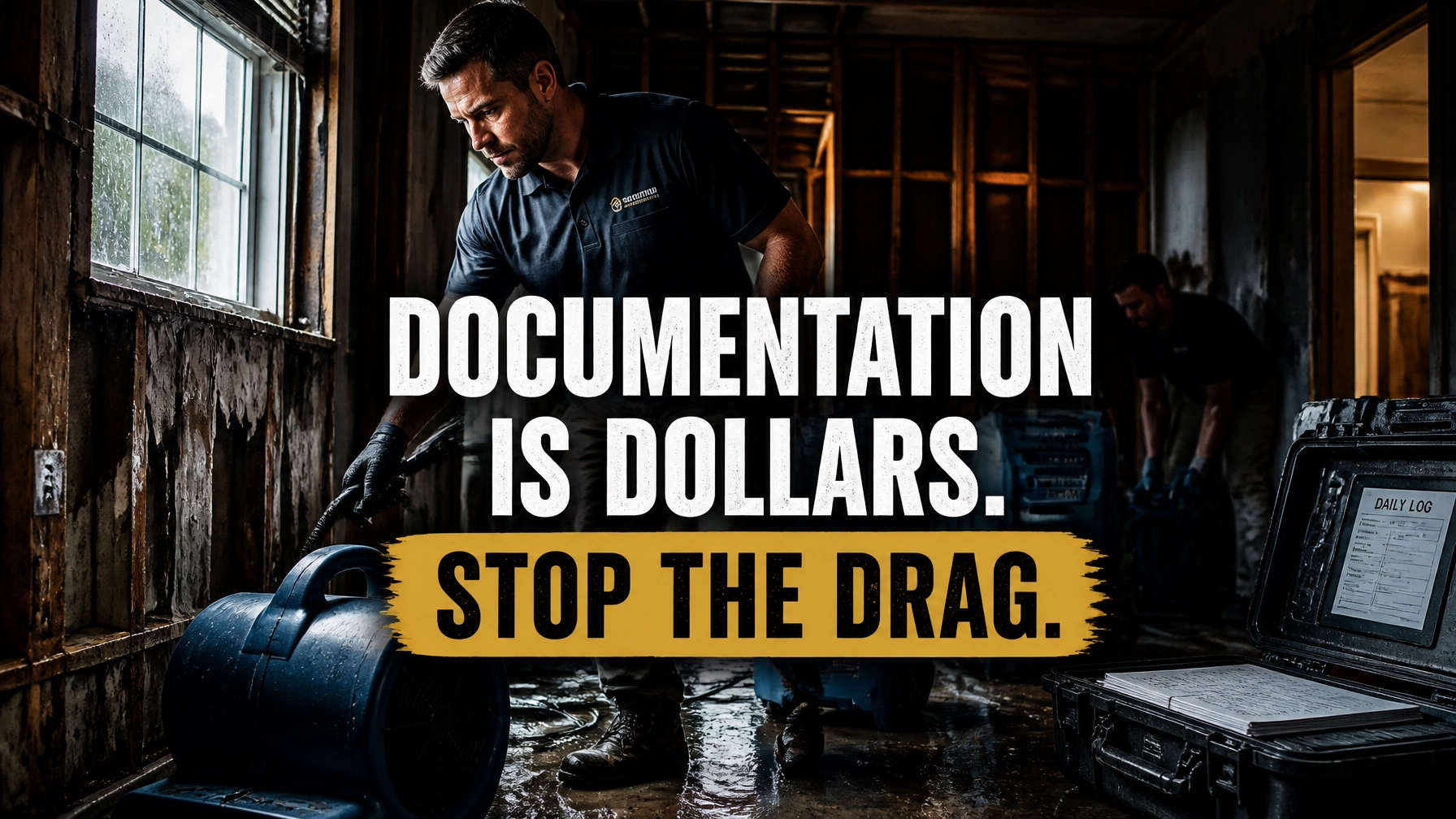
You are currently standing in a foot of water, and it isn’t from a burst pipe. It is the administrative flood drowning your restoration business. In the restoration industry, the difference between a high-growth enterprise and a struggling local shop isn't the quality of your air movers or the skill of your technicians. It is the speed of your documentation. You are likely experiencing the "Mitigation Gap", that lethal dead zone between emergency service and final payment where files stall, estimates linger, and cash flow dries up.
Scaling a restoration company requires more than just winning more jobs. It requires a backend infrastructure that can handle the brutal demands of 24/7 emergency response and the pedantic requirements of insurance carriers. When you try to scale using only local, in-house staff, you hit a ceiling. Your overhead sky-rockets, your office manager becomes a bottleneck, and your profit margins get eaten by the $60,000-a-year salary of an admin who can’t keep up with the 3 AM dispatch calls.
To break through, you must deploy a Construction Virtual Assistant specialized in restoration workflows. This isn't about general office help; this is about tactical, high-value support that manages your Xactimate sketches, moisture logs, and carrier communications for $8 per hour.
The Documentation Drag: Why Your Cash is Stuck
In restoration, documentation is dollars. If a technician forgets to upload a photo of the moisture meter reading on Day 2, the carrier will fight the invoice. If the psychrometric logs are incomplete, you lose the "Category 3" billing. Most restoration owners are losing 15% to 20% of their potential revenue simply because their field staff is too busy doing the work to document the work properly.
This is the primary drag on your scaling efforts. You cannot expect a lead technician, who just finished six hours of heavy demolition in a humid basement, to sit in their truck and perfectly organize 50 photos and detailed notes into your job management software. When this task falls to the owner or a single overtaxed office manager, the "Mitigation Gap" widens. Jobs that should be billed in 48 hours take 14 days to leave the desk.
A specialized Construction Virtual Assistant eliminates this drag. They act as the bridge between the field and the office, pulling data in real-time, auditing photos for compliance, and ensuring the file is ready for the estimator before the equipment is even picked up. This allows you to focus on scaling your operations rather than chasing paper.
The Xactimate Bottleneck: High-Stakes Estimating
Estimating is the engine of your restoration company. If the engine stalls, the company stops. Most owners find themselves stuck in "The Xactimate Trap", spending their nights and weekends hunched over a laptop, drawing floor plans and clicking through line items. This is the highest-value task in the company, yet it is often the most significant bottleneck.
When you scale, you can’t be the only one writing estimates. However, hiring a local, full-time estimator is a massive financial commitment, often costing $70,000 to $90,000 plus commissions.
By integrating remote estimators into your workflow, you can double your estimate throughput without the massive overhead. A remote assistant trained in Xactimate can take your field sketches and photos and turn them into professional, carrier-ready estimates while you are onto the next job. This systematic approach ensures that you aren't leaving money on the table by missing line items for floor protection, PPE, or equipment decontamination.
Tactical SOP: The Field-to-File Protocol
To fix the mitigation gap, you must implement a rigid system for data transfer. Use this SOP to standardize how your Construction Virtual Assistant handles field documentation.
- Real-Time Photo Audit: As the technician uploads photos to your management software (Dash, Encircle, or Restoration Manager), the virtual assistant reviews them instantly.
- Compliance Check: The assistant verifies that the "First Look" photos include the source of loss, the affected areas, and the initial moisture readings. If a photo is missing or blurry, the assistant pings the technician via radio or app immediately, while they are still on-site.
- Moisture Log Entry: The assistant transcribes the technician's handwritten or dictated readings into the digital moisture logs, ensuring the drying curve is documented daily.
- Carrier Notification: Once the initial mitigation scope is set, the assistant sends the required "Notice of Loss" and documentation to the adjuster, establishing your company as the professional authority on the claim.
- Job Status Update: The assistant moves the job stage from "Emergency Service" to "Monitoring," triggering the next phase of the workflow without human intervention from the owner.
Case Study 1: The Georgia Water Damage Firm
A mid-sized water damage restoration firm in Georgia was struggling with a 10-day lag between job completion and invoice submission. Their technicians were great at drying out homes but terrible at using their phones to document the process. The owner was spending 20 hours a week "cleaning up files" to satisfy insurance adjusters.
Virtual Nexgen Solutions deployed two specialized Construction Virtual Assistants to handle real-time field support. The results:
- Documentation Lag: Reduced by 50%. Files were now ready for billing within 48 hours of equipment pickup.
- Billing Accuracy: Revenue per job increased by 12% because the VAs caught missing line items for consumables and PPE that the technicians had previously ignored.
- Owner Freedom: The owner completely removed himself from the file-cleaning process, allowing him to secure three new contracts with local property management firms.
Case Study 2: The California Fire Restoration Specialist
Fire restoration involves thousands of line items, cleaning every individual stud, joist, and personal item. A specialist in California was overwhelmed by the sheer volume of Xactimate sketches and contents inventories. Their local office staff was six weeks behind on supplemental estimates, leading to a massive cash flow crunch.
By onboarding specialized remote estimators through Virtual Nexgen Solutions, they doubled their Xactimate throughput. The remote assistants worked overnight (relative to California time), meaning a technician could upload photos in the evening, and the completed sketch would be waiting in the owner’s inbox by 7 AM. This 24-hour cycle allowed the company to settle claims faster and take on larger commercial fire losses that they previously had to turn down.
24/7 Emergency Dispatch: The Profit of Availability
In restoration, the first person to answer the phone usually wins the job. If a pipe bursts at 2 AM and the caller gets a voicemail, they are moving to the next company on Google. Many owners try to handle the "on-call" rotation themselves or rotate it among their technicians. This leads to burnout, missed calls, and grumpy employees.
A remote dispatch team provides 24/7 coverage for a fraction of the cost of a local answering service. Unlike a generic call center, a dedicated Construction Virtual Assistant understands the restoration industry. They can pre-qualify the lead, determine the "Category" of water, check for lead/asbestos issues based on the age of the home, and dispatch the right crew with the right equipment.
Case Study 3: The Ohio Mold Remediation Company
A mold remediation company in Ohio was losing leads because their office closed at 5 PM. They knew they were missing weekend and evening calls, but they couldn't justify the $45,000 salary for a night-shift dispatcher.
They partnered with Virtual Nexgen Solutions to implement a 24/7 remote dispatch system. The remote assistant didn't just take messages; they entered the data directly into the company’s CRM and scheduled the initial inspection.
- Lead Conversion: Increased by 35% within the first 90 days.
- Operational Savings: They avoided a $45,000 local hire, instead utilizing a dedicated assistant at the $8/hour rate, saving over $28,000 annually while providing superior coverage.
Tactical SOP: The 24/7 Dispatch Loop
- Immediate Response: Every emergency call is answered within three rings.
- Lead Qualification: The assistant uses a standardized script to identify the source of loss, the number of affected rooms, and the insurance carrier information.
- Crew Activation: Using a shared GPS tracking dashboard, the assistant identifies the closest technician and dispatches the job via the company’s preferred communication app.
- Client Reassurance: The assistant provides the client with the technician's name and an estimated time of arrival, creating a professional first impression.
- Log Entry: The entire interaction is logged in the CRM, ensuring the field team has all the data before they arrive on-site.
The Economic Reality: $8/Hour vs. $60,000/Year
The math of scaling a restoration company is simple but brutal. A local office manager or admin assistant will cost you roughly $60,000 per year when you factor in salary, payroll taxes, insurance, and office space. This individual is often limited to a 40-hour work week and has a high turnover rate in the high-stress restoration environment.
For the same $60,000, you could employ nearly four full-time Construction Virtual Assistants through Virtual Nexgen Solutions at $8/hour. This allows you to have:
- One assistant dedicated to 24/7 dispatch and lead intake.
- One assistant focused exclusively on Xactimate sketching and estimating.
- One assistant managing moisture logs and compliance documentation.
- One assistant handling accounts receivable and carrier follow-ups.
This is how you build a machine that operates without you. You move from being an operator who happens to own a business to a CEO who manages a system.
Managing the Insurance Adjuster Relationship
A major part of the "Mitigation Gap" is the friction between your company and the insurance adjuster. Adjusters are overworked and under-trained. They want files that are easy to approve. When your documentation is messy, they push back, leading to supplements and delays.
A Construction Virtual Assistant can act as your dedicated "Claims Advocate." They follow up on every submitted estimate every 72 hours. They provide the adjusters with the missing photos or logs they need immediately. By being the most organized and responsive contractor the adjuster works with, you get your files moved to the top of the pile. This proactive communication is often the difference between getting paid in 14 days versus 60 days.
Why Restoration Owners Choose Virtual Nexgen Solutions
We don't just provide "virtual assistants." We provide specialized remote staff who understand the restoration industry. We know what a "Category 3" water loss is. We know how to read a psychrometric chart. We know why you need a "Proof of Loss" form signed before work begins.
We integrate directly into your existing software stack, whether you use ServiceTitan, Dash, Encircle, or Xactimate. Our goal is to remove the "Admin Debt" that is preventing your company from hitting the next revenue milestone.
Stop letting your hard-earned profit leak out through the holes in your documentation. Fix the mitigation gap. Standardize your operations. Scale your restoration business with a team that works as hard as your field crews.
Stop the revenue leak today. Book a strategy session with Virtual Nexgen Solutions and let’s build your restoration powerhouse.
Frequently Asked Questions
1. How does a Construction Virtual Assistant handle Xactimate if they aren't on-site?
The assistant uses your field sketches (like those from a Matterport scan or hand-drawn sketches) and a comprehensive set of photos to build the estimate. They can create the floor plan, add the line items based on your scope of work, and ensure all standard carrier-required notes are included.
2. Can they help with the "Supplement" process?
Yes. When adjusters cut your initial estimate, your assistant can prepare the supplemental package. They gather the supporting documentation, photos, and manufacturer specifications needed to justify the additional costs and send them to the adjuster for approval.
3. Will they work in my specific job management software?
Absolutely. Our assistants are trained to work within the systems you already use, such as Encircle, Dash, or Restoration Manager. They update the job status, upload photos, and ensure all logs are complete in real-time.
4. Is the $8/hour rate fixed regardless of the task?
Yes, our specialized Construction Virtual Assistants are available at a flat rate of $8 per hour. This includes their training in restoration-specific workflows and documentation standards.
5. How do they handle after-hours emergency calls?
We can set up a dedicated dispatch rotation. When a call comes in after-hours, it is routed to your dedicated assistant who follows your specific "Emergency Dispatch SOP," pre-qualifies the lead, and contacts your on-call technician.
6. Do they understand IICRC standards?
Our assistants are trained to recognize the documentation requirements aligned with IICRC standards, specifically regarding moisture mapping and drying logs. They ensure that your field data meets the professional threshold required for high-level insurance work.
7. What if I only need help with documentation, not estimating?
Our services are fully customizable. If your primary bottleneck is photo organization and moisture log entry, your assistant will focus 100% of their time on those tasks to ensure your files are billing-ready as fast as possible.
8. How long does it take to get a Construction Virtual Assistant started?
Once you book your strategy session and we define your specific needs, we can typically have your assistant integrated into your workflow and software within 7 to 10 business days.