
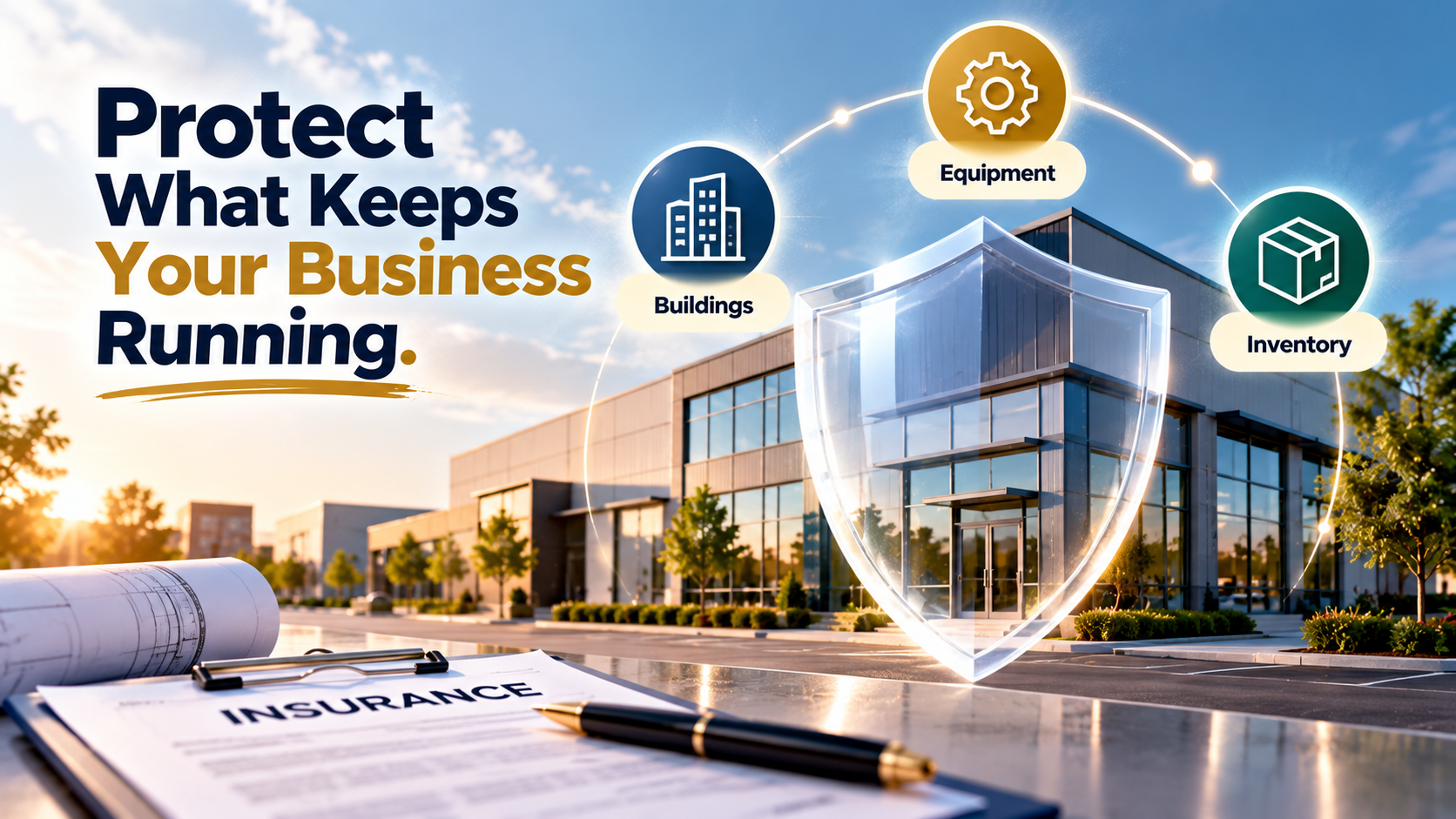
A fire, break-in, or windstorm can damage more than your building. It can also put your equipment, inventory, and ability to serve customers at risk. Understanding what commercial property insurance covers can help you identify which business assets need protection, and what to ask before you choose a policy.
For insurance agencies handling commercial lines, those questions can also create a steady flow of quote and renewal work. Virtual Nexgen Solutions’ insurance virtual assistants can support administrative tasks such as quote data entry, certificate processing, and renewal tracking, helping agency teams keep routine work moving while licensed professionals advise clients.
What is commercial property insurance?
Commercial property insurance is coverage for a business’s physical property when it is damaged or lost because of a cause covered by the policy. Depending on the policy and your business, insured property may include a building, business contents, or both.
The U.S. Small Business Administration describes commercial property insurance as protection for business property against events such as fire, smoke, wind, hail, civil disturbance, and vandalism. The specific events covered depend on the policy form, exclusions, endorsements, and other terms.
In everyday terms, it may help pay to repair or replace covered property after a covered loss. It does not automatically insure every asset or every cause of damage.
What property and events may be covered?
Your commercial property coverage may protect a range of business assets, subject to the policy’s definitions and limits. Common examples include:
- Buildings and structures your business owns
- Furniture, fixtures, computers, and office equipment
- Tools, machinery, and other work equipment
- Inventory, supplies, and materials
- Certain improvements you make to a leased space
- In some cases, property belonging to others while in your care
A contractor, for example, may want to ask how a policy treats tools kept at a workshop or equipment stored away from the primary business location. A retailer may need to consider whether the insured value of its inventory reflects seasonal or other fluctuations. Your agent can explain how the policy applies to your particular property and locations.
Covered causes of loss, often called perils, vary. Fire, theft, vandalism, and wind or hail may be covered, depending on the form and policy terms. Don’t rely on a short list in a quote summary alone; check the policy wording and ask about any special conditions, deductibles, or limits.
Named-peril versus open-peril coverage
A named-peril policy covers losses caused by the perils specifically listed in the policy. If a cause of damage is not listed, it may not be covered.
An open-peril policy, sometimes described as “special form” or “all risk”, generally covers direct physical loss unless the policy excludes it or limits coverage. “All risk” does not mean every possible loss is covered. Exclusions, conditions, and limits still matter. The Insurance Information Institute’s property insurance overview explains common forms and business-property considerations.
What does commercial property insurance usually not cover?
Some risks are commonly excluded from a standard commercial property policy or require separate coverage or an endorsement. Flood and earthquake are frequent examples. Whether protection is available, and how it applies, depends on the insurer, policy, and location.
Commercial property insurance is also not a substitute for other types of business coverage. It generally does not provide:
- General liability insurance, which addresses certain third-party injury or property-damage claims
- Workers’ compensation, which addresses covered employee work-related injuries or illnesses
- Commercial auto insurance, for business vehicles and related risks
- Professional liability, for certain claims involving professional services
Property policies may also contain exclusions or limitations relating to wear and tear, maintenance issues, equipment breakdown, or specific types of water damage. These examples are not a complete list. Ask your licensed agent to identify the exclusions and endorsements that matter for your operations.
Replacement cost or actual cash value: How are damaged items valued?
The policy’s valuation method affects how covered property may be valued after a loss.
Replacement cost generally refers to the cost to repair or replace property with new property of similar kind and quality, without deducting depreciation. Actual cash value (ACV) generally accounts for depreciation, such as age and wear, when valuing the property. The exact meaning and payment process depend on the policy.
The difference can matter when replacing older equipment or rebuilding after major damage. Ask your agent how the policy values buildings, equipment, inventory, and other property, and whether conditions apply before replacement-cost payments are made.
How does business income coverage relate to property insurance?
Commercial property insurance focuses on covered physical loss or damage. Business income coverage, sometimes called business interruption coverage, may help with certain income losses and continuing expenses if covered property damage disrupts operations.
Depending on the policy, covered expenses may include certain ongoing costs while repairs are underway. The coverage can have a waiting period, restoration period, limits, and exclusions. It usually does not apply to every reason a business might lose revenue; the policy’s trigger and terms are important.
The NAIC’s overview of business interruption and business owner policies explains how business income coverage may work alongside commercial property insurance.
Is commercial property insurance included in a BOP?
A business owner’s policy (BOP) typically packages commercial property coverage with general liability and may include business income coverage. It can be a convenient option for eligible small businesses, but eligibility and coverage vary by insurer and policy.
Commercial property insurance can also be purchased separately. The right structure depends on your business, property, operations, and coverage needs. For a closer look at the package, read our guide to what a BOP policy covers.
Which businesses should consider commercial property coverage?
Commercial property insurance may be worth discussing if your business owns or relies on physical assets to operate. That can include contractors with tools and equipment, retailers with inventory, healthcare practices with specialized equipment, offices with computers and furniture, and real estate investors who own commercial buildings.
If you lease your premises, don’t assume the landlord’s policy protects your business contents or improvements. Review your lease and ask your agent what you may be responsible for insuring. Lenders or lease agreements may also require certain property coverage.
What factors can affect the cost?
There is no single price for commercial property insurance. Insurers may consider factors such as the building’s age and construction, its location, how the space is used, the value of the insured property, and available protective features. A location’s exposure to certain weather or other risks may also be relevant.
Coverage choices matter too. Valuation method, deductibles, limits, endorsements, and the property included can affect a quote. The SBA recommends assessing your risks and comparing policy terms, not just prices. Ask your agent to explain what differs between quotes so you can make a useful comparison.
Questions to ask a licensed agent
Before choosing or renewing coverage, prepare an inventory of your buildings, equipment, furniture, inventory, and leased improvements. Then ask:
- Which buildings, contents, and locations are included?
- Which causes of loss are covered, excluded, or subject to special conditions?
- Are flood, earthquake, or equipment breakdown coverage relevant and available?
- Is property valued at replacement cost or actual cash value?
- What deductibles, sublimits, or other conditions apply?
- Is business income coverage included, and what triggers it?
- Should I consider a BOP or separate policies for my business?
Review the policy documents with your licensed agent or insurer. A quote is a starting point, not a substitute for understanding the coverage form and exclusions.
How insurance agencies can manage commercial-lines admin workload
Commercial property accounts can involve repeated information gathering, quote data entry, certificate of insurance processing, document follow-ups, and renewal tracking. When those tasks accumulate, agency staff may have less time for client conversations and licensed work.
A trained insurance virtual assistant can support administrative steps under your agency’s procedures, for example, organizing quote data, tracking outstanding information, coordinating COI requests, and flagging upcoming renewals. Coverage recommendations, binding decisions, and other work requiring a license should remain with appropriately qualified professionals.
Virtual Nexgen Solutions provides dedicated 1-on-1, industry-trained insurance VAs, with a structured onboarding and quality assurance process and privacy-first workflows. The company’s operational goals include reducing administrative workload by up to 60% and increasing capacity up to 3x; actual results depend on the agency’s workflows, task mix, and implementation.
Work with Virtual Nexgen Solutions
If routine commercial-lines administration is taking time away from service and growth, consider where dedicated support could fit into your existing process. Book a 30-minute conversation with Virtual Nexgen Solutions to discuss your agency’s workload and a practical starting point.
Frequently asked questions
Is commercial property insurance required?
Requirements vary. A lender, lease, or other agreement may require coverage, but the details depend on your circumstances. Check your agreements and confirm requirements with your licensed agent or insurer.
Does it cover my business property if I rent my space?
It may cover certain business contents or leased improvements if they are included in your policy. A landlord’s insurance does not necessarily protect your property. Review the lease and ask your agent how your policy applies.
Does commercial property insurance cover floods?
Flood is commonly excluded from standard commercial property coverage, but policy wording and available options vary. Ask whether separate coverage or an endorsement is appropriate for your location and business.
Is commercial property insurance the same as general liability?
No. Commercial property insurance generally addresses covered damage to business property. General liability addresses certain claims by others, such as some bodily injury or property-damage claims. A BOP may package both.
Educational notice: This article is general information, not insurance advice or a coverage recommendation. Coverage varies by insurer, policy, and state. Confirm specific terms, exclusions, limits, and requirements with your licensed agent or insurer.
Work With Virtual Nexgen Solutions
If your business needs dependable virtual assistant support, Virtual Nexgen Solutions can provide support around your existing workflow. Book a discovery call today.
Get in Touch Now!