
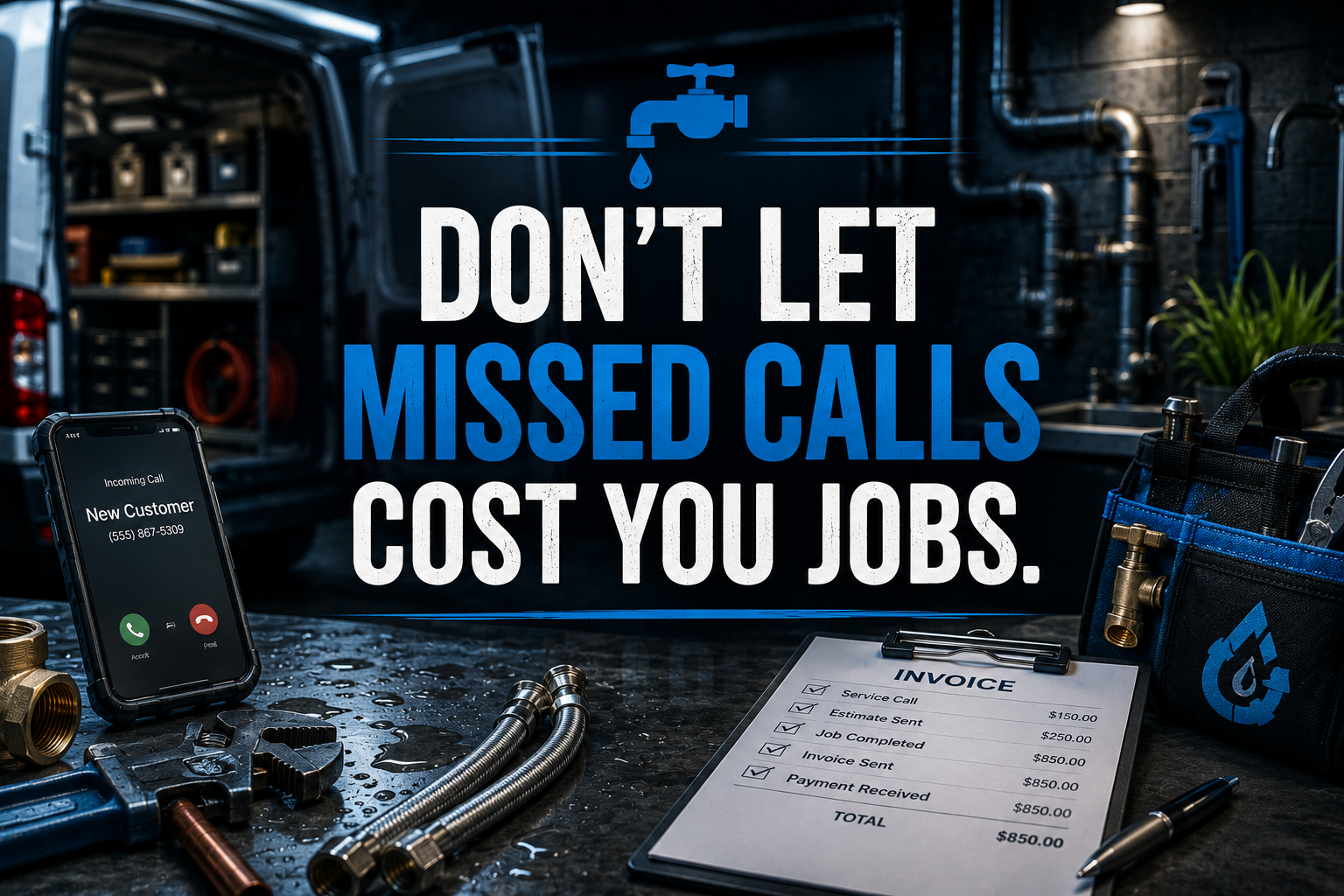
Profit leakage often begins before a plumber reaches the customer’s home. A call goes to voicemail. An emergency gets routed without enough information. An estimate sits open for six days. A completed job waits for an invoice.
A plumbing virtual assistant gives you a dedicated office resource to manage those handoffs. The VA can capture customer details, organize dispatch information, prepare records, follow approved rules, and keep administrative work moving while your licensed team focuses on plumbing.
The role is not a replacement for a plumber. It is structured back-office support for the work surrounding every service call.
What does a plumbing virtual assistant do?
A plumbing virtual assistant supports the workflow from the first customer contact to the final payment.
Customer intake and call handling: Capture the customer’s name, address, callback number, fixture or system involved, visible symptoms, access details, and preferred appointment window. Record the information directly in your approved platform.
Emergency triage support: Ask approved intake questions about active leaks, flooding, sewage backup, gas odors, electrical hazards, and property access. Escalate urgent or unsafe situations to the owner, on-call plumber, or master plumber. Do not provide technical diagnosis or safety instructions beyond your approved script.
Scheduling and dispatch support: Check technician availability, service areas, skills, appointment duration, memberships, and on-call rotations. Present qualified options to the dispatcher or route work according to written rules.
Estimate follow-up: Track open estimates, send approved documents, request missing photos or signatures, and follow up at defined intervals. Do not change pricing or approve repair recommendations.
Permits and inspection paperwork: Organize permit requests, inspection dates, documents, and municipal correspondence. Keep the responsible plumber informed of deadlines and missing information.
Warranty and service agreement records: Update warranty dates, membership details, maintenance reminders, and customer notes. Flag exceptions for management review.
Invoicing and accounts receivable: Prepare invoices from completed job information, attach approved documents, check required line items, send payment links, and maintain a follow-up queue for overdue balances.
Reviews and customer follow-up: Send approved post-service messages, request reviews through Podium or another approved platform, and escalate complaints rather than debating them.
Data and file management: Maintain organized records in Google Workspace, DocuSign, QuickBooks, and your field-service platform. Use consistent naming, folders, and status labels.
Which plumbing office workload should you delegate first?
Start with repetitive work that has clear rules and measurable handoffs. Prioritize missed-call callbacks, open-estimate follow-up, invoice preparation, appointment confirmations, and warranty documentation.
Keep decision-heavy work with the appropriate expert. The owner, licensed plumber, or master plumber must control technical diagnosis, safety instructions, code compliance, permit approval, pricing approval, repair recommendations, credits, refunds, and final job decisions.
A useful access model includes:
- View access for sensitive financial or customer records
- Task access for scheduling, notes, document uploads, and follow-up
- Approval access only for designated managers
- Escalation rules for emergencies, complaints, pricing exceptions, and legal issues
- Daily activity logs showing completed tasks and unresolved items
This structure gives your plumbing office assistant enough access to move work forward without giving unrestricted control.
Human VA versus an answering service or software tool
An answering service is usually strongest at receiving calls and passing messages. A software tool may support intake, reminders, or scheduling. A human plumbing virtual assistant adds judgment to administrative workflows.
A trained VA can review a customer record, identify missing information, find an open estimate, notice a warranty conflict, prepare a document, and ask a manager for approval. That broader context matters when a job moves across several systems.
Choose an answering service when you only need overflow call coverage. Choose software when you need a defined digital function. Choose a human VA when you need ongoing ownership of calls, dispatch support, estimate follow-up, records, billing preparation, and customer communication.
Which software can a plumbing VA use?
A qualified VA can work inside your existing stack after training and permission setup.
- ServiceTitan: Create or update customer records, document intake notes, confirm appointments, monitor open estimates, prepare invoice information, update memberships, and maintain follow-up queues.
- Housecall Pro: Manage customer details, appointment notes, technician schedules, estimates, payment reminders, and job status updates.
- Jobber: Maintain clients, requests, quotes, visits, invoices, follow-up tasks, and service agreement records.
- FieldEdge and Workiz: Support customer intake, scheduling, dispatch notes, estimates, job documentation, and invoice preparation.
- QuickBooks: Organize approved invoice data, match supporting documents, flag overdue accounts, and prepare reports for review.
- Google Workspace: Maintain shared inboxes, calendars, folders, forms, and operating procedures.
- DocuSign: Send approved estimates, authorizations, and agreements for signature.
- Podium: Manage approved customer messages, review requests, and service follow-up.
Review PHCC’s 2026 industry outlook for context on labor pressure, uneven construction demand, and the need for disciplined business management. Plumbing companies also benefit from customer education around water-efficient products and maintenance resources from the EPA’s WaterSense program.
How much does a plumbing virtual assistant cost?
Virtual Nexgen Solutions offers plumbing virtual assistant support starting at $8 per hour.
At 20 hours per week, that equals approximately $640 per month before any agreed service adjustments. At 40 hours per week, it equals approximately $1,280 per month. Your actual requirement depends on call volume, operating hours, software complexity, and the number of workflows assigned.
For comparison, the Bureau of Labor Statistics customer service representative data provides a broad U.S. benchmark for CSR compensation, while dispatcher data is available through the BLS occupational category for dispatchers outside police, fire, and ambulance services. A U.S. in-house CSR or dispatcher can cost about $40,000 to $55,000 in wages, with total employment cost potentially approaching $60,000 after payroll taxes, benefits, recruiting, training, and coverage.
Do not compare hourly rates alone. Compare the workflows completed, supervision required, coverage provided, and quality of documentation.
A practical 30-day implementation roadmap
Days 1–5: List every recurring office task. Mark each task as VA-owned, manager-approved, or licensed-trade-owned.
Days 6–10: Document call scripts, emergency escalation rules, service areas, appointment types, pricing boundaries, and customer communication standards.
Days 11–15: Create limited user accounts in ServiceTitan, Housecall Pro, Jobber, QuickBooks, Google Workspace, DocuSign, and Podium as needed.
Days 16–20: Train the VA on customer intake, dispatch support, estimate follow-up, invoicing preparation, warranty records, and daily reporting.
Days 21–25: Run a supervised pilot. Review call notes, appointment accuracy, open estimates, invoice readiness, and escalation decisions each day.
Days 26–30: Set weekly scorecards for missed-call callbacks, booked opportunities, estimate follow-up completion, invoice turnaround, overdue-account follow-up, and unresolved escalations.
Illustrative case study 1
A six-technician residential plumbing company in Arizona receives about 90 inbound calls each week. Its owner also reviews 18 open estimates and 45 completed jobs awaiting invoice preparation.
The company assigns 20 VA hours per week to call-backs, estimate tracking, appointment confirmations, and invoice preparation. If the VA completes 90% of scheduled follow-ups and reduces invoice preparation from five business days to two, the owner gains a clearer daily pipeline without adding an in-house position. The company must still validate pricing, job scope, and final invoices through its approved manager.
Illustrative case study 2
A mixed residential and commercial plumbing contractor in Ohio has one office employee handling calls, permits, warranty records, and overdue invoices. When that employee is absent, follow-up stops.
The contractor assigns a VA to maintain the permit calendar, request missing closeout documents, prepare warranty records, and organize a weekly accounts-receivable queue. If the VA keeps 100% of permit deadlines visible and prepares every approved invoice packet within one business day, management can focus on exceptions rather than searching through inboxes. These are operating targets, not guaranteed outcomes.
How should you choose a plumbing VA provider?
Ask each provider:
- Which plumbing workflows can the VA own from start to finish?
- Can the VA use your field-service platform?
- How are emergency calls escalated?
- Who approves estimates, pricing, credits, and refunds?
- How are passwords and permissions managed?
- What does the daily report include?
- How does training cover plumbing terminology without crossing into technical advice?
- Can support expand from calls into estimates, permits, warranties, and billing?
Choose documented process control over vague promises. Your provider should understand plumbing office operations, not just generic data entry.
Virtual Nexgen Solutions provides tailored administrative, dispatch, customer support, and back-office assistance for growing service businesses. Review the Virtual Nexgen Solutions service overview and consolidate related plumbing articles under this hub after verifying their CMS URLs.
FAQ Section
What does a plumbing virtual assistant do?
A plumbing virtual assistant handles approved administrative work such as customer intake, scheduling, dispatch support, estimate follow-up, permits, warranty records, invoicing preparation, customer messages, and data entry.
How much does a plumbing virtual assistant cost?
Virtual Nexgen Solutions’ plumbing virtual assistant support starts at $8 per hour. Monthly cost depends on hours, coverage, software, training, and assigned workflows.
Can a VA handle plumbing emergency calls?
Yes. A VA can capture approved emergency information, identify escalation triggers, notify the on-call plumber, and document the call. A VA should not diagnose hazards or provide technical safety instructions outside an approved script.
Can a plumbing VA use ServiceTitan?
Yes. With appropriate training and permissions, a plumbing VA can update customer records, add call notes, confirm appointments, track estimates, prepare invoice information, and maintain follow-up queues.
How do I hire a virtual assistant for a plumbing company?
Define the workflows, access requirements, escalation rules, schedule, and reporting standards first. Then choose a provider with plumbing-specific experience and test the process through a supervised pilot.
What is the difference between a plumbing virtual assistant and an answering service?
An answering service mainly receives calls and passes information forward. A plumbing virtual assistant can manage connected administrative workflows across calls, scheduling, estimates, paperwork, customer follow-up, and billing preparation.
Can a plumbing virtual assistant help with billing?
Yes. A VA can organize completed-job information, prepare approved invoices, attach documents, send payment reminders, and maintain accounts-receivable follow-up. A manager should approve financial adjustments and exceptions.
Are plumbing virtual assistant services available in the USA?
Yes. U.S. plumbing companies can use remote VA support for business-hours, extended-hours, or selected workflow coverage, depending on staffing, communication, and escalation requirements.
Put your plumbing office workflow on a cleaner track. Schedule a 30-minute consultation with Virtual Nexgen Solutions to discuss calls, dispatch, estimates, billing, software access, and the right starting hours for your business.