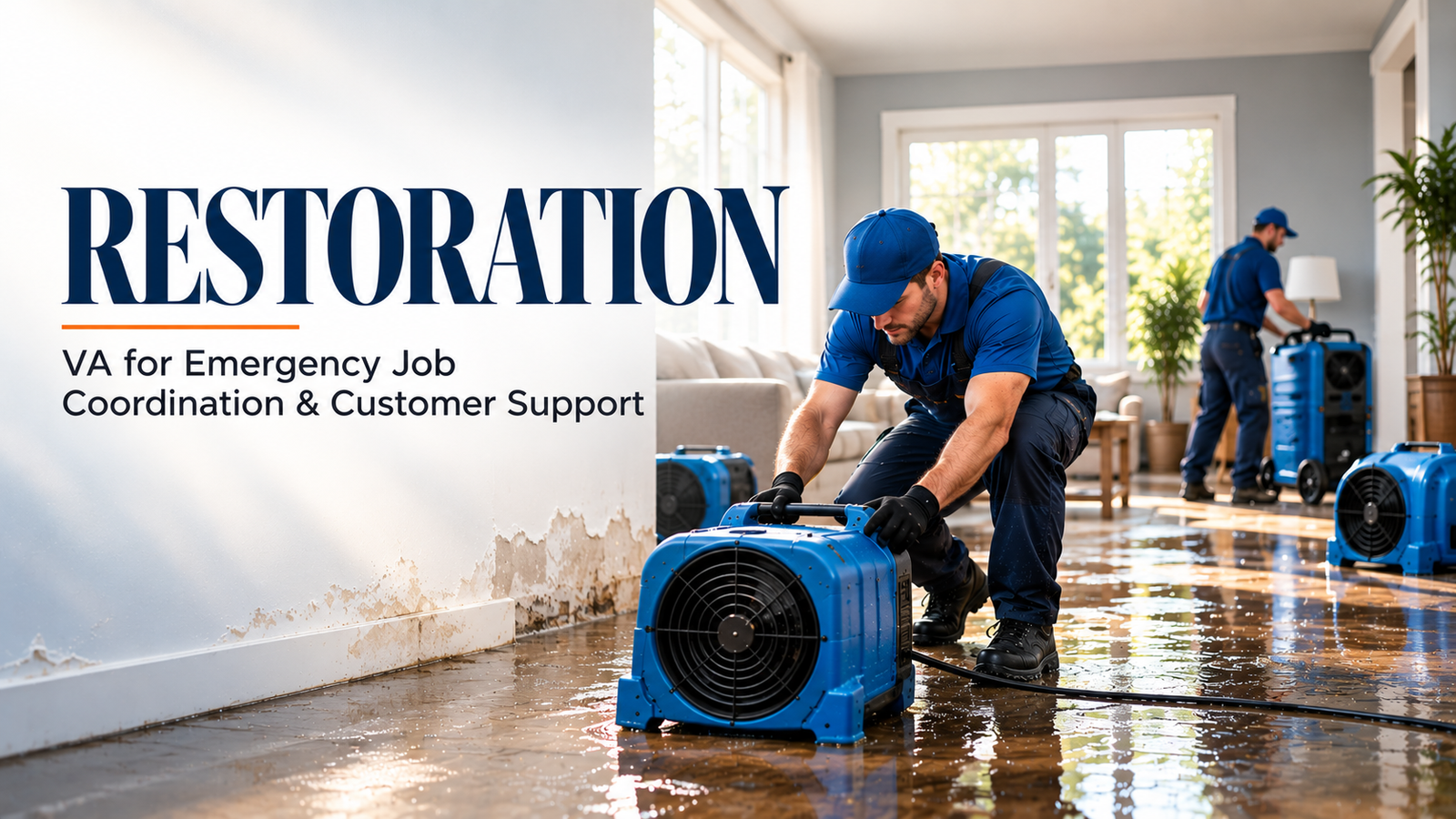


The IICRC just rewrote the rulebook. If you are operating a restoration business in 2026, you are no longer in the business of just drying buildings; you are in the business of manufacturing evidence. The release of the IICRC S500 2026 revision has shifted documentation from "supporting evidence" to a "central requirement." For the average restoration owner, this isn't just a technical update, it is a financial emergency. Incomplete drying logs, missing psychrometric data, and non-existent equipment tracking are now the #1 reasons insurance adjusters are slashing invoices by 25% to 40%. This is the $250,000 Documentation Denial Crisis, and it is quietly bankrupting firms that fail to adapt.
The Shift from Restoration to Documentation
For decades, restoration was a "boots on the ground" industry where the physical result, a dry floor, was the ultimate proof of success. That era is over. Today, the insurance carrier doesn't care that the floor is dry; they care that you can prove how it got dry, why it took four days instead of three, and exactly what equipment was running every hour of those four days. The administrative burden of meeting these standards has created what we call "Admin Debt", a mounting pile of unfiled photos, unlogged moisture readings, and unverified drying curves that results in massive profit leakage.
When your technicians are in the field, their priority is mitigation. They are focused on extraction, containment, and setting equipment. Expecting them to also be world-class data entry specialists is a recipe for disaster. The result? Gaps in the drying log. Missing baseline readings. Photos that don't show the moisture meter. These "minor" administrative lapses are exactly what carriers use to justify denials. At Virtual Nexgen Solutions, we see restoration companies losing an average of $5,000 per claim simply because the paperwork didn't keep pace with the work.
The $250,000 Denial Crisis: The High Cost of Inaction
In the restoration industry, revenue leaks are often invisible until the end of the quarter. Consider a medium-sized restoration firm handling 50 water damage claims a year. If the average claim value is $10,000, that’s a $500,000 revenue stream. However, if an adjuster identifies gaps in documentation, missing daily monitoring logs or a failure to justify "Category 3" water, they will often reduce the payout by 20% or more. Across 50 claims, that is a $100,000 loss purely due to administrative failure.
But the crisis goes deeper. When you factor in the "Equipment Shrinkage Tax", the 15-25% of equipment that is either lost, misplaced, or unbilled because it wasn't tracked on the job site, the losses climb. A restoration company with a $2.5 million annual revenue can easily face $250,000 in annual losses from denials and asset mismanagement. This isn't a problem that can be solved with more technicians or faster fans. It requires a dedicated Restoration Virtual Assistant who can systematize the documentation process in real-time.
Industry Statistics: The Brutal Reality of 2026
The data regarding restoration administration in 2026 paints a clear picture of an industry under pressure:
- 72% of claim denials in 2026 are attributed to "insufficient documentation" rather than the quality of the actual mitigation work.
- 15-25% of equipment inventory is lost annually to "shrinkage", a combination of theft (10%) and administrative misplacement or failure to bill (90%).
- 4.5 hours per claim is the average time a lead technician spends on documentation, time that is often unbillable and takes them away from revenue-generating field work.
- 30% of TPA (Third Party Administrator) scores are now based specifically on "real-time documentation compliance," meaning poor admin directly leads to fewer lead referrals.
These numbers highlight a fundamental truth: Admin Debt is a profit killer. If you are paying a senior technician $35/hr to struggle with Xactimate data entry or Encircle photo uploads, you are losing money on both ends of the transaction. You are overpaying for admin and under-utilizing your technical talent.
Revenue Leaks and the "Profit Leakage" Syndrome
Profit leakage in restoration occurs when the field reality doesn't match the digital record. This happens in three primary areas:
- Drying Log Gaps: An adjuster sees a drying log with a 24-hour gap in moisture readings. They immediately deny the equipment charges for that entire period, arguing there is no proof the equipment was necessary.
- Category/Class Disputes: Without time-stamped photo evidence of the water source and affected materials, carriers will "down-code" a Category 3 (Grossly Contaminated) loss to a Category 1, instantly cutting the billable rate by half.
- Unbilled Equipment: If three air movers were added on Day 2 but never logged in the system, they don't exist on the final invoice. This is "invisible" profit leakage that most owners never even realize is happening.
A specialized Restoration Virtual Assistant acts as a digital auditor. As your technicians work, the VA monitors the project files in real-time. If a photo is missing or a moisture reading looks inconsistent, the VA notifies the technician immediately, while they are still on-site. This proactive approach turns "Admin Debt" into "Admin Asset."
Operational and Staffing Challenges
The restoration industry is currently facing a dual crisis: a shortage of skilled labor and an explosion of administrative requirements. Hiring an in-house administrative assistant in the United States now costs upwards of $60,000 per year when you include benefits, taxes, and overhead. For many small-to-mid-sized restoration firms, this expense is prohibitive.
Furthermore, in-house staff are often tied to traditional 9-to-5 hours. Restoration, however, is a 24/7 business. When a CAT event hits or a late-night flood occurs, the documentation needs to start immediately. This is where a Restoration Virtual Assistant provides a massive operational advantage. At $8/hr, you can have a specialized professional managing your project files 24/7, ensuring that every midnight emergency is documented with the same precision as a scheduled appointment.
The IICRC S500 2026 Impact: What Changed?
The IICRC S500 2026 revision has introduced several critical changes that directly affect your bottom line. The most significant shift is the elevation of documentation from "recommended" to "mandatory" for verifying drying goals. Under the new guidelines, the following data points are non-negotiable for claim approval:
1. Material Moisture Content (MMC)
You must now provide daily readings for every affected material type (drywall, framing, subfloor). These readings must be photographed with the meter visible and time-stamped. If you miss one day of readings, the entire drying curve is considered "broken" by adjusters.
2. Psychrometric Data
The standard now requires more rigorous tracking of Temperature, Relative Humidity (RH), and Grains Per Pound (GPP). You must document the "Inlet" and "Outlet" readings for every dehumidifier to prove it is actually pulling grain. If your dehumidifier is "flat-lining" and you don't document an adjustment, the carrier will deny those equipment days.
3. Equipment Placement Logs
The 2026 revision emphasizes the rationale for equipment placement. You can no longer just say "15 air movers." You must document the square footage, the "Class" of water (1 through 4), and the calculation used to justify the equipment count. A Restoration Virtual Assistant can perform these calculations in the background while your tech is still setting up.
4. Project Limitations and Complications
If a job takes longer because of high outside humidity or restricted access, it must be documented as a "Complication" in the project notes immediately. Retrospective notes added three weeks later during the billing phase are often dismissed as "fraudulent" or "self-serving" by carrier AI review systems.
The $8/hr Solution: How a Restoration VA Systematizes Your Business
The solution to the documentation crisis isn't to work harder; it's to work smarter by delegating the administrative "heavy lifting" to a specialized Restoration Virtual Assistant. For just $8/hr, a Virtual Nexgen Solutions VA handles the technical workflows that keep your cash flow moving.
By integrating a VA into your daily operations, you remove the administrative burden from your field technicians. Your lead tech can focus on IICRC-standard mitigation, while the VA handles the "Digital Twin" of the project. This ensures that every claim is bulletproof before it ever reaches the adjuster's desk.
11-Task Checklist: What Your Restoration VA Handles Daily
- Daily Drying Log Auditing: Reviewing every job file in Encircle or DASH to ensure moisture readings are logged and consistent.
- Photo Management: Organizing, labeling, and "hearting" the most critical photos for the Xactimate estimate.
- Equipment Tracking: Reconciling the equipment set in the field with the digital inventory to prevent "shrinkage."
- Xactimate Sketching: Taking technician measurements and creating the initial floor plan and sketch in Xactimate.
- Supplement Mining: Identifying missed billable opportunities (e.g., floor protection, personal protective equipment, content manipulation) that technicians often forget to log.
- Carrier Follow-up: Proactively calling adjusters to check on claim status and provide any missing documentation immediately.
- TPA Compliance Monitoring: Ensuring all project milestones are met within the required timeframes (e.g., 24-hour contact, 48-hour estimate upload).
- Job Costing: Real-time tracking of labor hours and materials used on each job to ensure profitability.
- Certificate of Completion (COC) Management: Ensuring the homeowner signs off on the work digitally as soon as the equipment is pulled.
- Inventory Reconciliation: Using tools like Kahi or Airpinpoint to track the physical location of dehumidifiers and air movers across multiple job sites.
- Customer Communication: Sending daily updates to the homeowner and agent, which significantly reduces "anxiety calls" to the owner.
Software Expertise: Mastering the Restoration Tech Stack
A specialized Restoration Virtual Assistant isn't just a generalist; they are experts in the software that runs your business. At Virtual Nexgen Solutions, our VAs are trained in the specific workflows required by the industry’s leading platforms:
- Encircle & DASH: Your VA manages the lifecycle of the project, from initial intake to final report generation. They ensure that the "Environment," "Inlet," and "Outlet" readings are properly synced and that the moisture map is complete.
- Xactimate & Symbility: We handle the data entry and sketching, allowing your estimators to focus on higher-level negotiations. We ensure that every line item is justified by the documentation in the file.
- CompanyCam: Organizing job site photos by room and phase, ensuring that the "Before," "During," and "After" story is told clearly for the adjuster.
- Kahi & Airpinpoint: Tracking your high-value assets in real-time to eliminate the 25% equipment shrinkage that plagues unmanaged warehouses.
- JobNimbus & Lever360: Managing the CRM and sales pipeline, ensuring that every lead is followed up on and every contract is signed.
Case Study: A Restoration Company in Florida
A P&C restoration firm in Florida was struggling with a 22% reduction in claim payouts across their water mitigation department. The owner was spending 15 hours a week arguing with adjusters over "missing drying logs." Despite having top-tier technicians, their "Admin Debt" was costing them over $18,000 a month in lost revenue.
The Solution:
They hired two Restoration Virtual Assistants from Virtual Nexgen Solutions at $8/hr. One VA was assigned to "Real-Time Auditing," and the other to "Xactimate Sketching and Supplementing."
The Result:
- Claim Reductions: Dropped from 22% to less than 4% within 90 days.
- Equipment Recovery: They identified $12,000 worth of "lost" equipment that was sitting in a sub-contractor's truck.
- Cash Flow: Their "Days to Paid" (DTP) metric improved by 14 days because the documentation was submitted "clean" the first time.
- ROI: For a total investment of roughly $2,600 a month in VA services, the company recovered over $24,000 a month in previously lost revenue and equipment.
Cost Comparison: In-House Admin vs. Virtual Nexgen Solutions
The financial argument for a Restoration Virtual Assistant is undeniable. When you look at the total cost of employment, the gap is staggering.
In-House Restoration Admin:
- Annual Salary: $45,000 - $55,000
- Payroll Taxes (8%): $4,400
- Health Insurance & Benefits: $6,000
- Office Space & Equipment: $3,000
- Total Annual Cost: $58,400 - $68,400
Virtual Nexgen Solutions VA:
- Hourly Rate: $8/hr
- Annual Cost (Full-time): $16,640
- Taxes & Benefits: $0 (Included in rate)
- Office Space & Equipment: $0
- Total Annual Cost: $16,640
Total Annual Savings: $41,760 - $51,760 per position.
By switching to a specialized VA, you save enough money to hire three additional field technicians or purchase a new fleet of high-efficiency dehumidifiers. You aren't just cutting costs; you are reallocating capital to the areas of your business that drive growth.
ROI Comparison: The Valuation Multiplier
Beyond the immediate payroll savings, a Restoration Virtual Assistant increases the overall valuation of your company. In the restoration world, buyers (such as Private Equity firms or larger national consolidators) look at your "Data Integrity."
A company with clean, IICRC-compliant project files and a systematized administrative workflow commands a higher EBITDA multiple. If your business is valued at 4x EBITDA and you use a VA to save $50,000 in overhead while recovering $100,000 in denied claims, you have just added $600,000 to your exit value. This is how you win the long game in the restoration industry.
Future Trends: Carrier AI and the Era of Instant Denials
As we move deeper into 2026, insurance carriers are increasingly using AI-driven "Desk Review" software to audit claims. These systems are programmed to scan for specific patterns:
- Drying Curve Anomalies: If the moisture readings don't follow a logical physics-based curve, the AI flags the claim for a human audit.
- Metadata Mismatches: If a photo's GPS coordinates don't match the job site or the timestamp is inconsistent with the drying log, the line item is auto-deleted.
- Omission Detection: If "Category 3" is selected but the word "sewage" or "bacteria" doesn't appear in the notes, the AI automatically down-codes the claim.
A Restoration Virtual Assistant is your defense against these AI-driven denials. They ensure that every file "speaks the language" of the carrier's review software, preventing the friction that leads to payment delays.
Frequently Asked Questions
1. How does a restoration virtual assistant access our field data in real-time?
Our VAs are trained to work directly within your existing software, such as Encircle, DASH, or CompanyCam. As soon as your technician uploads a photo or a moisture reading from their mobile device, the VA sees it on their dashboard and begins the auditing and reporting process.
2. Can a VA actually help with Xactimate estimates?
Yes. While your lead estimator provides the scope and technical details, the VA handles the heavy data entry, sketching from floor plans, and ensuring that all supporting documentation is attached to the correct line items. This allows your estimator to handle three times the volume of claims.
3. What happens if a technician forgets to take a required photo?
The VA monitors the file in real-time. If they see that a "Daily Monitoring" phase has started but no moisture meter photos have been uploaded, they immediately text or call the technician to remind them while they are still on the job site.
4. How do you handle the security of our sensitive customer and carrier data?
Virtual Nexgen Solutions employs rigorous data security protocols. Our VAs use secure, encrypted connections and follow strict confidentiality agreements. We can also work within your existing security environment, including Two-Factor Authentication (2FA).
5. Does an $8/hr VA really understand IICRC standards?
Our specialized restoration VAs undergo internal training focused on the core concepts of the IICRC S500, including the difference between categories of water, classes of loss, and the requirements for psychrometric logging. They understand the "why" behind the documentation.
6. Can a VA help with equipment tracking and shrinkage?
Absolutely. The VA reconciles your digital inventory (e.g., Kahi or Airpinpoint) with the job logs. If a piece of equipment is logged out of the warehouse but doesn't appear on a drying log, the VA alerts the operations manager immediately.
7. How quickly can we get a Restoration VA started?
We can typically have a specialized VA integrated into your workflow within 7 to 10 days. This includes a discovery phase where we learn your specific software stack and internal communication preferences.
8. What is the minimum commitment for your services?
We offer flexible solutions designed to scale with your business. Whether you need part-time support for a small local firm or a full team of VAs to handle a national CAT event response, we can tailor a plan that fits your budget and operational needs.
Conclusion: Stop the $250,000 Leak Today
The IICRC S500 2026 revision has made one thing clear: documentation is no longer a "back-office task": it is the core of your revenue cycle. If you continue to let "Admin Debt" accumulate, you are choosing to leave hundreds of thousands of dollars on the table. You are choosing to work harder for less money.
By partnering with Virtual Nexgen Solutions, you systematize your documentation, protect your equipment assets, and insulate your business against carrier denials. You provide your technicians with the freedom to focus on their craft while ensuring your business operates with the administrative precision of a Fortune 500 company.
Don't wait for your next major claim denial to realize you have a documentation crisis. Address the "Profit Leakage" now and build a restoration business that is scalable, profitable, and bulletproof.